


Introduction
Alzheimer's disease is a common neurodegenerative disease that causes a progressive loss of memory and cognitive function as patients age. The disease not only poses profound challenges for patients, but also impacts the lives of caregivers and family members. Patients often experience behavioral and psychological symptoms such as anxiety and depression, which exacerbates the difficulty of care.
Despite advances in modern medicine, treatments for Alzheimer's disease remain challenging and focus primarily on relieving symptoms. Therefore, exploring new treatment methods, especially those derived from traditional medicine and natural products, has become an important research direction. Curcumin, a traditional herbal ingredient that has been shown in recent years to have potential benefits on Alzheimer's dementia behaviors, attracted the attention of the scientific community. This article will delve into the properties of Curcumin and its application and research status in the treatment of Alzheimer's disease.
Basic properties of Curcumin
Curcumin is a yellow polyphenolic compound extracted from the rhizome of the turmeric plant and is the main active ingredient of the plant. It is responsible for turmeric's vibrant yellow color and has been extensively studied for its rich pharmacological activities.
Chemically, Curcumin is a compound with a diketone structure and is a terpenoid. Its molecular structure gives it powerful antioxidant and anti-inflammatory properties. These properties stem from Curcumin's effects on multiple molecular pathways, modulating the expression and activity of inflammatory factors, antioxidant enzymes, and other important molecules.
An important feature of Curcumin is its relatively low bioavailability, which means that when ingested orally, only a small portion is absorbed and utilized by the body. This low bioavailability is a challenge when researching and applying Curcumin. To increase its effectiveness, researchers are exploring various methods, including the use of bioenhancers (such as piperidine in black pepper) and nanotechnology, to increase Curcumin's absorption rate in the body.

Traditional treatments for Alzheimer’s disease
Traditional treatments for Alzheimer's disease have focused on relieving symptoms and improving patients' quality of life. There is currently no cure for the disease. These treatment methods can be roughly divided into two categories: drug treatment and non-drug treatment.
Existing drug treatments and their limitations
Cholinesterase Inhibitors: Used in people with mild to moderate Alzheimer’s disease to increase levels of neurotransmitters in the brain to improve memory and cognitive function.
NMDA receptor antagonists: Suitable for patients with moderate to severe disease and help slow down the progression of symptoms.
A limitation of pharmacological treatments is that they primarily target symptoms rather than causes, and their effectiveness may diminish as the disease progresses.
Non-drug treatments
Cognitive therapy: Help patients maintain and improve their cognitive function through various cognitive training and activities.
Lifestyle modifications: Including a balanced diet, moderate exercise, social interaction and adequate sleep can help slow the progression of the disease.
While the conventional treatments mentioned above can help Alzheimer's patients to some extent, none of them can stop or reverse the progression of the disease. As a result, researchers and doctors are always looking for more effective treatments, including exploring the potential of natural medicines and complementary therapies.
Curcumin in the treatment of Alzheimer's disease
In recent years, with the in-depth study of the potential pharmacological effects of Curcumin, its application in the treatment of Alzheimer's disease has received increasing attention.
Research Review: Effects of Curcumin in Alzheimer’s Patients
Scientific research in recent years has focused on exploring Curcumin’s potential effects on Alzheimer’s disease. Alzheimer's disease is a complex neurodegenerative disease characterized by the death of nerve cells and the abnormal accumulation of specific proteins, such as amyloid and tau, in the brain. These changes lead to memory loss, cognitive impairment, and behavioral changes.
Curcumin acts as a powerful anti-inflammatory and antioxidant, and its mechanism of action is thought to be relevant to these pathological processes. Research shows that Curcumin may combat the development of Alzheimer’s in several ways:
Reduced inflammation in the brain: The brains of Alzheimer's patients often show significant signs of inflammation, which is thought to be a key factor in disease progression. Curcumin reduces this inflammatory response by inhibiting key factors in the inflammatory pathway, such as cytokines and inflammatory mediators.
Antioxidative Stress: Oxidative stress is thought to be another important factor in the development of Alzheimer’s disease. Curcumin has powerful antioxidant capabilities that neutralize free radicals and reduce oxidative damage, thereby protecting nerve cells.
Affects amyloid aggregation: Abnormal aggregation of amyloid is one of the hallmark features of Alzheimer's disease. Studies have shown that Curcumin may slow down the accumulation of amyloid in the brain by affecting its production and deposition.
These findings reveal multiple mechanisms by which Curcumin may combat Alzheimer's disease. However, it is important to note that despite the promise of these findings, most studies are currently limited to laboratory conditions and animal models. Therefore, the efficacy and mechanism of Curcumin still need to be further verified through more clinical trials.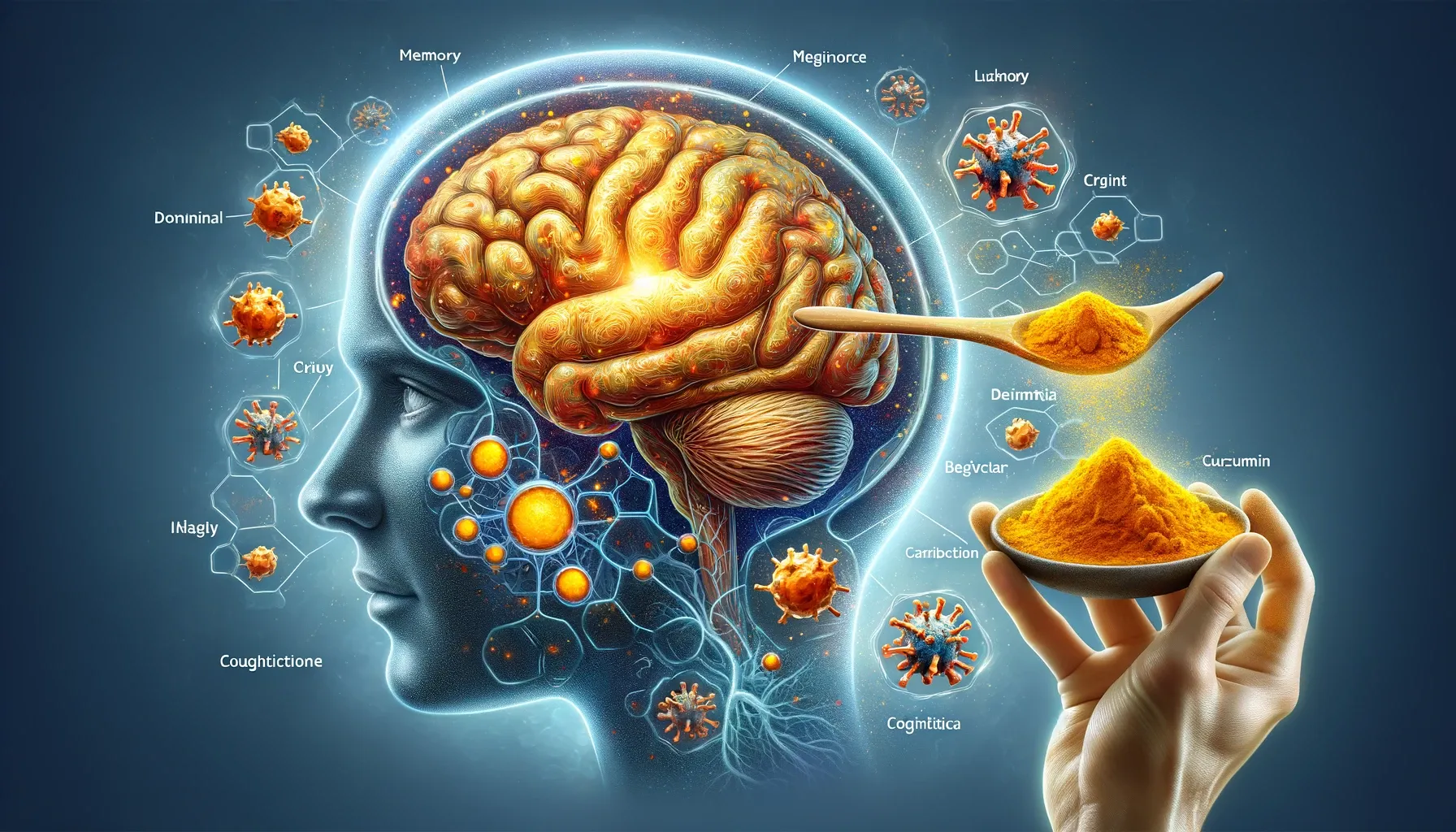
How Curcumin affects behavior and cognitive function in dementia
Alzheimer's disease not only affects memory, but also involves widespread decline in cognitive functions, such as a decline in attention, judgment, and decision-making abilities, as well as the emergence of various behavioral and psychological symptoms. In the search for effective treatments, Curcumin has attracted the attention of researchers as a potential complementary therapy.
Improving cognitive function: Research shows that Curcumin may improve cognitive function by reducing inflammation and oxidative stress in the brain. Preliminary clinical trials and animal experiments show that patients taking Curcumin experienced improvements in memory, concentration and other cognitive abilities. These improvements may be due to the neuroprotective effects of Curcumin, as well as its effects on amyloid accumulation.
Reduce the severity of dementia behaviors: People with Alzheimer’s disease often exhibit psychological symptoms such as anxiety, depression and irritability. Some studies have found that Curcumin may reduce these symptoms by improving the brain's chemical balance. For example, Curcumin has been found to help relieve symptoms of anxiety and depression and improve patients' overall mental health.
Safety and Tolerability:Safety and tolerability are key considerations when evaluating any potential treatment. Curcumin, a natural ingredient, is considered safe and well-tolerated in most cases. This is especially important for long-term treatment of Alzheimer's patients, who may need to take this supplement for an extended period of time.
Overall, while Curcumin has shown potential positive effects in improving dementia behavior and cognitive function in Alzheimer's patients, current research is insufficient for it to become part of standard treatment. Future clinical studies are needed to further explore its effectiveness and optimal dosage.
Case studies and empirical data
Individual case studies and empirical data provide important insights when evaluating Curcumin's potential role in Alzheimer's disease treatment.
Specific Case Studies: Some case studies focus on a single person or a small group of Alzheimer's patients and explore their improvement after receiving Curcumin supplementation. These studies typically assess the effects of Curcumin by carefully documenting changes in patients' cognitive abilities, behavioral symptoms, and quality of life. Although these case studies provide valuable preliminary data, their results cannot be broadly generalized to the larger population due to small sample sizes.
Interpretation of Statistics and Study Results: In addition to individual case studies, there are also studies evaluating the effects of Curcumin in larger population samples. These studies often use randomized controlled trials to provide more statistically significant data. Nonetheless, interpretation of study results is often limited by differences in study design, sample size, dose differences, and assessment methods.
Comparison with other treatments: Some studies have attempted to compare Curcumin with existing Alzheimer’s treatments to assess their relative effectiveness. These comparative studies help determine whether Curcumin is an effective alternative or complementary therapy. However, current research in this area is still limited and more clinical evidence is needed to support it.

Future prospects and research directions
Although Curcumin has shown some potential in the treatment of Alzheimer's disease, current research still has limitations, and future research directions need to be explored in depth at multiple levels.
Overcoming Research Limitations: Most of the current research on Curcumin is pre-experimental, often involving small sample sizes or short-term studies. Future research needs to increase the sample size and length of the study to provide more convincing evidence. At the same time, research designs need to be more rigorous to ensure the validity and reproducibility of results.
Improvement in bioavailability: Since Curcumin has relatively low bioavailability in the body, researchers are working hard to improve its absorption and bioavailability through various methods. This includes using nanotechnology to prepare Curcumin, or combining it with other absorption-enhancing substances such as piperidine. Developments in these technologies may significantly improve Curcumin's effectiveness in Alzheimer's treatment.
Insight into the mechanism: Although Curcumin is known to have anti-inflammatory and antioxidant properties, its exact mechanism of action in Alzheimer’s disease is not fully understood. Future studies are needed to explore its molecular mechanisms in more depth, including how it affects neurodegenerative processes and neuroprotection.
Clinical trials and long-term studies: To fully evaluate the efficacy and safety of Curcumin, more clinical trials and long-term follow-up studies are needed. These studies will help determine the optimal dose of Curcumin, length of treatment, and potential side effects.
Exploration of integrated treatment approaches: In addition to using Curcumin alone, future studies may explore the effects of combining Curcumin with other treatments, such as medications, cognitive therapy, or lifestyle modifications .
Overall, Curcumin’s application in the treatment of Alzheimer’s disease is promising, but more scientific evidence is needed to support its potential as an effective treatment. Future research will be key to determining its exact role and value in Alzheimer's management.
in conclusion

This article reviews the potential application of Curcumin in treating Alzheimer’s dementia behaviors and its related research. Curcumin, a natural polyphenolic compound, has long been used in traditional medicine for its anti-inflammatory and antioxidant properties. In recent years, scientific research has begun to focus on its potential in Alzheimer's disease treatment.
While current research suggests that Curcumin may combat Alzheimer's disease by reducing inflammation, oxidative stress, and amyloid aggregation in the brain, these findings need to be confirmed in more extensive clinical trials and long-term studies. Curcumin has shown some promise in improving cognitive function and reducing dementia behaviors, but its effectiveness and safety as a standard treatment still need to be further explored.
Future research needs to focus on improving the bioavailability of Curcumin, gaining a deeper understanding of its mechanism of action, conducting large-scale clinical trials, and exploring its use in combination with other treatments. As research into Curcumin continues, its potential value in Alzheimer's treatment is expected to be more fully evaluated and applied.
Overall, the promise shown by Curcumin in the treatment of Alzheimer's disease is promising, but more in-depth and comprehensive studies in the future are needed to reveal its true potential in this area.
References
Aggarwal, B. B., & Harikumar, K. B. (2009). Potential therapeutic effects of Curcumin, the anti-inflammatory agent, against neurodegenerative, cardiovascular, pulmonary, metabolic, autoimmune and neoplastic diseases. The International Journal of Biochemistry & Cell Biology, 41 (1), 40-59.
Baum, L., et al. (2008). Curcumin effects on blood lipid profile in a 6-month human study. Pharmacological Research, 58(6), 509-514.
Chin, D., Huebbe, P., Frank, J., Rimbach, G., & Pallauf, K. (2013). Curcumin may impair iron status when fed to mice for six months. Redox Biology, 1(1) , 394-400.
Goozee, K. G., Shah, T. M., Sohrabi, H. R., Rainey-Smith, S. R., Brown, B., Verdile, G., & Martins, R. N. (2016). Examining the potential clinical value of Curcumin in the prevention and diagnosis of Alzheimer's disease. British Journal of Nutrition, 115(3), 449-465.


