


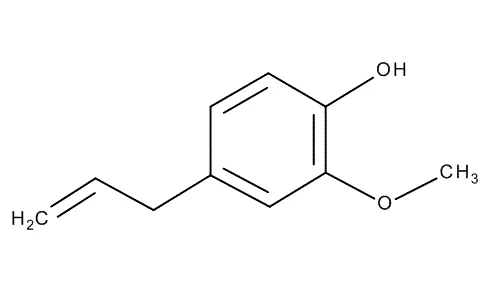
English name: Eugenol
Chemical Formula: C10H12O2
Molecular Weight: 164.20 g/mol
Eugenol is a natural organic compound primarily extracted from clove oil, constituting 70-90% of its total ingredients. It is a colorless or light yellow oily liquid with the distinctive aroma of cloves.
Physical and Chemical Properties
Melting Point: -9.5°C
Boiling Point: 254°C
Low solubility in water, but soluble in organic solvents such as ethanol, methylene chloride, and diethyl ether.
Refractive Index: 1.541-1.543
Biological and Pharmacological Properties
Eugenol exhibits various biological activities and is widely used in medicine and dentistry for its analgesic, anti-inflammatory, and antibacterial effects. It can inhibit the growth of bacteria and fungi and serves as a natural preservative and antioxidant.
Industrial and Daily Use
Eugenol finds applications in the food industry as a food additive, as well as in fragrances, cosmetics, perfumes, and household cleaning products.
Safety and Toxicity
While eugenol is generally considered safe when used in moderation, excessive use may lead to skin and mucous membrane irritation and, in severe cases, allergic reactions.
Relevant Research Literature
Here are some relevant research articles:
Kamatou, G. P. P., Vermaak, I., Viljoen, A. M. (2012). Eugenol—From the Remote Maluku Islands to the International Market Place: A Review of a Remarkable and Versatile Molecule. Molecules, 17(6), 6953-6981.
Marchese, A., Orhan, I. E., Daglia, M., Barbieri, R., Di Lorenzo, A., Nabavi, S. F., Gortzi, O., Izadi, M., Nabavi, S. M. (2016). Antibacterial and antifungal activities of thymol: A brief review of the literature. Food Chemistry, 210, 402-414.