


1. Introduction
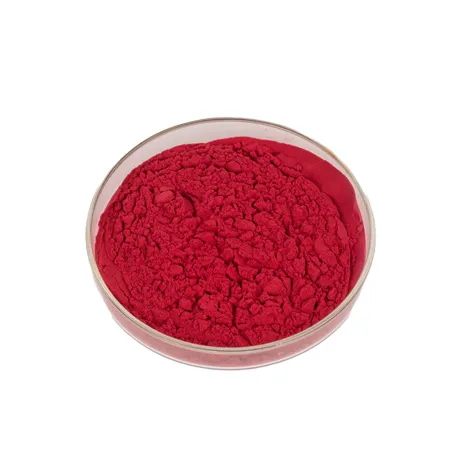
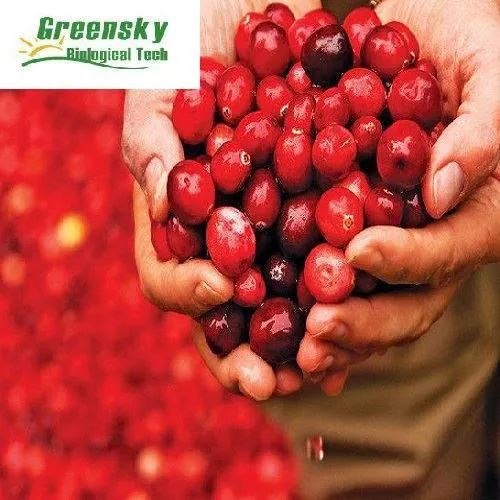
Cranberries are well - known for their rich nutritional content and potential health benefits. Cranberry Extract, which contains various bioactive compounds such as proanthocyanidins, flavonoids, and phenolic acids, has been increasingly studied and used in different industries, including the food, pharmaceutical, and cosmetic sectors. Efficient extraction and distillation methods are crucial for obtaining high - quality Cranberry Extract with desired properties.
2. Traditional Extraction Methods
2.1 Maceration
Maceration is one of the traditional and widely used extraction methods for Cranberry Extract. In this process, cranberries are soaked in a solvent, usually ethanol or water - ethanol mixtures, for an extended period. The solvent penetrates the cranberry tissues, dissolving the soluble components. The main advantage of maceration is its simplicity and low cost. It can be carried out at room temperature, and no specialized equipment is required. However, it has some limitations. The extraction time is relatively long, which may range from several hours to days. Moreover, the extraction efficiency may not be very high, resulting in a relatively low yield of the desired components.
For example, when using a 50% ethanol - water mixture for maceration of cranberries, it was found that after 24 hours of soaking, only about 30 - 40% of the total phenolic compounds were extracted. This indicates that a significant amount of valuable components still remained in the cranberry residues.

2.2 Soxhlet Extraction
Soxhlet extraction is another traditional method that has been used for Cranberry Extraction. It is a continuous extraction method that uses a Soxhlet apparatus. The cranberry sample is placed in a thimble, and the solvent is continuously recycled through the sample. This method is more efficient than maceration in terms of extraction time. It can usually complete the extraction within a few hours. However, it also has some drawbacks. The Soxhlet extraction requires more solvent compared to maceration, which may increase the cost and environmental impact. Additionally, the high temperature and long - term solvent recycling may cause some degradation of the bioactive components in cranberries.
Studies have shown that when Soxhlet extraction was carried out using ethanol as the solvent at a relatively high temperature (around 80 °C), there was a decrease in the antioxidant activity of the extracted cranberry components compared to those extracted at lower temperatures. This is because some of the heat - sensitive bioactive compounds, such as certain flavonoids, may be degraded during the extraction process.
3. Importance of Distillation in Cranberry Extract Processing
Distillation plays a critical role in Cranberry Extract processing. After the extraction process, the resulting extract is a complex mixture containing different components, including the desired bioactive compounds, solvents, and other impurities. Distillation is used to separate and purify these components.
One of the main purposes of distillation is to remove the solvent. For example, if ethanol was used as the extraction solvent, distillation can effectively separate ethanol from the Cranberry Extract, allowing for the production of a solvent - free or low - solvent - content extract. This is important for the final product quality, especially in applications where solvent residues are not desired, such as in food and pharmaceutical products.
Moreover, distillation can also be used to separate different bioactive components based on their boiling points. This can help in obtaining a more purified extract with a higher concentration of specific bioactive compounds. For instance, if the goal is to obtain a Cranberry Extract rich in proanthocyanidins, distillation can be used to separate other components with lower or higher boiling points, thus enriching the proanthocyanidin content in the final extract.
4. New Trends in Extraction and Distillation
4.1 Supercritical Fluid Extraction (SFE)
Supercritical fluid extraction is an emerging and promising method for Cranberry Extract production. Supercritical fluids, such as supercritical carbon dioxide (scCO₂), have unique properties that make them ideal for extraction. The density of supercritical fluids can be adjusted by changing the pressure and temperature, which allows for better control over the extraction process.
Advantages of SFE over traditional methods:
- Higher Yield: SFE can often achieve a higher yield of bioactive components compared to traditional extraction methods. For example, in some studies, the yield of proanthocyanidins using SFE with scCO₂ was found to be about 20 - 30% higher than that obtained by maceration.
- Higher Purity: The extract obtained by SFE is generally of higher purity. Since supercritical fluids have good selectivity, they can preferentially extract the desired components while leaving behind many impurities. This results in a cleaner extract with a higher concentration of bioactive compounds.
- Environmental - Friendly: SFE is more environmentally friendly compared to traditional methods. For example, when using scCO₂ as the extraction medium, it is non - toxic, non - flammable, and can be easily recycled. In contrast, traditional solvents such as ethanol may pose environmental risks if not properly disposed of.
However, SFE also has some challenges. The equipment for SFE is relatively expensive, which may limit its widespread application in small - scale or low - budget production. Additionally, the optimization of extraction parameters such as pressure, temperature, and extraction time requires more in - depth research to ensure the best extraction results.

4.2 Microwave - Assisted Extraction (MAE)
Microwave - assisted extraction is another new trend in Cranberry Extract extraction. In MAE, microwaves are used to heat the cranberry - solvent mixture. The microwaves can penetrate the sample and cause rapid heating, which can enhance the extraction efficiency.
Benefits of MAE:
- Reduced Extraction Time: MAE can significantly reduce the extraction time compared to traditional methods. For example, in some cases, the extraction time can be reduced from several hours to just a few minutes.
- Energy - Efficient: It is an energy - efficient method as the microwaves directly heat the sample - solvent system, reducing the overall energy consumption compared to methods that rely on external heating sources.
Nevertheless, MAE also has some limitations. The distribution of microwaves within the sample may not be completely uniform, which may lead to inconsistent extraction results. Also, the equipment for MAE needs to be carefully calibrated to ensure accurate and reproducible extraction.
5. Comparison of Different Methods
When comparing the different extraction and distillation methods, several factors need to be considered, including yield, purity, cost, and environmental impact.
5.1 Yield
As mentioned before, supercritical fluid extraction often shows a higher yield of bioactive components compared to traditional methods like maceration and Soxhlet extraction. Microwave - assisted extraction can also achieve relatively high yields in a shorter time. However, the actual yield also depends on various factors such as the type of cranberry variety, the extraction conditions, and the nature of the target components.
5.2 Purity
Supercritical fluid extraction and microwave - assisted extraction generally result in extracts with higher purity compared to traditional methods. The selectivity of SFE and the rapid extraction process of MAE help to reduce the amount of impurities in the final extract. Traditional methods may require additional purification steps after extraction to achieve similar levels of purity.
5.3 Cost
Traditional methods such as maceration are relatively low - cost as they require simple equipment and inexpensive solvents. Soxhlet extraction may have a higher cost due to the larger amount of solvent used. Supercritical fluid extraction has a high initial investment in equipment, but in the long run, it may be cost - effective considering its higher yield and purity. Microwave - assisted extraction equipment also has a certain cost, but the reduced extraction time can offset some of the costs.
5.4 Environmental Impact
Supercritical fluid extraction is more environmentally friendly, especially when using scCO₂. Traditional methods that use large amounts of solvents may have environmental risks associated with solvent disposal. Microwave - assisted extraction has a relatively small environmental impact as it reduces energy consumption and solvent usage compared to some traditional methods.
6. Conclusion
In conclusion, Cranberry Extract has great potential in various industries, and the extraction and distillation methods play a crucial role in obtaining high - quality extract. Traditional methods such as maceration and Soxhlet extraction have their own advantages and limitations. New trends such as supercritical fluid extraction and microwave - assisted extraction offer new opportunities with their higher yield, purity, and better environmental performance in some cases. However, the choice of method should be based on various factors including cost, production scale, and the specific requirements of the final product. Future research should focus on further optimizing these methods and exploring new extraction and distillation techniques to fully realize the potential of Cranberry Extract.
FAQ:
What are the traditional extraction methods of Cranberry Extract?
One of the traditional extraction methods of Cranberry Extract is maceration. Maceration has been utilized for a long time to extract components from cranberries.
Why is distillation important in the process of Cranberry Extract?
Distillation is important in the Cranberry Extract process as it helps in separating different components. This separation is crucial for obtaining a more refined and useful Cranberry Extract.
What is supercritical fluid extraction in the context of Cranberry Extract?
Supercritical fluid extraction is a relatively new method in the extraction of Cranberry Extract. It uses a supercritical fluid, which has properties between a gas and a liquid, to extract components from cranberries. This method may offer certain advantages over traditional methods.
How does supercritical fluid extraction compare to traditional methods in terms of yield?
When comparing supercritical fluid extraction to traditional methods in terms of yield, supercritical fluid extraction may potentially offer a higher yield in some cases. However, it depends on various factors such as the equipment used, the quality of the cranberries, and the specific extraction conditions.
How does supercritical fluid extraction compare to traditional methods in terms of purity?
In terms of purity, supercritical fluid extraction might be able to achieve a higher level of purity compared to traditional methods. This is because it can be more selective in extracting specific components, leaving behind unwanted substances.
How does supercritical fluid extraction compare to traditional methods in terms of environmental impact?
Regarding environmental impact, supercritical fluid extraction may have some advantages over traditional methods. It may use less solvent or be more energy - efficient in some cases, resulting in a lower environmental footprint. However, a comprehensive assessment is needed considering all aspects of the extraction process.
Related literature
- Advanced Extraction Techniques for Cranberry Bioactive Compounds"
- "Comparative Study of Cranberry Extract Production: Traditional vs. Modern Methods"
- "The Science behind Cranberry Extract Distillation"


-

Saw Palmetto Extract
2024-12-20
-

Coconut Water Powder
2024-12-20
-

N-Acetyl-L-cysteine(NAC)
2024-12-20
-

Saffron Extract Powder
2024-12-20
-

Almond Extract Powder
2024-12-20
-

Cat Claw Extract
2024-12-20
-

Rutin
2024-12-20
-

Camu Camu Extract
2024-12-20
-

Kidney Bean Extract
2024-12-20
-

Chia Seed Powder
2024-12-20