


1. Introduction
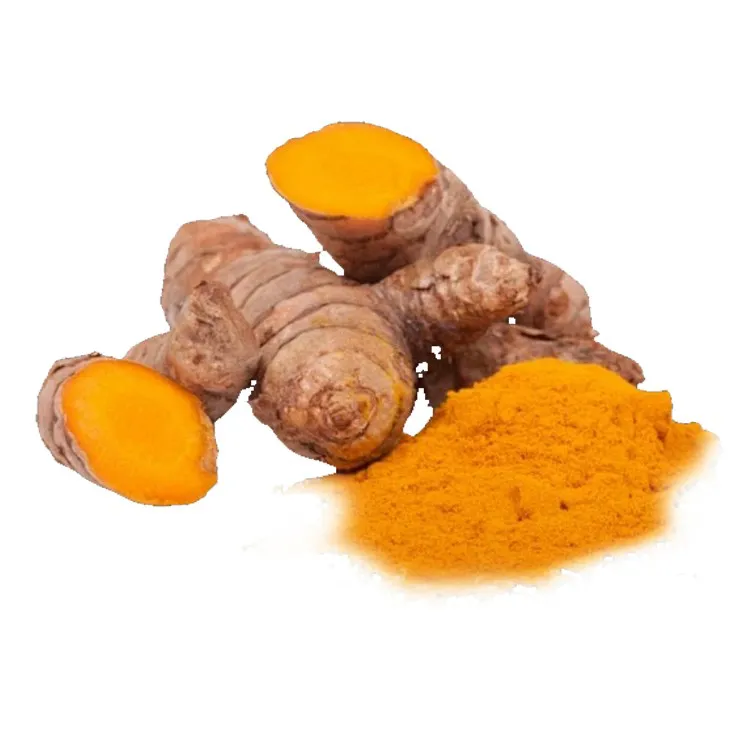
Curcumin, a natural polyphenolic compound, has been the focus of extensive research in recent years due to its diverse range of potential applications. It is derived from the rhizome of turmeric (Curcuma longa), a plant native to South Asia. Curcumin exhibits various biological activities, including antioxidant, anti - inflammatory, antimicrobial, and anticancer properties. These properties make it a highly promising compound for use in pharmaceuticals, nutraceuticals, cosmetics, and food industries. However, the extraction, separation, and identification of Curcumin from turmeric are complex processes that require careful consideration and the application of appropriate techniques.
2. Extraction of Curcumin
2.1 Solvent Extraction
- Solvent extraction is one of the most commonly used methods for Curcumin extraction. In this method, a suitable solvent is used to dissolve Curcumin from the turmeric matrix.
- Traditional solvents such as ethanol, methanol, and acetone have been widely employed. Ethanol, for example, is a popular choice due to its relatively low toxicity and good solubility for Curcumin.
- The extraction process typically involves grinding the turmeric rhizome into a fine powder, followed by soaking it in the solvent for a certain period of time. The solvent - Curcumin mixture is then filtered to remove the insoluble residues.
- However, solvent extraction has some limitations. One major drawback is the relatively low selectivity, which may result in the co - extraction of other components present in turmeric, such as oils and resins. This can lead to a lower purity of the Curcumin extract.

2.2 Supercritical Fluid Extraction (SFE)
- Supercritical fluid extraction has emerged as an advanced technique for Curcumin extraction. Supercritical fluids, such as carbon dioxide (CO₂), possess unique properties that make them ideal for extraction.
- At supercritical conditions (above its critical temperature and pressure), CO₂ has a density similar to that of a liquid, allowing it to dissolve Curcumin effectively. At the same time, it has the diffusivity of a gas, enabling it to penetrate the turmeric matrix rapidly.
- The SFE process is typically carried out in a closed system. The supercritical CO₂ is passed through the ground turmeric, and Curcumin is dissolved into the supercritical fluid. By adjusting the pressure and temperature, the selectivity of the extraction can be controlled.
- One of the main advantages of SFE is its high selectivity, which can result in a purer Curcumin extract compared to solvent extraction. Additionally, supercritical CO₂ is non - toxic, non - flammable, and easily removable from the extract, leaving no solvent residues.
- However, the equipment required for SFE is relatively expensive, which may limit its widespread use in some industries.

2.3 Other Extraction Methods
- There are also other extraction methods that have been explored for Curcumin extraction.
- For example, microwave - assisted extraction (MAE) utilizes microwave energy to heat the solvent - turmeric mixture, which can accelerate the extraction process. This method can reduce the extraction time compared to traditional solvent extraction.
- Ultrasonic - assisted extraction (UAE) is another alternative. The application of ultrasonic waves creates cavitation bubbles in the solvent, which helps to break down the cell walls of the turmeric and release Curcumin more efficiently.
3. Separation of Curcumin

3.1 Column Chromatography
- Column chromatography is a widely used method for the separation of Curcumin from the complex mixture obtained after extraction.
- In column chromatography, a stationary phase (such as silica gel or alumina) is packed into a column, and the crude Curcumin extract is loaded onto the top of the column.
- A mobile phase (a solvent or a mixture of solvents) is then passed through the column. Different components in the extract will have different affinities for the stationary and mobile phases, resulting in their separation as they move through the column.
- For Curcumin separation, the choice of stationary and mobile phases is crucial. For example, using a silica gel column with an appropriate solvent system can effectively separate Curcumin from other impurities.
- However, column chromatography can be a time - consuming process, especially when dealing with large - scale separations.
3.2 High - Performance Liquid Chromatography (HPLC)
- High - performance liquid chromatography is another powerful technique for Curcumin separation. HPLC offers high resolution and can separate Curcumin from closely related compounds.
- In HPLC, the sample is injected into a high - pressure liquid chromatography system, where it is carried by a mobile phase through a column packed with a stationary phase.
- The separation is based on the differential interactions between the Curcumin molecules and the stationary and mobile phases. By using different columns and mobile phase compositions, the separation of Curcumin can be optimized.
- HPLC is highly sensitive and can detect and quantify Curcumin at very low concentrations. This makes it suitable for quality control and analysis of Curcumin - containing products.
4. Identification of Curcumin

4.1 Spectroscopic Techniques
- Spectroscopic techniques play a crucial role in the identification of Curcumin.
- Ultraviolet - visible (UV - Vis) spectroscopy is one of the most commonly used methods. Curcumin has characteristic absorption peaks in the UV - Vis region, typically around 420 - 430 nm. By measuring the absorption spectrum of a sample, the presence of Curcumin can be preliminarily determined.
- Infrared (IR) spectroscopy can provide information about the functional groups present in Curcumin. The IR spectrum of Curcumin shows characteristic peaks corresponding to phenolic - OH groups, carbonyl groups, and aromatic rings, which can be used to confirm its chemical structure.
- Nuclear magnetic resonance (NMR) spectroscopy is a more powerful technique for the structural elucidation of Curcumin. Both ¹H - NMR and ¹³C - NMR spectra can provide detailed information about the hydrogen and carbon atoms in Curcumin, respectively. This allows for the accurate determination of its chemical structure and the identification of any impurities or isomers.
4.2 Mass Spectrometry (MS)
- Mass spectrometry is another important technique for Curcumin identification. MS measures the mass - to - charge ratio (m/z) of ions generated from the sample.
- Electrospray ionization - mass spectrometry (ESI - MS) and matrix - assisted laser desorption/ionization - mass spectrometry (MALDI - MS) are two commonly used ionization methods in Curcumin analysis.
- The mass spectrum of Curcumin can provide information about its molecular weight and fragmentation patterns. By comparing the obtained mass spectrum with the known spectra of Curcumin, the identity of the compound can be verified.
5. Conclusion
The extraction, separation, and identification of Curcumin are essential steps in understanding and harnessing the potential of this valuable compound. Different extraction methods, such as solvent extraction and supercritical fluid extraction, offer various advantages and limitations. Column chromatography and HPLC are effective separation techniques, while spectroscopic techniques and mass spectrometry are powerful tools for identification. Continued research in these areas will further improve our ability to obtain high - quality Curcumin and fully explore its applications in different fields.
FAQ:
What are the common solvent extraction methods for Curcumin?
Common solvent extraction methods for Curcumin include using organic solvents such as ethanol, acetone, or ethyl acetate. These solvents can dissolve Curcumin from the source material. For example, in some cases, a mixture of ethanol and water in a certain ratio can be used. The choice of solvent depends on factors like the solubility of Curcumin, the nature of the source material, and the efficiency of extraction.
How does supercritical fluid extraction work for Curcumin?
Supercritical fluid extraction (SFE) for Curcumin utilizes a supercritical fluid, often carbon dioxide. In the supercritical state, the fluid has properties between those of a liquid and a gas. It can penetrate the matrix containing Curcumin effectively. By adjusting the pressure and temperature, the solubility of Curcumin in the supercritical fluid can be controlled. This allows for selective extraction of Curcumin with advantages such as reduced solvent residue and high extraction efficiency.
What is the principle behind column chromatography for Curcumin separation?
Column chromatography for Curcumin separation is based on the differential adsorption and desorption of Curcumin and other components in the mixture on the stationary phase of the column. The stationary phase can be silica gel or other materials. Curcumin and other substances have different affinities for the stationary phase. As the mobile phase (a solvent or solvent mixture) passes through the column, Curcumin is separated from other components based on its unique interaction with the stationary and mobile phases.
Which advanced analytical techniques are used for Curcumin identification?
Advanced analytical techniques for Curcumin identification include high - performance liquid chromatography (HPLC), mass spectrometry (MS), and nuclear magnetic resonance (NMR). HPLC can separate Curcumin from other components and provide information about its purity. MS can determine the molecular weight and structure - related information of Curcumin. NMR is useful for elucidating the detailed chemical structure of Curcumin.
What are the factors affecting the extraction efficiency of Curcumin?
The factors affecting the extraction efficiency of Curcumin include the type of extraction method (e.g., solvent extraction or supercritical fluid extraction), the nature of the source material (such as the particle size, moisture content), the extraction conditions (temperature, pressure in the case of supercritical fluid extraction, and extraction time), and the type and concentration of the solvent used in solvent extraction.
Related literature
TAGS:


-

L-Arginine alpha-ketoglutarate
2024-12-05
-

Peppermint Oil
2024-12-05
-

Ginger Extract
2024-12-05
-

Lemon Balm Extract
2024-12-05
-

Feverfew Extract
2024-12-05
-

Mango flavored powder
2024-12-05
-

Citrus Aurantium Extract
2024-12-05
-

Boswellia Serrata Extract
2024-12-05
-

Lemon Extract
2024-12-05
-

Oyster Peptide
2024-12-05