


1. Introduction
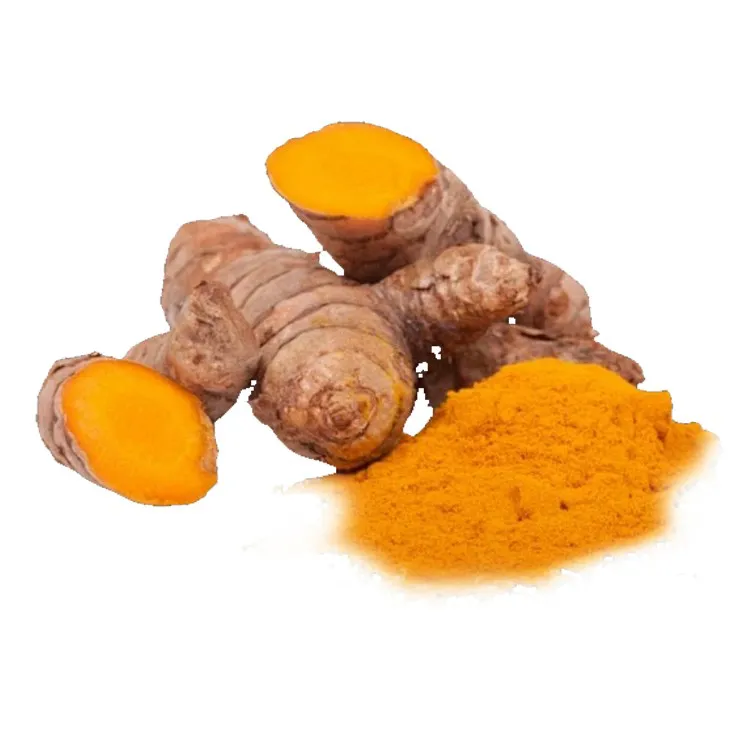
Turmeric, a common spice in Asian cuisine, has been widely recognized for its various health - promoting properties. The main bioactive compound in turmeric is Curcumin. Curcumin has antioxidant, anti - inflammatory, and anti - cancer properties, among others. Turmeric extract is a rich source of Curcumin, and the extraction, separation, and identification of Curcumin from this extract are crucial for its application in the pharmaceutical, food, and cosmetic industries.
2. Extraction process of Curcumin
2.1 Traditional extraction methods
- Solvent extraction: This is one of the most common traditional methods. Organic solvents such as ethanol, methanol, and acetone are often used. For example, in the extraction using ethanol, turmeric powder is soaked in ethanol for a certain period. The solvent penetrates the turmeric matrix and dissolves Curcumin. However, this method has some drawbacks. It may require a large amount of solvent, and the extraction efficiency may not be very high. Also, there are concerns about solvent residues in the final product.
- Hydrodistillation: In this method, water is used as the medium. Turmeric is boiled in water, and the volatile components, including Curcumin, are carried over with the steam. The steam is then condensed, and the Curcumin - containing liquid is collected. But the problem with hydrodistillation is that Curcumin has relatively low volatility, so the extraction yield is usually low.

2.2 Modern innovative extraction methods
- Supercritical fluid extraction (SFE): Supercritical carbon dioxide (CO₂) is a popular choice for SFE. The critical temperature and pressure of CO₂ are relatively easy to achieve. Under supercritical conditions, CO₂ has properties similar to both liquid and gas. It can penetrate the turmeric matrix effectively and extract Curcumin with high selectivity. Compared to traditional solvent extraction, SFE has the advantages of being environmentally friendly, having a high extraction rate, and leaving no solvent residues. For example, in a study, it was found that the extraction yield of Curcumin using SFE was significantly higher than that using traditional ethanol extraction.
- Ultrasonic - assisted extraction: Ultrasonic waves are applied during the extraction process. The ultrasonic cavitation effect can break the cell walls of turmeric more effectively, allowing the solvent to better access Curcumin. This method can significantly shorten the extraction time and improve the extraction efficiency. For instance, when ultrasonic - assisted extraction was carried out using ethanol as a solvent, the extraction time was reduced from several hours in traditional extraction to just a few minutes, while the extraction yield was also increased.
- Microwave - assisted extraction: Microwave energy is used to heat the extraction system. The microwaves can cause the polar molecules in turmeric, such as water molecules, to vibrate rapidly, generating heat. This internal heating can accelerate the extraction process. It can also improve the selectivity of Curcumin extraction. However, careful control of microwave power and extraction time is required to avoid the degradation of Curcumin.
3. Separation of Curcumin

3.1 Column chromatography
Column chromatography is a widely used method for separating Curcumin from the complex matrix of turmeric extract. A column is filled with a stationary phase, such as silica gel or alumina. The turmeric extract is loaded onto the top of the column, and then a mobile phase, which can be a solvent or a solvent mixture, is passed through the column. Curcumin has different affinities for the stationary and mobile phases compared to other components in the extract. As a result, it can be separated and eluted at a different time. For example, when using silica gel column chromatography, a non - polar solvent like hexane can be used as part of the mobile phase to initially elute non - polar impurities, and then a more polar solvent like ethyl acetate can be used to elute Curcumin.

3.2 High - performance liquid chromatography (HPLC)
HPLC is a powerful separation technique for Curcumin. It can achieve high - resolution separation. The turmeric extract is injected into a HPLC system, which consists of a pump, a column, and a detector. The column is usually a reversed - phase column, and the mobile phase is a carefully selected solvent mixture. The detector can monitor the elution of Curcumin, and based on the retention time and peak area, the amount and purity of Curcumin can be determined. HPLC has the advantage of being able to separate Curcumin from very similar compounds in the extract, and it can also be used for quantitative analysis.
3.3 Membrane separation
- Ultrafiltration: Ultrafiltration membranes with a certain molecular weight cut - off can be used. The turmeric extract is passed through the ultrafiltration membrane. Larger molecules, such as polysaccharides and proteins in the extract, are retained by the membrane, while Curcumin, which has a relatively smaller molecular weight, can pass through the membrane, achieving a certain degree of separation.
- Nanofiltration: Nanofiltration membranes can also be applied. They have a more precise molecular weight cut - off. Nanofiltration can further purify the Curcumin - containing solution obtained from ultrafiltration, removing smaller impurities and improving the purity of Curcumin.
4. Identification of Curcumin

4.1 Spectroscopic identification
- Ultraviolet - visible (UV - Vis) spectroscopy: Curcumin has characteristic absorption peaks in the UV - Vis region. The main absorption peak is around 420 - 430 nm. By measuring the UV - Vis spectrum of a sample suspected to contain Curcumin, and comparing it with the standard spectrum of Curcumin, we can preliminarily identify the presence of Curcumin. However, this method has some limitations as other compounds may also have absorption in this region, so it is mainly used for a quick and preliminary identification.
- Fourier - transform infrared (FT - IR) spectroscopy: FT - IR spectroscopy can provide information about the functional groups in Curcumin. Curcumin has characteristic absorption bands corresponding to its phenolic - OH groups, carbonyl groups, and aromatic rings. By analyzing the FT - IR spectrum of a sample, we can confirm the presence of these functional groups in Curcumin, which is a more specific identification method compared to UV - Vis spectroscopy.
- Nuclear magnetic resonance (NMR) spectroscopy: NMR spectroscopy can provide detailed structural information about Curcumin. Both ¹H - NMR and ¹³C - NMR spectra can be used. The chemical shifts and coupling constants in the NMR spectra can accurately identify the positions of different atoms in the Curcumin molecule. NMR spectroscopy is a very accurate method for identifying Curcumin, but it requires relatively expensive equipment and more sample preparation.
4.2 Other identification methods
- Mass spectrometry (MS): MS can determine the molecular weight of Curcumin and its fragmentation pattern. By ionizing Curcumin molecules and analyzing the mass - to - charge ratios of the resulting ions, we can accurately identify Curcumin. In addition, techniques such as liquid chromatography - mass spectrometry (LC - MS) can combine the separation ability of HPLC with the identification ability of MS, providing a more comprehensive analysis of Curcumin in turmeric extract.
- Thin - layer chromatography (TLC): TLC is a simple and cost - effective identification method. A small amount of the turmeric extract is spotted on a TLC plate coated with a stationary phase, such as silica gel. The plate is then developed in a mobile phase. Curcumin will move a certain distance on the plate according to its affinity for the stationary and mobile phases. By comparing the position of the spot of the sample with that of a standard Curcumin spot, we can identify Curcumin in the extract. However, the resolution of TLC is relatively low compared to HPLC.
5. Conclusion
In conclusion, the extraction, separation, and identification of Curcumin from turmeric extract are important aspects for its utilization. Traditional extraction methods have certain limitations, while modern innovative methods such as SFE, ultrasonic - assisted extraction, and microwave - assisted extraction offer higher extraction efficiencies. Column chromatography, HPLC, and membrane separation are effective separation techniques for Curcumin. Spectroscopic methods such as UV - Vis, FT - IR, and NMR spectroscopy, along with other methods like MS and TLC, can accurately identify Curcumin. With the continuous development of these techniques, the extraction of high - quality Curcumin from turmeric extract will be more efficient and reliable, which will further promote the application of Curcumin in various fields.
FAQ:
What are the traditional extraction methods of Curcumin from turmeric extract?
Traditional extraction methods of Curcumin from turmeric extract mainly include solvent extraction. For example, using organic solvents like ethanol, methanol or acetone. The turmeric powder is soaked in the solvent for a certain period, and then the solvent containing Curcumin is separated through filtration. After that, the solvent is evaporated to obtain crude Curcumin.
What are the modern innovative extraction methods for Curcumin?
Modern innovative extraction methods for Curcumin include supercritical fluid extraction. Supercritical carbon dioxide is often used as the extraction medium. This method has the advantages of being environmentally friendly, having a high extraction efficiency and being able to obtain high - quality Curcumin. Another method is microwave - assisted extraction, which can significantly shorten the extraction time by using microwave energy to enhance the mass transfer process during extraction.
Why is the separation of Curcumin from the turmeric extract complex matrix important?
The turmeric extract is a complex mixture containing many other components besides Curcumin. Separating Curcumin is important because it helps to obtain pure Curcumin for further applications such as in the pharmaceutical and food industries. Pure Curcumin can ensure the consistency and effectiveness of its biological activities, and also meets the requirements for accurate quality control and standardization in different fields.
What are the common separation strategies for Curcumin?
Common separation strategies for Curcumin include chromatography methods. For example, column chromatography can be used to separate Curcumin based on the different affinities of components in the extract to the stationary phase. High - performance liquid chromatography (HPLC) is also widely used, which can achieve high - resolution separation and purification of Curcumin. Another strategy is crystallization, by adjusting the solubility conditions of Curcumin in the solution to make it crystallize out.
How can Curcumin be identified with high precision?
High - precision identification of Curcumin can be achieved through spectroscopic methods. For example, ultraviolet - visible (UV - Vis) spectroscopy can be used to detect the characteristic absorption peaks of Curcumin in the ultraviolet and visible regions. Infrared (IR) spectroscopy can identify the functional groups in Curcumin molecules. Nuclear magnetic resonance (NMR) spectroscopy can provide detailed information about the structure of Curcumin at the atomic level. In addition, mass spectrometry (MS) can also be used to determine the molecular weight and molecular structure of Curcumin for accurate identification.
Related literature
TAGS:


-

Shikone Extract
2024-12-07
-

Aguaje Extract
2024-12-07
-

Astaxanthin
2024-12-07
-
Curcumin
2024-12-07
-

Grape Leaf Extract
2024-12-07
-

Black Garlic Extract
2024-12-07
-

Lavender Extract
2024-12-07
-

Sophora Japonica Flower Extract
2024-12-07
-

Eyebright Extract
2024-12-07
-

Kelp Extract Powder
2024-12-07