


1. Introduction
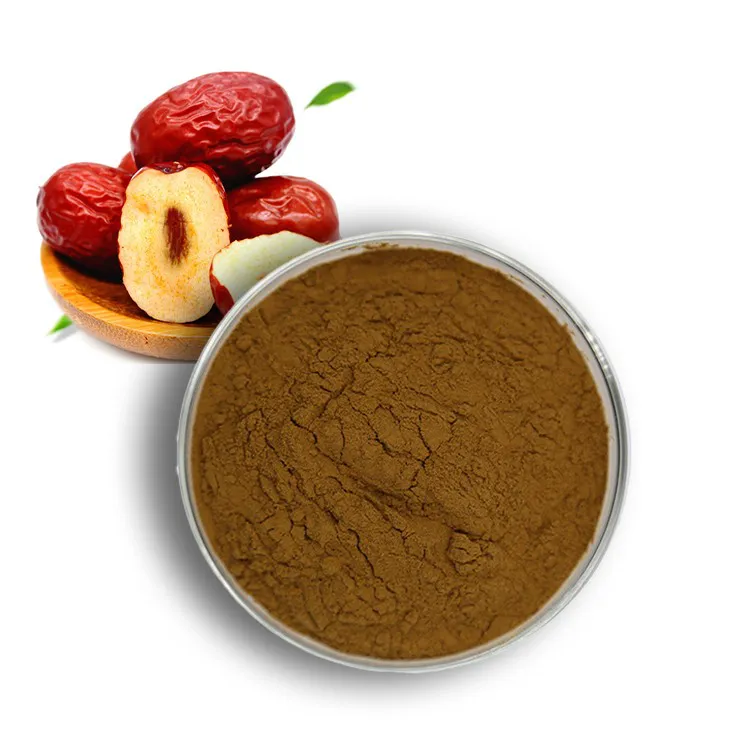
Jujube, a traditional and important fruit in many regions, has been widely studied for its various bioactive components. Cyclic adenosine monophosphate (cAMP) is one of the significant substances in jujube. It plays crucial roles in many biological processes. Understanding the extraction process, separation, and identification of cAMP in Jujube Extract is of great importance for both scientific research and potential applications in the fields of medicine, food, and health.
2. Importance of cAMP in Jujube
cAMP is involved in numerous physiological functions. In jujube, it may contribute to the regulation of cell growth, differentiation, and metabolism. It has been associated with antioxidant properties, immune - enhancing effects, and potential anti - inflammatory activities. The presence of cAMP in jujube also makes it a potential candidate for the development of functional foods and nutraceuticals.
3. Extraction Process of cAMP from Jujube Extract
3.1 Solvent Extraction
- One of the common methods for extracting cAMP from jujube is solvent extraction. Ethanol is often used as a solvent due to its relatively good solubility for cAMP and its compatibility with the jujube matrix.
- The process typically involves grinding the jujube samples into a fine powder. Then, the powder is mixed with a certain proportion of ethanol solution. For example, a ratio of 1:5 (jujube powder: ethanol solution) may be used.
- The mixture is then subjected to agitation for a specific period, usually several hours at a constant temperature. This helps to ensure the efficient extraction of cAMP from the jujube cells into the solvent.
- After agitation, the mixture is centrifuged to separate the supernatant, which contains the extracted cAMP, from the solid residue.
3.2 Acid - Base Extraction
- Acid - base extraction is another approach. By adjusting the pH of the extraction solution, the solubility and extraction efficiency of cAMP can be influenced.
- For instance, initially, the Jujube Extract can be acidified with a mild acid such as acetic acid. This helps to break down some of the complex structures in the jujube that may be binding cAMP.
- Subsequently, the pH can be adjusted to a more alkaline level using a base like sodium hydroxide. This change in pH can cause cAMP to be released from its bound forms and be more easily extracted into the solution.
- However, careful control of the pH is crucial as extreme pH values can lead to the degradation of cAMP or other unwanted chemical reactions.
4. Separation of cAMP from Jujube Extract

4.1 Chromatographic Separation
- High - performance liquid chromatography (HPLC) is a widely used method for separating cAMP from other components in the Jujube Extract.
- An appropriate column, such as a reversed - phase C18 column, is selected. The mobile phase composition is carefully optimized. For example, a mixture of water and methanol or acetonitrile in a certain ratio may be used as the mobile phase.
- The sample containing the extracted cAMP is injected into the HPLC system. The different components in the sample will have different retention times on the column based on their chemical properties, allowing for the separation of cAMP from other interfering substances.
- Another chromatographic technique, ion - exchange chromatography, can also be applied. If cAMP has a different charge state compared to other components in the Jujube Extract, ion - exchange chromatography can effectively separate it. Cation - exchange or anion - exchange resins can be used depending on the charge characteristics of cAMP.

4.2 Precipitation and Filtration
- Precipitation can be used as a simple separation method. By adding certain precipitating agents, some of the unwanted components in the Jujube Extract can be made to precipitate out.
- For example, salts such as ammonium sulfate can be added. Proteins and some large - molecular - weight impurities may precipitate, while cAMP remains in the solution.
- After precipitation, filtration is carried out to remove the precipitated solids. Membrane filtration or vacuum filtration can be used depending on the scale of the operation and the nature of the sample.
5. Identification of cAMP in Jujube Extract
5.1 Spectroscopic Methods
- Ultraviolet - visible (UV - Vis) spectroscopy can be used for the identification of cAMP. cAMP has characteristic absorption peaks in the UV - Vis region. By comparing the absorption spectrum of the sample from the Jujube Extract with that of a standard cAMP solution, a preliminary identification can be made.
- Fluorescence spectroscopy is also a valuable tool. cAMP may exhibit fluorescence properties under certain excitation and emission wavelengths. By measuring the fluorescence intensity and spectral characteristics, it can be further verified whether cAMP is present in the Jujube Extract.
5.2 Mass Spectrometry
- Mass spectrometry (MS) provides a more accurate and detailed identification of cAMP. Liquid chromatography - mass spectrometry (LC - MS) combines the separation ability of HPLC with the identification power of MS.
- The sample is first separated by HPLC and then introduced into the mass spectrometer. The mass spectrometer measures the mass - to - charge ratio (m/z) of the ions in the sample. The molecular weight of cAMP can be accurately determined, and its fragmentation pattern can be analyzed to confirm its identity.
- Another type of mass spectrometry, matrix - assisted laser desorption/ionization - time - of - flight mass spectrometry (MALDI - TOF MS), can also be used. It is especially useful for analyzing complex mixtures such as Jujube Extracts. The sample is mixed with a matrix material and then ionized by a laser. The ions are then detected based on their time - of - flight in the mass spectrometer, allowing for the identification of cAMP.
6. Challenges and Future Directions
- One of the main challenges in the extraction, separation, and identification of cAMP from Jujube Extract is the presence of interfering substances. Jujube contains a large number of other compounds such as sugars, proteins, and polyphenols, which can affect the extraction efficiency, separation accuracy, and identification reliability.
- The development of more selective and efficient extraction methods is needed. For example, the exploration of new solvents or extraction techniques that can specifically target cAMP while minimizing the extraction of interfering substances.
- In terms of separation, improving the resolution of chromatographic methods and reducing the analysis time are important future directions. This may involve the development of new column materials or mobile phase compositions.
- For identification, enhancing the sensitivity and selectivity of spectroscopic and mass spectrometry methods is crucial. This could lead to more accurate and rapid identification of cAMP in Jujube Extracts, especially in complex matrices.
- Furthermore, more research is required to fully understand the biological functions and potential applications of cAMP in jujube. This will help to promote the development of jujube - based products with high added value in the fields of medicine, food, and health.
7. Conclusion
The extraction process, separation, and identification of cAMP in Jujube Extract are complex but important tasks. Through solvent extraction, acid - base extraction, chromatographic separation, precipitation - filtration, spectroscopic methods, and mass spectrometry, cAMP can be effectively dealt with. However, there are still challenges to be overcome. Future research should focus on improving the existing methods and exploring new techniques to better understand the role of cAMP in jujube and to promote its potential applications.
FAQ:
What are the common extraction methods for cyclic adenosine monophosphate in Jujube Extract?
There are several common extraction methods for cyclic adenosine monophosphate (cAMP) in Jujube Extract. One approach is solvent extraction, which uses appropriate solvents to dissolve cAMP from the Jujube Extract. Another method could be enzymatic hydrolysis followed by extraction, where specific enzymes are used to break down the complex components in the Jujube Extract to make cAMP more accessible for extraction.
Why is the separation of cyclic adenosine monophosphate from other components in Jujube Extract important?
The separation of cAMP from other components in Jujube Extract is crucial. Firstly, it helps in obtaining pure cAMP for accurate analysis and study. Other components in the Jujube Extract may interfere with the determination of cAMP's properties and functions. Secondly, pure cAMP is required for further research such as in vitro and in vivo studies to understand its specific biological activities and potential health benefits without the confounding effects of other substances.
What techniques are used for the identification of cyclic adenosine monophosphate in Jujube Extract?
For the identification of cAMP in Jujube Extract, techniques like high - performance liquid chromatography (HPLC) are often used. HPLC can separate and detect cAMP based on its chemical properties. Another technique is mass spectrometry (MS), which can provide detailed information about the molecular weight and structure of cAMP, helping in its accurate identification.
How does the extraction process of cyclic adenosine monophosphate affect its yield in Jujube Extract?
The extraction process significantly affects the yield of cAMP in Jujube Extract. If the extraction conditions such as solvent type, extraction time, and temperature are not optimized, the yield may be low. For example, using a solvent that has a low solubility for cAMP will result in less cAMP being extracted. Also, insufficient extraction time may not allow complete extraction of cAMP from the jujube matrix, leading to a lower yield.
What are the potential applications of cyclic adenosine monophosphate isolated from Jujube Extract?
Cyclic adenosine monophosphate isolated from Jujube Extract has several potential applications. In the field of medicine, it may have implications in regulating certain physiological processes as cAMP is involved in cell signaling. It could also be used in the development of nutraceuticals or functional foods, as jujube is a traditional food with potential health - promoting properties, and cAMP may contribute to these beneficial effects.
Related literature
- Isolation and Identification of Cyclic Adenosine Monophosphate from Natural Products"
- "Advances in the Extraction and Separation of Bioactive Compounds in Jujube"
- "The Role of Cyclic Adenosine Monophosphate in Traditional Medicinal Plants"


-

Nettle Root Extract
2024-12-06
-

White Willow Bark Extract
2024-12-06
-

Cactus Extract
2024-12-06
-

Kidney Bean Extract
2024-12-06
-

Alisma Extract
2024-12-06
-

Red Clover Extract
2024-12-06
-

Saw Palmetto Extract
2024-12-06
-

Moringa powder
2024-12-06
-

Europen Bilberry Extract
2024-12-06
-

Rutin
2024-12-06