


1. Introduction
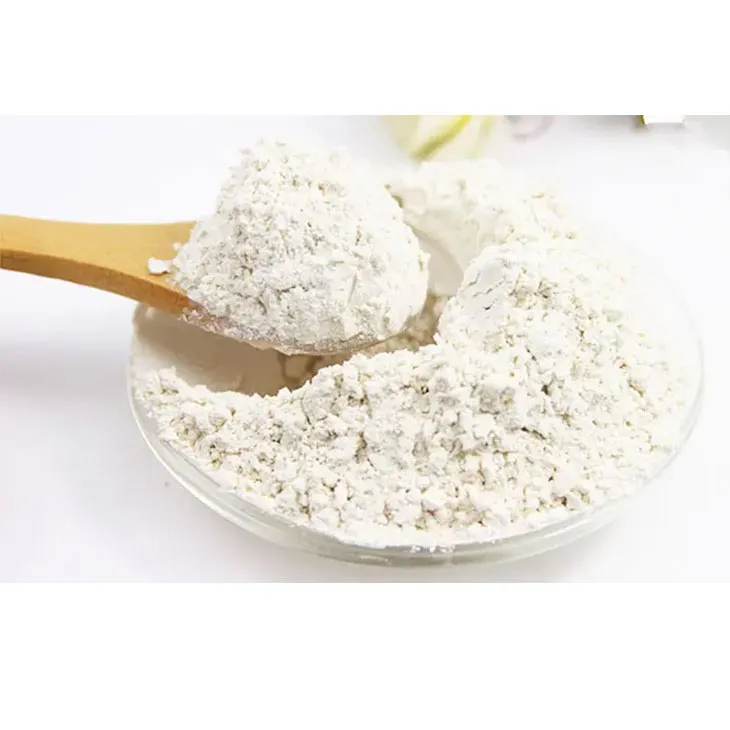
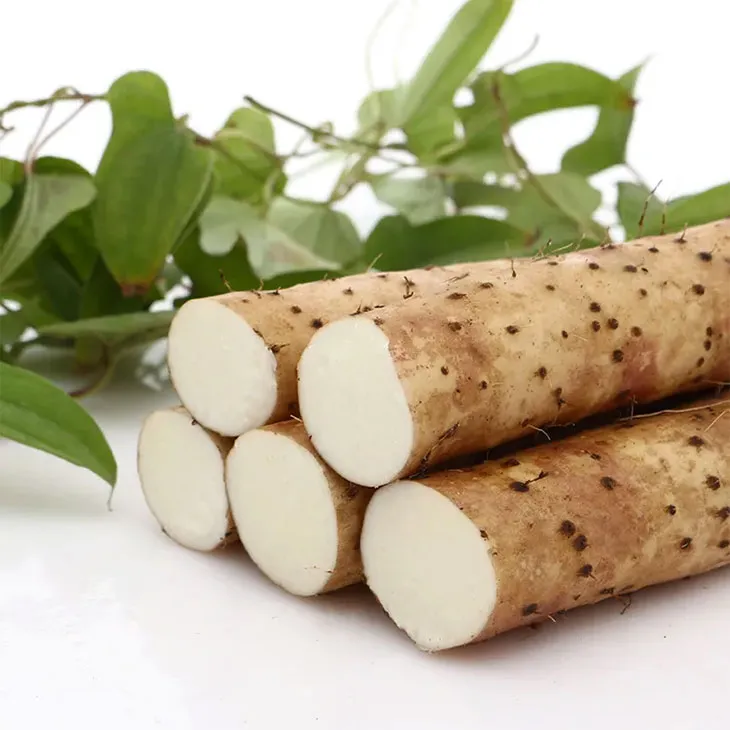
Yam is a well - known tuberous plant that has been widely used in both food and traditional medicine. The mucilage in Yam Extracts is a complex substance that has attracted increasing attention in recent years. It is believed to possess various biological activities and potential applications. Understanding the extraction process, separation, and identification of this mucilage is crucial for its further exploration and utilization.
2. Extraction Process of Yam Mucilage
2.1 Traditional Extraction Methods
2.1.1 Maceration
- Maceration is one of the simplest traditional extraction methods. In this process, yam slices or powder are soaked in a suitable solvent, usually water or a water - alcohol mixture. For example, yam pieces are immersed in water at room temperature for a certain period, typically several hours to a few days.
- The solvent gradually penetrates the yam tissue, dissolving the mucilage. However, this method is relatively time - consuming, and the extraction efficiency may not be very high.
2.1.2 Decoction
- Decoction involves boiling yam materials in water. The yam is cut into small pieces and then boiled in a certain amount of water for a specific time, usually around 30 minutes to several hours.
- During boiling, the heat helps to break down the cell walls of the yam, releasing the mucilage into the water. But, some of the heat - sensitive components in the mucilage may be degraded during this process.

2.2 Modern Extraction Methods
2.2.1 Ultrasonic - Assisted Extraction
- Ultrasonic - assisted extraction utilizes ultrasonic waves to enhance the extraction process. The yam samples are placed in a solvent, and ultrasonic waves are applied.
- The ultrasonic waves create cavitation bubbles in the solvent. When these bubbles collapse, they generate high - pressure and high - temperature micro - environments, which can effectively break the cell walls of the yam, facilitating the release of mucilage. This method can significantly reduce the extraction time and improve the extraction efficiency compared to traditional methods.
2.2.2 Microwave - Assisted Extraction
- Microwave - assisted extraction is another modern technique. In this method, the yam and the solvent are placed in a microwave - transparent container and exposed to microwaves.
- The microwaves heat the solvent and the yam rapidly and uniformly. The rapid heating causes the expansion of cells in the yam, leading to the rupture of cell walls and the release of mucilage. This method is also time - efficient and can achieve a relatively high extraction yield.
2.2.3 Enzyme - Assisted Extraction
- Enzyme - assisted extraction involves the use of specific enzymes to break down the cell walls of the yam more selectively. For example, cellulase or pectinase can be used.
- The enzymes are added to the yam - solvent mixture, and the reaction is carried out under suitable conditions, such as a specific pH and temperature. The enzymes hydrolyze the cell wall components, making it easier for the mucilage to be released. This method can improve the quality of the extracted mucilage as it is more gentle compared to some other extraction methods.
3. Separation of Yam Mucilage

3.1 Filtration
3.1.1 Gravity Filtration
- After the extraction process, the resulting mixture contains the mucilage along with other impurities such as yam debris and insoluble substances. Gravity filtration is a simple and commonly used method for the initial separation. The mixture is poured through a filter paper or a porous membrane in a funnel under the force of gravity.
- This method can remove larger particles, but it may not be very effective for separating finer impurities or colloidal particles present in the mucilage.
3.1.2 Vacuum Filtration
- Vacuum filtration is an improvement over gravity filtration. A vacuum is applied below the filter medium, which speeds up the filtration process. The pressure difference created by the vacuum helps to draw the liquid through the filter more quickly.
- It can effectively remove a larger amount of liquid from the mucilage - containing mixture, leaving behind a more concentrated mucilage. However, it may still not be sufficient for obtaining highly pure mucilage.
3.2 Centrifugation
3.2.1 Low - Speed Centrifugation
- Centrifugation is another important separation method. Low - speed centrifugation can be used to separate the mucilage from heavier particles such as yam cell fragments. The sample is placed in a centrifuge tube and spun at a relatively low speed, usually a few thousand revolutions per minute.
- The heavier particles sediment at the bottom of the tube, while the mucilage remains in the supernatant. This method is relatively simple and can be used as an initial step in the purification process.
3.2.2 High - Speed Centrifugation
- High - speed centrifugation is used when a higher degree of purification is required. By spinning the sample at a much higher speed, typically tens of thousands of revolutions per minute, even finer particles and impurities can be separated from the mucilage.
- The mucilage obtained after high - speed centrifugation is relatively purer, but this process may also cause some aggregation or loss of certain components in the mucilage.
3.3 Dialysis
3.3.1 Principle of Dialysis
- Dialysis is a method based on the difference in molecular size. The mucilage - containing solution is placed in a dialysis bag, which is a semi - permeable membrane. Small molecules such as salts and sugars can pass through the membrane, while the larger mucilage molecules are retained inside the bag.
- This process is useful for removing small - molecule impurities from the mucilage, thus purifying it further.
3.3.2 Dialysis Conditions
- The choice of dialysis buffer and the duration of dialysis are important factors. The buffer should be selected according to the properties of the mucilage and the impurities to be removed. The dialysis time should be long enough to ensure effective removal of impurities but not so long as to cause damage to the mucilage.
4. Identification of Yam Mucilage
4.1 Chemical Composition Analysis
4.1.1 Carbohydrate Analysis
- The mucilage in yam is mainly composed of carbohydrates. One of the common methods for carbohydrate analysis is the use of colorimetric assays. For example, the phenol - sulfuric acid method can be used to determine the total carbohydrate content in the mucilage.
- Chromatographic techniques such as high - performance liquid chromatography (HPLC) and gas chromatography (GC) can also be applied to analyze the specific types of carbohydrates present in the mucilage, such as glucose, fructose, and polysaccharides.
4.1.2 Protein Analysis
- Although the protein content in yam mucilage may be relatively low, it is still important to analyze it. The Bradford assay is a simple and commonly used method for protein quantification.
- For more detailed protein analysis, techniques such as sodium dodecyl sulfate - polyacrylamide gel electrophoresis (SDS - PAGE) can be used to separate and identify the proteins present in the mucilage.
4.1.3 Other Components
- In addition to carbohydrates and proteins, yam mucilage may also contain other components such as lipids, minerals, and phenolic compounds. Lipid analysis can be carried out using methods like Soxhlet extraction followed by gravimetric or chromatographic analysis.
- For mineral analysis, techniques such as atomic absorption spectrometry (AAS) or inductively coupled plasma - optical emission spectrometry (ICP - OES) can be used. Phenolic compounds can be analyzed by colorimetric assays or high - performance liquid chromatography.
4.2 Physical Property Characterization
4.2.1 Viscosity Measurement
- Viscosity is an important physical property of mucilage. The viscosity of yam mucilage can be measured using a viscometer. Different extraction methods and purification steps may result in mucilage with different viscosities.
- The viscosity is affected by factors such as the concentration of the mucilage, temperature, and the presence of other substances. Measuring the viscosity can provide information about the quality and consistency of the mucilage.
4.2.2 Rheological Behavior
- Rheological studies can provide more in - depth understanding of the flow and deformation properties of yam mucilage. Oscillatory rheometry can be used to investigate the viscoelastic properties of the mucilage, such as its storage modulus (G') and loss modulus (G'').
- The rheological behavior of the mucilage can be influenced by factors like temperature, shear rate, and the composition of the mucilage. Understanding the rheological behavior is important for applications such as in the food and pharmaceutical industries.
4.2.3 Microscopic Observation
- Microscopic techniques such as optical microscopy and electron microscopy can be used to observe the structure of yam mucilage. Optical microscopy can provide a general view of the mucilage at a relatively low magnification, showing the presence of particles and the overall texture.
- Electron microscopy, such as scanning electron microscopy (SEM) or transmission electron microscopy (TEM), can provide more detailed information about the microstructure of the mucilage, such as the shape and arrangement of polymer chains.
5. Conclusion
The extraction process, separation, and identification of mucilage in Yam Extracts are complex but important aspects for the full utilization of this valuable substance. Traditional extraction methods have their limitations, while modern methods offer improved efficiency and quality. Separation techniques play a crucial role in obtaining pure mucilage, and identification methods help to understand its chemical composition and physical properties. Further research is still needed to optimize these processes and explore more potential applications of yam mucilage in various fields such as food, medicine, and cosmetics.
FAQ:
What are the traditional methods for extracting mucilage in Yam Extracts?
Traditional methods for extracting mucilage in Yam Extracts may include simple solvent extraction. For example, using water as a solvent. The yam is typically crushed or sliced and then soaked in water. After a period of time, the mucilage will dissolve in the water. Another traditional approach could be a form of mechanical extraction where the yam is mashed and the mucilage is separated from the solid parts through filtration or centrifugation.
How does modern technology improve the extraction process of yam mucilage?
Modern technology offers several improvements to the extraction process. For instance, advanced enzymatic extraction can be used. Specific enzymes can break down the cell walls of the yam more effectively, releasing the mucilage more completely. Also, ultrasonic - assisted extraction is a modern method. Ultrasonic waves create cavitation bubbles in the solvent, which helps in better penetration into the yam tissue and thus more efficient extraction of the mucilage. Supercritical fluid extraction is another modern technique. It uses supercritical fluids, like supercritical CO₂, which has good solubility and diffusivity properties, enabling a more selective and efficient extraction of the mucilage.
What are the key steps in the separation of yam mucilage?
The key steps in the separation of yam mucilage often start with a filtration step. After the initial extraction, the mixture is filtered to remove large solid particles. Centrifugation can also be used to separate the mucilage from other components based on their different densities. Another important step is dialysis. If there are small - molecular - weight impurities in the mucilage extract, dialysis can be used to remove them by allowing only the small molecules to pass through a semi - permeable membrane while retaining the mucilage. Precipitation methods can also be applied. By adding certain chemicals, the mucilage can be made to precipitate out of the solution, allowing for its isolation.
How can the chemical composition of yam mucilage be determined?
The chemical composition of yam mucilage can be determined through various analytical techniques. Spectroscopic methods such as infrared spectroscopy (IR) can be used. IR spectroscopy can identify the functional groups present in the mucilage. Nuclear magnetic resonance (NMR) spectroscopy is also very useful. It can provide detailed information about the molecular structure of the components in the mucilage. Chromatographic techniques like high - performance liquid chromatography (HPLC) are effective in separating and identifying the different compounds in the mucilage. Elemental analysis can also be carried out to determine the elemental composition of the mucilage.
What are the important properties of yam mucilage?
Yam mucilage has several important properties. It has good thickening properties, which means it can increase the viscosity of a solution. This makes it potentially useful in the food industry for products like sauces and jellies. It also has water - holding capacity. This property allows it to retain water, which can be beneficial in applications where moisture retention is important, such as in some cosmetic products. In addition, yam mucilage may have certain biological activities, such as antioxidant or antibacterial properties, which are of interest in the pharmaceutical and nutraceutical industries.
Related literature
- Extraction and Characterization of Mucilage from Yam (Dioscorea spp.)"
- "Modern Approaches in Yam Mucilage Separation and Identification"
- "The Chemical Composition and Properties of Yam Extract Mucilage: A Comprehensive Review"


-

Rutin
2024-12-06
-

Lemon Extract
2024-12-06
-

Genistein
2024-12-06
-

S-Adenosyl L-methionine(SAMe)
2024-12-06
-

Hops Extract
2024-12-06
-

Wheat Germ Extract
2024-12-06
-

Hawthorn powder
2024-12-06
-

Troxerutin
2024-12-06
-

Milk Thistle Extract
2024-12-06
-

Green Tea Extract
2024-12-06