


1. Introduction
Jujube, a common fruit in many regions, has been long recognized for its potential health - promoting properties. Among the various bioactive components in jujube, polysaccharides have attracted significant attention. Polysaccharides are complex carbohydrates that play crucial roles in many biological processes. Understanding the extraction, separation, and identification of polysaccharides in Jujube Extracts is essential for further exploring their functions and potential applications in the fields of medicine, food, and cosmetics.
2. Extraction of Polysaccharides from Jujube Extracts
2.1. Selection of Raw Materials
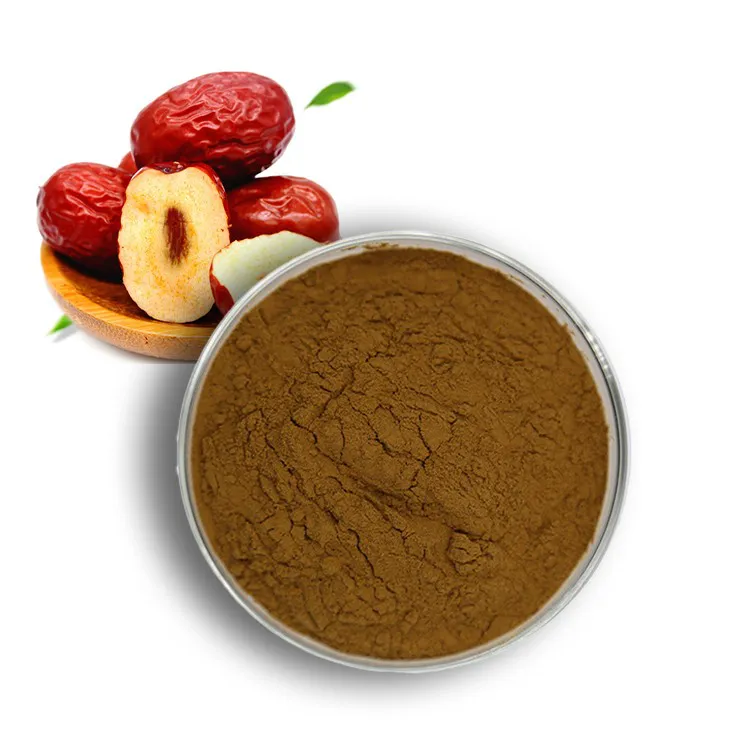
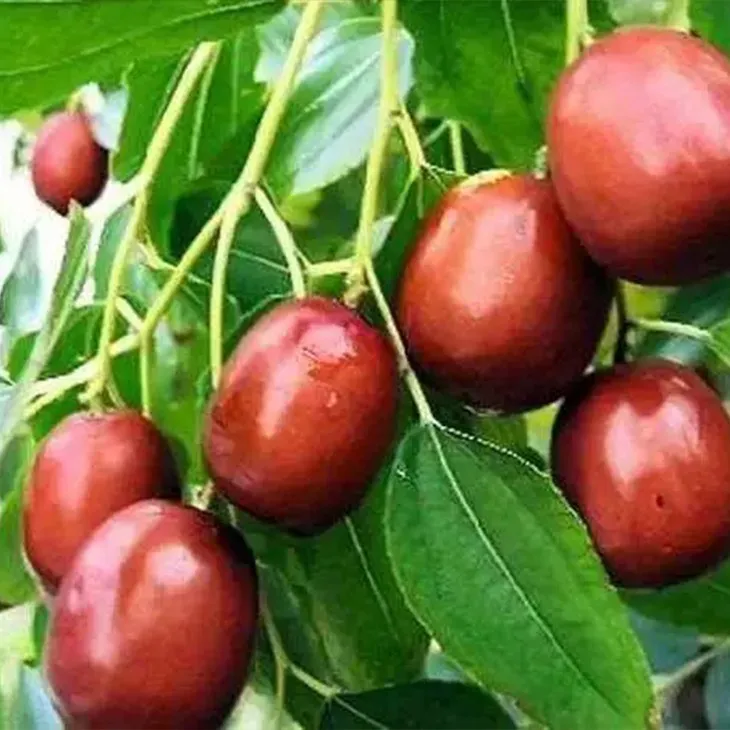
The quality of jujube used as the raw material significantly affects the extraction of polysaccharides. High - quality jujubes, which are fully ripe, free from diseases and pests, should be selected. Different varieties of jujubes may also contain different amounts and types of polysaccharides. For example, some traditional Chinese jujube varieties are known to have relatively high polysaccharide contents.
2.2. Pretreatment of Jujube
Before extraction, jujube needs to be pretreated. Firstly, the jujubes are washed thoroughly to remove dirt and impurities. Then, they are dried to a certain moisture content. Drying can be carried out using natural drying methods such as sun - drying or artificial drying methods like oven - drying. After drying, the jujubes are usually ground into powder to increase the surface area for subsequent extraction.

2.3. Extraction Methods
- Hot - Water Extraction: This is one of the most commonly used methods. Jujube powder is soaked in hot water at a certain temperature (usually between 50 - 90°C) for a specific period (e.g., 1 - 3 hours). During this process, polysaccharides are dissolved in the hot water. The advantage of this method is its simplicity and low cost. However, it may also extract some other impurities simultaneously.
- Enzymatic Extraction: Enzymes can be used to break down the cell walls of jujube more effectively, thus facilitating the release of polysaccharides. For example, cellulase and pectinase can be added to the jujube powder suspension. The enzymatic reaction is carried out under specific conditions of temperature, pH, and enzyme concentration. This method can generally obtain polysaccharides with higher purity compared to hot - water extraction, but it is more complex and requires more precise control of reaction conditions.
- Ultrasonic - Assisted Extraction: Ultrasonic waves can create cavitation effects, which can disrupt the cell structure of jujube and enhance the mass transfer of polysaccharides from the cells to the extraction solvent. When using this method, jujube powder is placed in the extraction solvent (such as water or buffer solution), and ultrasonic treatment is carried out for a certain time (usually 15 - 60 minutes). Ultrasonic - assisted extraction can significantly shorten the extraction time and improve the extraction efficiency.
3. Separation of Polysaccharides

3.1. Filtration
After extraction, the resulting mixture contains polysaccharides along with other substances such as cell debris, proteins, and small molecules. Filtration is the first step in separation. A filter with an appropriate pore size can be used to remove large - sized impurities such as cell debris. For example, a filter paper or a membrane filter with a pore size of 0.2 - 0.45 μm can be employed. This helps to obtain a relatively clear extract containing polysaccharides.
3.2. Precipitation
- Ethanol Precipitation: Ethanol is commonly used to precipitate polysaccharides. The extract obtained after filtration is slowly added with ethanol to a final concentration of usually 70 - 80%. As the ethanol concentration increases, polysaccharides will gradually precipitate out due to the change in solubility. The precipitated polysaccharides can be collected by centrifugation or filtration.
- Isopropanol Precipitation: Isopropanol can also be used for precipitation. Similar to ethanol, when the appropriate concentration of isopropanol is reached, polysaccharides will precipitate. However, different polysaccharides may have different precipitation behaviors with isopropanol compared to ethanol, which can be used for the preliminary separation of different types of polysaccharides.
3.3. Chromatographic Separation
- Size - Exclusion Chromatography (SEC): SEC separates polysaccharides based on their molecular size. In a SEC column, the stationary phase consists of porous beads with different pore sizes. Smaller polysaccharides can enter the pores of the beads more easily and thus have a longer retention time, while larger polysaccharides are eluted faster. This method can effectively separate polysaccharides with different molecular weights.
- Ion - Exchange Chromatography (IEC): IEC is based on the charge differences of polysaccharides. If polysaccharides have ionizable groups, they can interact with the ion - exchange resin in the column. By adjusting the pH and ionic strength of the elution buffer, different polysaccharides can be selectively eluted. For example, positively charged polysaccharides can be retained on a negatively charged resin and then eluted by changing the buffer conditions.
4. Identification of Polysaccharides
4.1. Chemical Composition Analysis
- Monosaccharide Composition: Determining the monosaccharide composition is an important part of polysaccharide identification. Hydrolysis of polysaccharides can be carried out using acid hydrolysis methods, such as hydrolysis with sulfuric acid or hydrochloric acid. After hydrolysis, the resulting monosaccharides can be analyzed by methods such as high - performance liquid chromatography (HPLC) or gas chromatography (GC). Common monosaccharides in jujube polysaccharides include glucose, fructose, and galactose.
- Functional Group Analysis: Various spectroscopic techniques can be used to analyze the functional groups of polysaccharides. For example, infrared spectroscopy (IR) can detect characteristic absorption peaks of functional groups such as hydroxyl, carbonyl, and glycosidic bonds. Nuclear magnetic resonance (NMR) spectroscopy can provide more detailed information about the structure and chemical environment of the polysaccharide, such as the configuration of monosaccharides and the linkage types between them.
4.2. Molecular Weight Determination
- Static Light Scattering (SLS): SLS measures the scattering of light by polysaccharides in solution. By analyzing the scattering intensity, the molecular weight and the size of the polysaccharide in solution can be determined. This method is suitable for polysaccharides with relatively high molecular weights.
- Gel Permeation Chromatography - Multi - Angle Laser Light Scattering (GPC - MALLS): GPC - MALLS combines the separation ability of gel permeation chromatography with the molecular weight determination by multi - angle laser light scattering. It can accurately measure the molecular weight distribution of polysaccharides during the separation process.
4.3. Structural Characterization
- X - ray Diffraction (XRD): XRD can be used to study the crystalline structure of polysaccharides. Although polysaccharides are generally semi - crystalline or amorphous, XRD can still provide some information about the short - range order and the packing of polysaccharide chains.
- Scanning Electron Microscopy (SEM): SEM can observe the surface morphology of polysaccharides at a high magnification. It can show the shape, size, and aggregation state of polysaccharide particles, which is helpful for understanding the physical properties of polysaccharides.
5. Conclusion
The extraction, separation, and identification of polysaccharides in Jujube Extracts are complex but important processes. Through appropriate extraction methods, we can obtain polysaccharides from jujube with high efficiency. The separation techniques can purify the polysaccharides to different degrees, and the identification methods can comprehensively analyze their chemical composition, molecular weight, and structure. Understanding these aspects of jujube polysaccharides can provide a basis for further exploring their health - promoting functions and potential applications in various industries.
FAQ:
What are the common extraction methods for polysaccharides in Jujube Extracts?
Common extraction methods for polysaccharides in Jujube Extracts include hot water extraction, ultrasonic - assisted extraction, and enzymatic extraction. Hot water extraction is a traditional method, which uses high - temperature water to dissolve polysaccharides from jujube. Ultrasonic - assisted extraction can enhance the extraction efficiency by using ultrasonic waves to break cell walls and promote the release of polysaccharides. Enzymatic extraction uses specific enzymes to break down the cell wall components, making polysaccharides more easily extracted.
How can polysaccharides in Jujube Extracts be separated?
Polysaccharides in Jujube Extracts can be separated by methods such as chromatography. For example, gel filtration chromatography can separate polysaccharides according to their molecular size. Ion - exchange chromatography can be used to separate polysaccharides based on their charge properties. These separation methods help to obtain relatively pure polysaccharide fractions for further study.
What are the important identification procedures for jujube polysaccharides?
Important identification procedures for jujube polysaccharides include chemical analysis and spectroscopic methods. Chemical analysis may involve determination of monosaccharide composition through hydrolysis and subsequent analysis. Spectroscopic methods such as infrared spectroscopy (IR) and nuclear magnetic resonance (NMR) spectroscopy are used to analyze the structure and functional groups of polysaccharides, which can help in identifying the characteristics of jujube polysaccharides.
What are the potential health - promoting functions of jujube polysaccharides?
Jujube polysaccharides may have several potential health - promoting functions. They may have antioxidant properties, which can help in scavenging free radicals in the body. They may also have immunomodulatory effects, potentially enhancing the body's immune system. Additionally, some studies suggest that they could have anti - diabetic or anti - inflammatory effects, although more research is needed to fully understand these functions.
What factors can affect the extraction of polysaccharides from jujube?
Factors that can affect the extraction of polysaccharides from jujube include extraction time, temperature, solvent - to - material ratio, and the type of extraction method used. Longer extraction time and higher temperature may generally increase the extraction yield, but excessive values may also cause degradation of polysaccharides. The solvent - to - material ratio affects the concentration gradient and mass transfer during extraction. Different extraction methods have different efficiencies and selectivity, which also impact the extraction outcome.
Related literature
- Study on the Extraction and Bioactivity of Polysaccharides from Jujube"
- "Isolation, Purification and Structural Characterization of Jujube Polysaccharides"
- "Polysaccharide in Jujube: Properties, Extraction and Health Benefits"


-

Plantain extract
2024-12-07
-

Vitamin D3
2024-12-07
-

Alisma Extract
2024-12-07
-

Genistein
2024-12-07
-

L-Tyrosine
2024-12-07
-

Chasteberry Extract
2024-12-07
-

Tormentil Extract
2024-12-07
-

Golden Seal Extract
2024-12-07
-

Pine bark Extract Powder
2024-12-07
-

Hericium erinaceus extract powder
2024-12-07