


1. Introduction
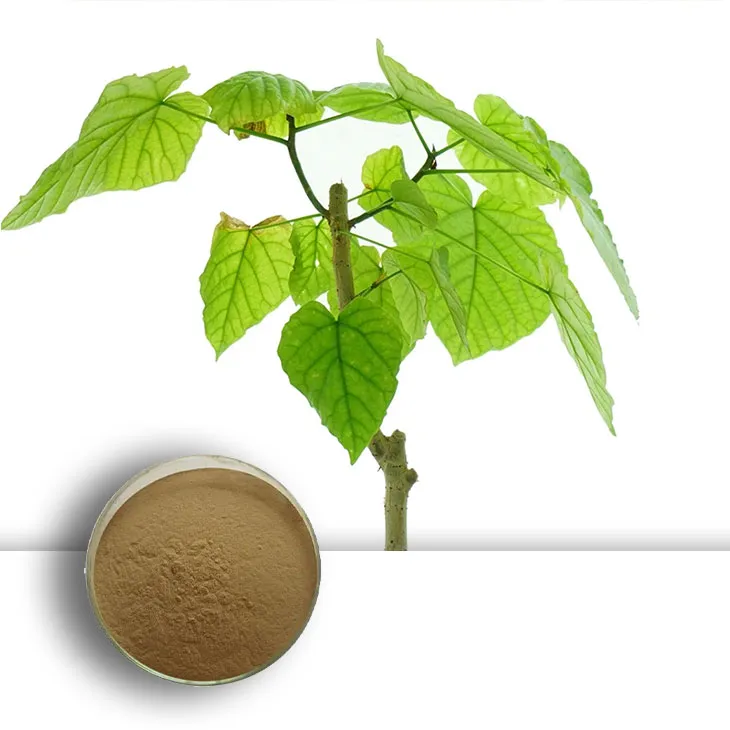
Mulberry leaf Extract has gained significant attention in recent years due to its numerous health benefits and potential applications in various industries. The extraction of valuable components from mulberry leaves requires efficient and reliable production methods. This article will delve into the different production methods for Mulberry leaf Extract, highlighting their advantages and disadvantages.
2. Soxhlet Extraction
Soxhlet extraction is a well - known and widely used method in the production of Mulberry leaf Extract. It is based on the principle of continuously cycling the solvent through the mulberry leaf sample.
2.1 Working Principle
The solvent is heated in a flask, and its vapors rise into a condenser where they are cooled and condensed back into a liquid. This liquid then drips onto the mulberry leaf sample placed in a thimble. The solvent extracts the desired substances, such as chlorogenic acid, from the leaves. The extract - laden solvent then siphons back into the flask, and the cycle repeats.

2.2 Advantages
- It is a relatively simple method that does not require complex equipment. - It can achieve a relatively high extraction yield for some components in mulberry leaves.
2.3 Disadvantages
- Long Extraction Time: The Soxhlet extraction process can be quite time - consuming. It may take several hours to days to complete the extraction, depending on the nature of the sample and the substances being extracted. - Large Solvent Consumption: A significant amount of solvent is required for the Soxhlet extraction process. This not only increases the cost but also poses environmental concerns due to the need for solvent disposal.
3. Pressurized Liquid Extraction
Pressurized Liquid Extraction (PLE), also known as Accelerated Solvent Extraction (ASE), is an emerging and more advanced method for Mulberry leaf Extract production.
3.1 Working Principle
PLE operates at elevated pressure and temperature. The high pressure keeps the solvent in a liquid state even at temperatures above its normal boiling point. This allows for more efficient extraction as the solubility of the active ingredients in the solvent is increased. The sample and the solvent are placed in a sealed extraction cell, and the extraction is carried out under controlled pressure and temperature conditions.
3.2 Advantages
- High Extraction Rate: The combination of high pressure and temperature significantly improves the extraction rate of active ingredients from mulberry leaves. This means that a more complete extraction can be achieved in a shorter time compared to Soxhlet extraction. - Reduced Solvent Consumption: Since the extraction is more efficient, less solvent is required. This not only reduces the cost but also has a positive environmental impact. - Good Reproducibility: The controlled conditions in PLE ensure good reproducibility of the extraction process, which is important for the quality control of the Mulberry leaf Extract.
3.3 Disadvantages
- The equipment for PLE is more complex and expensive compared to Soxhlet extraction equipment. - There may be some safety concerns associated with operating at high pressure and temperature, requiring proper training and safety measures.
4. Purification Steps
After the extraction process, purification steps are crucial to obtain a high - quality Mulberry leaf Extract. One of the most commonly used techniques for purification and analysis is Chromatographic Techniques, specifically High - Performance Liquid Chromatography (HPLC).
4.1 High - Performance Liquid Chromatography (HPLC)
- Working Principle: HPLC separates the components of a mixture based on their differential interaction with a stationary phase and a mobile phase. The sample is injected into a column filled with the stationary phase, and the mobile phase (a solvent or a mixture of solvents) is pumped through the column at a high pressure. Different components in the sample will elute from the column at different times depending on their affinity for the stationary and mobile phases. - Purification and Analysis: In the context of Mulberry leaf Extract, HPLC can be used to purify the extract by separating the desired active ingredients from impurities. It can also be used for quantitative and qualitative analysis of the components in the extract. For example, it can accurately determine the concentration of chlorogenic acid and other important components in the Mulberry leaf Extract.
4.2 Other Purification Methods
- Filtration: Simple filtration can be used to remove large particles and debris from the extract. This can be achieved using filter papers or membrane filters. - Centrifugation: Centrifugation can be employed to separate heavier particles from the extract. This helps in clarifying the extract and removing insoluble substances.
5. Comparison of Different Production Methods
When considering the production methods for Mulberry leaf Extract, it is important to compare the different methods based on various factors.
5.1 Extraction Efficiency
Pressurized Liquid Extraction generally shows higher extraction efficiency compared to Soxhlet extraction, especially for active ingredients that are difficult to extract under normal conditions. However, the actual extraction efficiency also depends on the specific components of interest and the characteristics of the mulberry leaf sample.
5.2 Cost - Effectiveness
- Although Soxhlet extraction equipment is relatively inexpensive, the long extraction time and large solvent consumption can make it costly in the long run. - Pressurized Liquid Extraction has a higher initial investment due to the more complex equipment, but the reduced solvent consumption and shorter extraction time can lead to cost savings over time.
5.3 Environmental Impact
- Soxhlet extraction's large solvent consumption poses a greater environmental risk. The disposal of large amounts of used solvent requires proper treatment to prevent environmental pollution. - Pressurized Liquid Extraction, with its reduced solvent consumption, has a relatively lower environmental impact.
6. Conclusion
The production methods for Mulberry leaf Extract play a crucial role in determining the quality, cost - effectiveness, and environmental impact of the final product. Soxhlet extraction, while being a classic method, has certain limitations. Pressurized Liquid Extraction offers several advantages in terms of extraction efficiency, solvent consumption, and reproducibility. The purification steps, especially HPLC, are essential for obtaining a high - quality and pure Mulberry leaf Extract. Manufacturers need to carefully consider these factors when choosing the production method for Mulberry leaf Extract, taking into account their specific requirements, resources, and environmental considerations.
FAQ:
What are the main production methods of Mulberry leaf Extract?
The main production methods include Soxhlet extraction and pressurized liquid extraction. Soxhlet extraction continuously cycles the solvent through the sample but has long extraction time and large solvent consumption. Pressurized liquid extraction operates at high pressure and temperature, improving the extraction rate and reducing solvent amount.
What are the drawbacks of Soxhlet extraction in producing Mulberry leaf Extract?
The drawbacks of Soxhlet extraction in producing Mulberry leaf Extract are long extraction time and relatively large solvent consumption.
How does pressurized liquid extraction work in the production of Mulberry leaf Extract?
Pressurized liquid extraction in the production of Mulberry leaf Extract works by operating at high pressure and temperature. This significantly improves the extraction rate of active ingredients and reduces the amount of solvent required.
Why are purification steps important in the production of Mulberry leaf Extract?
Purification steps are important in the production of Mulberry leaf Extract because they ensure the quality and purity of the final product. Chromatographic techniques like HPLC are often used to purify and analyze the components.
What chromatographic technique is often used in the purification of Mulberry leaf Extract?
High - performance liquid chromatography (HPLC) is often used in the purification of Mulberry leaf Extract to purify and analyze its components.
Related literature
- Mulberry leaf Extract: Production, Composition, and Bioactivities"
- "Advanced Techniques in Mulberry leaf Extract Manufacturing"
- "Optimizing the Production of Mulberry leaf Extract for Industrial Applications"


-

Resveratrol Extract
2024-12-13
-

Eyebright Extract
2024-12-13
-

Dan Shen Root Extract/Salvia Root Extract
2024-12-13
-

Honeysuckle Pollen
2024-12-13
-

Rhodiola Rosea Root extract
2024-12-13
-

Senna Leaf Extract
2024-12-13
-

Camu Camu Extract
2024-12-13
-

Bayberry Extract
2024-12-13
-

Garcinia Cambogia Extract
2024-12-13
-

Acerola Extract
2024-12-13