


1. Introduction
Mulberry leaf Extract has gained significant attention in various industries, especially in the field of health - related products. The processing of Mulberry leaf Extract, particularly the reduction of particle size, plays a crucial role in enhancing its overall quality. This article will analyze how precise particle size reduction in Mulberry leaf Extract processing can improve extraction efficiency, product stability, and its potential in health - related products.
2. Importance of Particle Size Reduction in Mulberry leaf Extract
2.1. Extraction Efficiency
Smaller particle size offers a larger surface area for extraction solvents to interact with the mulberry leaf material. When the particles are fine, the solvent can penetrate more effectively into the interior of the particles. This enhanced penetration leads to a more complete extraction of the active compounds present in the mulberry leaves. For example, the bioactive components such as flavonoids and alkaloids can be extracted more efficiently. In traditional extraction methods, larger particles may leave some of these valuable compounds trapped inside, resulting in a lower yield. However, with particle size reduction, the extraction efficiency can be significantly boosted, allowing for a higher concentration of the desired compounds in the final extract.

2.2. Product Stability
Reducing the particle size of Mulberry leaf Extract can also improve its product stability. Finer particles tend to have a more uniform distribution, which helps in preventing the aggregation or sedimentation of the extract components. This is especially important in liquid - based products where the extract is suspended or dissolved. For instance, in a Mulberry leaf Extract - based beverage, if the particle size is large, over time, the particles may settle at the bottom, leading to an inconsistent product appearance and potentially affecting its taste. By minimizing the particle size, the extract remains more evenly dispersed, maintaining the product's stability during storage and transportation.
2.3. Potential in Health - Related Products
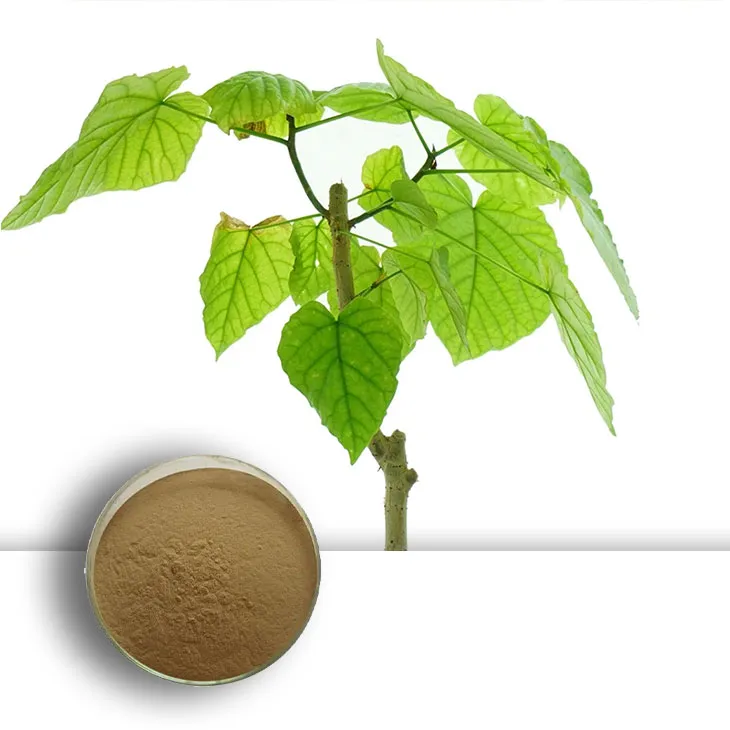
In the context of health - related products, the reduced particle size of Mulberry leaf Extract can have several advantages. Enhanced bioavailability is one of the key benefits. Smaller particles are more easily absorbed by the body. When consumed, the body's digestive system can break down and assimilate the active compounds from the smaller particles more effectively. For example, in dietary supplements containing Mulberry leaf Extract, the reduced particle size can ensure that the health - promoting properties, such as blood - sugar - regulating effects (attributed to compounds like DNJ - 1 - deoxynojirimycin), are more readily available to the body. This can lead to better therapeutic or preventive outcomes for consumers.
3. Methods for Particle Size Reduction
3.1. Mechanical Grinding
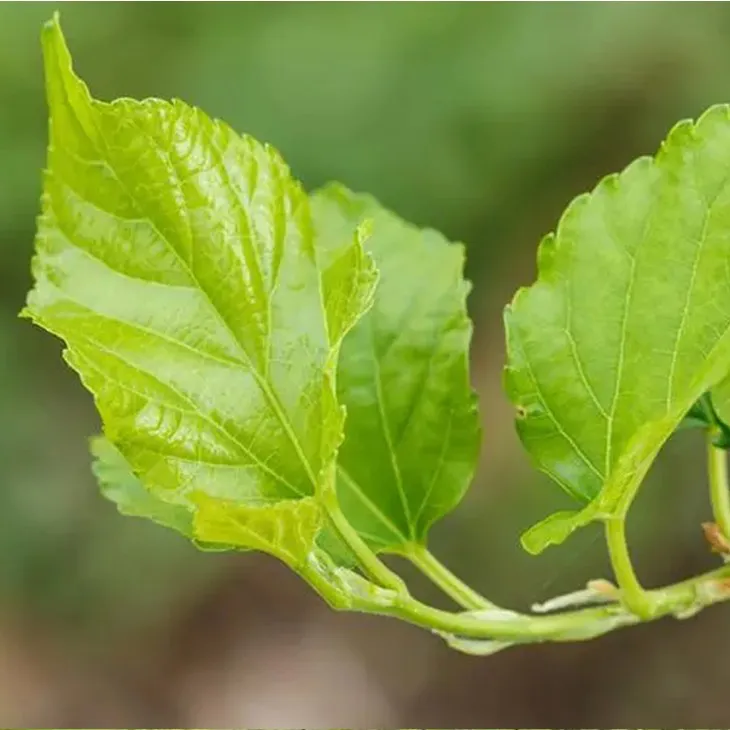
Mechanical grinding is one of the most common methods for reducing the particle size of Mulberry leaf Extract. It involves the use of grinding equipment such as ball mills, hammer mills, or attrition mills. In a ball mill, for example, small balls made of materials like stainless steel or ceramic are placed in a rotating chamber along with the mulberry leaf material. As the chamber rotates, the balls collide with the leaves, gradually breaking them into smaller particles. The advantage of mechanical grinding is its simplicity and relatively low cost. However, it also has some limitations. For instance, excessive grinding can lead to overheating, which may damage some of the heat - sensitive active compounds in the Mulberry leaf Extract.
3.2. Micronization
Micronization is another effective method for achieving a small particle size. This technique uses specialized equipment such as jet mills or fluid - energy mills. In a jet mill, high - velocity gas jets are used to accelerate the mulberry leaf particles, causing them to collide with each other or with the walls of the milling chamber. This process can produce very fine particles, often in the micron or sub - micron range. Micronization offers a more precise control over particle size compared to mechanical grinding. It is also suitable for heat - sensitive materials as it can be carried out under relatively low - temperature conditions. However, the equipment for micronization is generally more expensive and requires more sophisticated operation and maintenance.
3.3. Ultrasonic Treatment
Ultrasonic treatment has emerged as an innovative method for particle size reduction in Mulberry leaf Extract processing. Ultrasonic waves are applied to the extract suspension, creating cavitation bubbles. When these bubbles collapse, they generate intense local pressure and temperature changes. These forces can break the mulberry leaf particles into smaller sizes. Ultrasonic treatment is a non - thermal method, which means it can avoid the thermal degradation of the active compounds. Additionally, it can be used in combination with other methods, such as mechanical grinding, to further enhance the particle size reduction effect. However, the efficiency of ultrasonic treatment may be affected by factors such as the frequency and intensity of the ultrasonic waves, as well as the properties of the extract suspension.
4. Factors Affecting Particle Size Reduction
4.1. Raw Material Characteristics
The characteristics of the raw mulberry leaves play an important role in particle size reduction. The moisture content, for example, can significantly affect the grinding process. If the leaves have a high moisture content, they may be more difficult to grind into fine particles. Additionally, the structure and composition of the leaves, such as the presence of tough fibers or high - density tissues, can also influence the effectiveness of particle size reduction methods. For instance, leaves with a more fibrous structure may require more intense grinding or a different combination of methods to achieve the desired particle size.
4.2. Processing Conditions
The processing conditions, including temperature, pressure, and processing time, can have a great impact on particle size reduction. As mentioned earlier, in mechanical grinding, high temperature can be generated, which may not be suitable for heat - sensitive compounds. Therefore, controlling the temperature during grinding is crucial. In micronization, the pressure of the gas jets in a jet mill can affect the particle size and distribution. Longer processing time may lead to smaller particle sizes, but it may also increase the risk of over - processing and damage to the active compounds.
4.3. Equipment Parameters
Different equipment used for particle size reduction has its own set of parameters that need to be optimized. In a ball mill, the size and number of balls, the rotation speed of the chamber, and the filling ratio of the material all affect the grinding efficiency and the final particle size. In a jet mill, the nozzle design, the gas flow rate, and the inlet pressure are important parameters that determine the micronization performance. For ultrasonic treatment, the frequency, power, and treatment time of the ultrasonic waves are key factors influencing the particle size reduction.
5. Quality Control and Characterization of Reduced - Particle - Size Mulberry leaf Extract
5.1. Particle Size Analysis
To ensure the effectiveness of particle size reduction, it is essential to conduct particle size analysis. This can be done using various techniques such as laser diffraction, microscopy, or sedimentation methods. Laser diffraction is a widely used method that measures the scattering of light by the particles to determine their size distribution. Microscopy, on the other hand, allows for a direct visual observation of the particles, which can provide detailed information about their shape and morphology. Sedimentation methods are based on the principle of the settling of particles in a fluid, and can be used to estimate the particle size based on the sedimentation rate.
5.2. Chemical Composition Analysis
After particle size reduction, it is necessary to analyze the chemical composition of the Mulberry leaf Extract to ensure that the active compounds are not significantly affected. Techniques such as high - performance liquid chromatography (HPLC), gas chromatography - mass spectrometry (GC - MS), and Fourier - transform infrared spectroscopy (FT - IR) can be used. HPLC is often used to analyze the content of flavonoids, alkaloids, and other bioactive compounds in the extract. GC - MS can be used to identify and quantify volatile components, while FT - IR can provide information about the functional groups present in the extract, which can help in understanding its chemical structure and potential biological activities.
5.3. Functional Evaluation
In addition to particle size analysis and chemical composition analysis, functional evaluation of the reduced - particle - size Mulberry leaf Extract is also important. This can involve in - vitro and in - vivo tests. In - vitro tests can be used to study the antioxidant, anti - inflammatory, or enzyme - inhibitory activities of the extract. For example, antioxidant activity can be measured using assays such as the DPPH (2,2 - diphenyl - 1 - picrylhydrazyl) assay. In - vivo tests can be carried out on animal models to evaluate the potential health benefits of the extract, such as its effects on blood - sugar regulation or lipid metabolism. These functional evaluations can help in determining the quality and potential applications of the reduced - particle - size Mulberry leaf Extract.
6. Conclusion
In conclusion, the precise reduction of particle size in Mulberry leaf Extract processing is of great significance. It can improve extraction efficiency, product stability, and enhance the potential of Mulberry leaf Extract in health - related products. Different methods for particle size reduction, such as mechanical grinding, micronization, and ultrasonic treatment, each have their own advantages and limitations. Factors such as raw material characteristics, processing conditions, and equipment parameters need to be carefully considered to achieve the optimal particle size reduction. Quality control and characterization through particle size analysis, chemical composition analysis, and functional evaluation are essential to ensure the quality of the reduced - particle - size Mulberry leaf Extract. With the continuous development of technology, it is expected that more efficient and reliable methods for particle size reduction will be developed, further promoting the utilization of Mulberry leaf Extract in various industries.
FAQ:
Q1: Why is minimizing the particle size important in Mulberry leaf Extract processing?
Minimizing the particle size in Mulberry leaf Extract processing is crucial for several reasons. Firstly, it can significantly improve extraction efficiency. Smaller particles have a larger surface area to volume ratio, which allows for better contact between the solvent and the active components in the mulberry leaves during extraction. This leads to a more complete extraction of beneficial compounds. Secondly, it enhances product stability. Smaller particles are less likely to aggregate or sediment, ensuring a more homogeneous and stable product over time. In terms of potential in health - related products, smaller particles can potentially have better bioavailability. This means that the body can more easily absorb and utilize the active ingredients in the Mulberry leaf Extract, making it more effective in various health applications such as blood sugar regulation or antioxidant support.
Q2: What methods are commonly used to reduce the particle size of Mulberry leaf Extract?
There are several common methods for reducing the particle size of Mulberry leaf Extract. One of the frequently used techniques is mechanical milling. This can include ball milling, where small balls are used to grind the particles to a smaller size. Another method is high - pressure homogenization. In this process, the extract is forced through a narrow orifice at high pressure, which breaks the particles into smaller ones. Additionally, ultrasonic treatment can also be employed. Ultrasonic waves create cavitation bubbles in the extract, and when these bubbles collapse, they generate intense shockwaves that can fragment the particles into smaller sizes.
Q3: How does particle size reduction affect the extraction efficiency of Mulberry leaf Extract?
As mentioned earlier, particle size reduction has a positive impact on extraction efficiency. When the particle size of Mulberry leaf Extract is minimized, the surface area available for interaction with the extraction solvent increases. For example, if we consider the active compounds in the mulberry leaves as being trapped within the particles, smaller particles expose more of these compounds to the solvent. This enables a greater amount of the desired substances to be dissolved and extracted. It is like having more doors (the exposed surfaces) for the solvent to enter and retrieve the valuable components from the mulberry leaf particles.
Q4: Can minimizing particle size improve the bioavailability of Mulberry leaf Extract in health - related products?
Yes, minimizing the particle size can potentially improve the bioavailability of Mulberry leaf Extract in health - related products. Smaller particles are more easily absorbed by the body. In the digestive system, they can be more readily broken down and the active ingredients can be more efficiently taken up by the cells. For instance, if the active compounds in the Mulberry leaf Extract are encapsulated within larger particles, it may be difficult for the body to access and utilize them. However, when the particles are small, they can be more easily transported across the intestinal barrier and into the bloodstream, where they can exert their beneficial effects on health, such as in reducing blood sugar levels or providing antioxidant protection.
Q5: What challenges are associated with minimizing the particle size of Mulberry leaf Extract?
There are several challenges associated with minimizing the particle size of Mulberry leaf Extract. One challenge is maintaining the integrity of the active components. Some methods of particle size reduction, such as high - energy processes, may cause degradation or denaturation of the active compounds. Another challenge is cost. Some advanced techniques for precise particle size reduction can be expensive to implement on a large - scale production basis. Additionally, ensuring the reproducibility of the particle size reduction process can be difficult. Different batches may end up with slightly different particle sizes if the process is not carefully controlled, which can affect the consistency of the final product in terms of quality and performance.
Related literature
- Advances in Mulberry leaf Extract Processing for Enhanced Bioactivity"
- "Particle Size Reduction Techniques in Botanical Extract Manufacturing: A Focus on Mulberry Leaves"
- "The Impact of Particle Size on the Quality and Efficacy of Mulberry leaf Extract - based Health Products"


-

Citrus Aurantium Extract
2024-12-08
-

Polygonum Cuspidatum Extract
2024-12-08
-

Garcinia Cambogia Extract
2024-12-08
-

Resveratrol Extract
2024-12-08
-

Lemon Extract
2024-12-08
-

Peppermint Oil
2024-12-08
-

Calendula Extract
2024-12-08
-

Acerola Extract
2024-12-08
-

L-Cysteine
2024-12-08
-

Green Tea Extract
2024-12-08