


Introduction
Pine bark Extract Powder has gained significant attention in various industries due to its numerous potential benefits. Reducing the particle size of this powder is a crucial aspect of its professional processing. A smaller particle size implies a larger surface area, which is a key factor in enhancing its performance in different applications.
Importance of Smaller Particle Size
Enhanced Bioavailability
When the particle size of Pine bark Extract Powder is reduced, its bioavailability improves significantly. The larger surface area allows for better interaction with biological systems, whether it is in the human body for dietary supplement applications or in other organisms. This means that a greater proportion of the active compounds in the pine bark extract can be absorbed and utilized effectively.
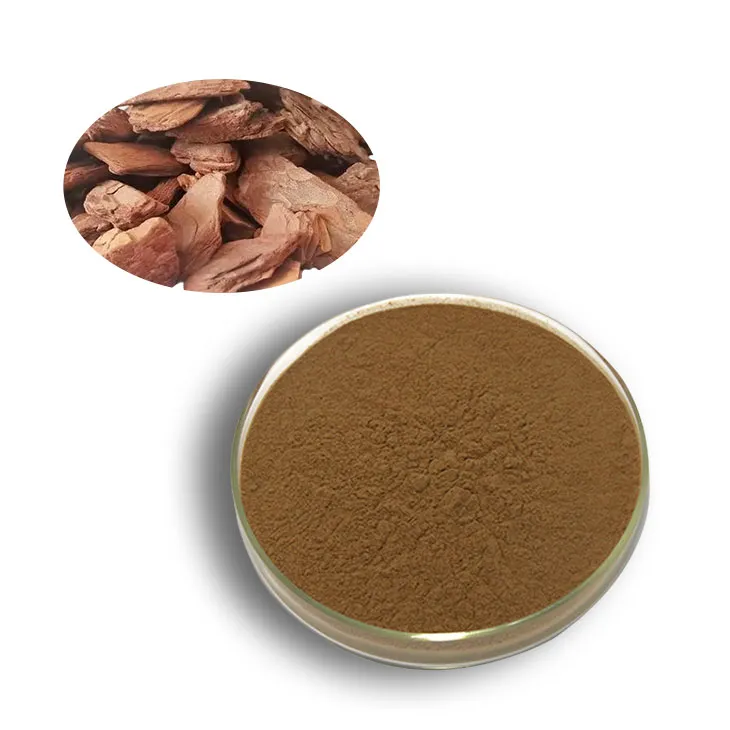
Optimized Physical and Chemical Properties
Smaller particles of Pine bark Extract Powder can lead to changes in its physical and chemical properties. For example, the powder may become more evenly distributed, which is beneficial in formulations. It can also exhibit different solubility characteristics, which is important for applications where the powder needs to be dissolved or dispersed in a liquid medium.
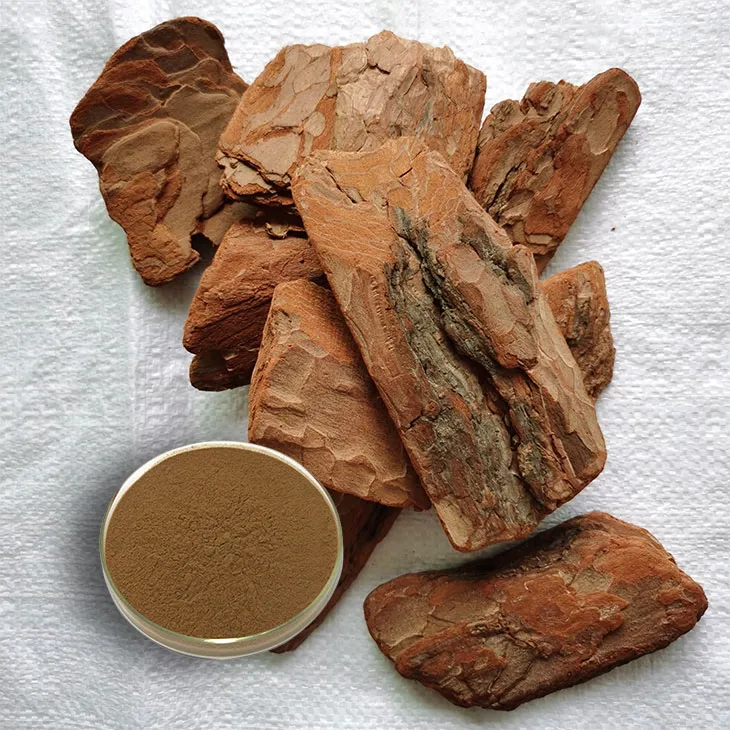
Expanded Application Range
The reduced particle size broadens the application range of Pine bark Extract Powder.
- In the field of dietary supplements, it can be more easily incorporated into tablets, capsules, or powders. Consumers can benefit from its enhanced bioavailability, which may lead to more pronounced health effects.
- In the realm of high - end skincare products, smaller particles can penetrate the skin more effectively. This allows for better delivery of the active ingredients present in the pine bark extract, such as antioxidants, which can help in reducing wrinkles, improving skin elasticity, and protecting the skin from environmental damage.
Modern Technologies for Particle Size Reduction
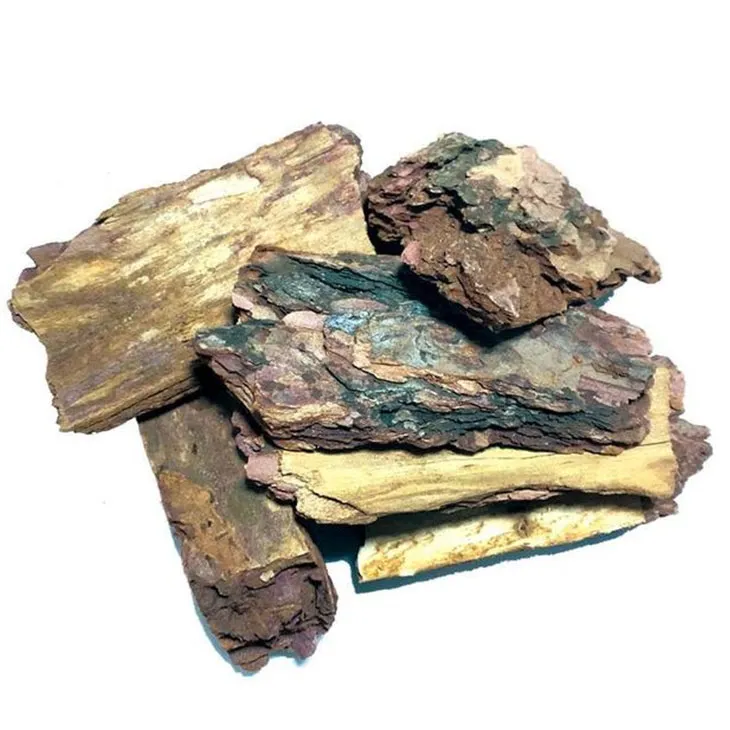
Mechanical Milling
One of the common methods for reducing the particle size of Pine bark Extract Powder is mechanical milling. This process involves the use of mills, such as ball mills or hammer mills.
- In a ball mill, balls of a certain material (usually ceramic or steel) are placed in a rotating chamber along with the Pine bark Extract Powder. As the chamber rotates, the balls collide with each other and with the powder, gradually breaking it down into smaller particles. The speed of rotation, the size and number of balls, and the milling time are important parameters that can be adjusted to achieve the desired particle size.
- A hammer mill operates by using rapidly rotating hammers to strike the pine bark extract powder. This high - impact force causes the powder to fragment into smaller pieces. Hammer mills are often used for coarser initial reduction of particle size, which can then be followed by further milling using other methods if a very small particle size is required.
High - Pressure Homogenization
High - pressure homogenization is another effective technology for particle size reduction. In this process, the Pine bark Extract Powder is forced through a narrow orifice under high pressure.
- The high - pressure environment causes the particles to experience intense shear forces, which break them down into smaller sizes. This method is particularly useful for producing very fine particles with a narrow size distribution.
- It can also be used to create stable emulsions or suspensions when the Pine bark Extract Powder is combined with other substances, as the homogenization process helps to evenly disperse the particles.
Ultrasonic Processing
Ultrasonic processing utilizes high - frequency sound waves to reduce the particle size of pine bark extract powder.
- When the ultrasonic waves are applied to the powder suspended in a liquid medium, they create cavitation bubbles. These bubbles grow and then collapse violently, generating shock waves that break apart the particles.
- Ultrasonic processing is a relatively gentle method compared to some mechanical methods, which can be advantageous when dealing with heat - sensitive or fragile components in the Pine bark Extract Powder.
Quality Control in Particle Size Reduction
Particle Size Analysis
To ensure that the particle size reduction process is effective and consistent, regular particle size analysis is necessary. This can be done using various techniques such as laser diffraction, dynamic light scattering, or sieve analysis.
- Laser diffraction measures the angular distribution of light scattered by the particles. Based on this measurement, the particle size distribution can be calculated. It is a widely used method due to its accuracy and ability to analyze a wide range of particle sizes.
- Dynamic light scattering focuses on the fluctuations in light intensity caused by the Brownian motion of particles in a liquid suspension. It is particularly suitable for analyzing very small particles, typically in the nanometer range.
- Sieve analysis involves passing the Pine bark Extract Powder through a series of sieves with different mesh sizes. The amount of powder retained on each sieve provides information about the particle size distribution in the coarser range.
Process Optimization
Based on the results of particle size analysis, the particle size reduction process can be optimized.
- If the average particle size is larger than the desired value, parameters such as milling time, pressure in homogenization, or ultrasonic power can be adjusted accordingly.
- Process optimization also involves considering factors such as energy consumption, production cost, and the quality of the final product. For example, increasing the milling time may further reduce the particle size, but it may also lead to higher energy consumption and potential degradation of the active compounds in the Pine bark Extract Powder.
Challenges in Particle Size Reduction
Agglomeration
One of the main challenges in reducing the particle size of Pine bark Extract Powder is agglomeration. Small particles have a tendency to stick together, forming larger aggregates.
- Agglomeration can occur due to various factors such as electrostatic forces, van der Waals forces, or moisture content. For example, if the powder has a relatively high moisture content, water molecules can act as a bridge between particles, causing them to agglomerate.
- To prevent agglomeration, anti - agglomeration agents may be added during the particle size reduction process. These agents can modify the surface properties of the particles, reducing the attractive forces between them. However, the addition of such agents needs to be carefully controlled to avoid any adverse effects on the quality or functionality of the Pine bark Extract Powder.
Preservation of Active Compounds
During the particle size reduction process, it is essential to preserve the active compounds in the Pine bark Extract Powder. Some processing methods, especially those involving high energy or heat, may cause degradation or loss of these compounds.
- For example, if mechanical milling is carried out at a very high speed for a long time, the heat generated may lead to the breakdown of antioxidants or other bioactive molecules in the pine bark extract.
- To overcome this challenge, appropriate processing conditions need to be selected. This may involve using lower - energy methods, controlling the processing temperature, or adding stabilizers to protect the active compounds.
Future Perspectives
The future of professional processing of Pine bark Extract Powder with a focus on particle size reduction looks promising.
- Continued research is expected to lead to the development of more efficient and cost - effective technologies for particle size reduction. For example, new types of mills or homogenizers may be designed to achieve even smaller particle sizes with less energy consumption.
- There is also potential for the combination of different particle size reduction methods to achieve optimal results. For instance, a two - step process involving mechanical milling followed by ultrasonic processing may be explored to obtain a narrow particle size distribution while preserving the active compounds.
- As the understanding of the relationship between particle size and the performance of pine bark extract powder in various applications deepens, it will be possible to customize the particle size reduction process according to specific end - use requirements. This will further enhance the competitiveness of Pine bark Extract Powder in the global market.
FAQ:
What are the main benefits of reducing the particle size of Pine bark Extract Powder?
Reducing the particle size of Pine bark Extract Powder increases its surface area. This leads to better bioavailability. It also optimizes the powder's physical and chemical properties and broadens its application range from dietary supplements to high - end skincare products, ultimately improving its competitiveness in the global market.
What modern technologies are used to reduce the particle size of Pine bark Extract Powder?
There are several modern technologies used. For example, mechanical grinding techniques can be employed. High - energy ball milling is a common method where the powder is subjected to intense mechanical forces in a ball mill. Another technology could be microfluidization, which uses high - pressure fluid to break down the particles uniformly.
How does the reduced particle size of Pine bark Extract Powder enhance its application in skincare products?
In skincare products, the smaller particle size of Pine bark Extract Powder allows for better penetration into the skin. This is because of the increased surface area which can interact more effectively with the skin's surface and pores. It can also lead to more efficient delivery of the active compounds in the extract, enhancing its potential benefits such as antioxidant and anti - aging effects.
What factors should be considered when processing Pine bark Extract Powder to reduce particle size?
When processing, factors such as the initial quality of the pine bark extract, the equipment used for particle size reduction, and the processing conditions need to be considered. The purity and composition of the extract can affect how it responds to the particle size reduction methods. The type of equipment, like the speed and force in a milling device, needs to be optimized. Also, factors like temperature and humidity during processing can influence the final product quality.
How does the reduced particle size affect the stability of Pine bark Extract Powder?
The reduced particle size can have both positive and negative effects on stability. On one hand, the increased surface area can make it more reactive, which may require better storage conditions to prevent degradation. On the other hand, if processed correctly, the uniform particle size can lead to more consistent physical and chemical properties, which may contribute to better long - term stability.
Related literature
- Advances in Particle Size Reduction Technologies for Botanical Extracts"
- "The Impact of Particle Size on the Bioavailability of Pine Bark Extracts"
- "Modern Processing Techniques for Optimizing Pine bark Extract Powder Properties"


-

Beetroot Powder
2024-12-06
-

Panax Ginseng Leaf Extract
2024-12-06
-

Golden Seal Extract
2024-12-06
-

Alisma Extract
2024-12-06
-

Aged Garlic Extract
2024-12-06
-

Maca Extract
2024-12-06
-

Feverfew Extract
2024-12-06
-

Curcumin
2024-12-06
-

Garcinia Cambogia Extract
2024-12-06
-

Nutmeg Extract
2024-12-06