


1. Introduction
Rosehip extract has emerged as a highly sought - after natural ingredient in recent years. It has found applications in various fields, especially in skincare and health supplements. The growing interest in rosehip extract is due to its numerous potential benefits, which are rooted in its chemical composition.
2. Chemical Composition of Rose Hip Extract
2.1 Ascorbic Acid
Ascorbic acid, also known as Vitamin C, is a prominent component in rosehip extract. It plays a crucial role in various physiological processes. Vitamin C is a powerful antioxidant that helps to neutralize free radicals in the body. Free radicals are highly reactive molecules that can cause damage to cells, proteins, and DNA. By scavenging these free radicals, ascorbic acid helps to protect the body from oxidative stress. In addition to its antioxidant properties, ascorbic acid is also essential for collagen synthesis. Collagen is a key protein in the skin, providing structural support and maintaining skin elasticity. Thus, the presence of ascorbic acid in rosehip extract contributes to its skin - rejuvenating properties.
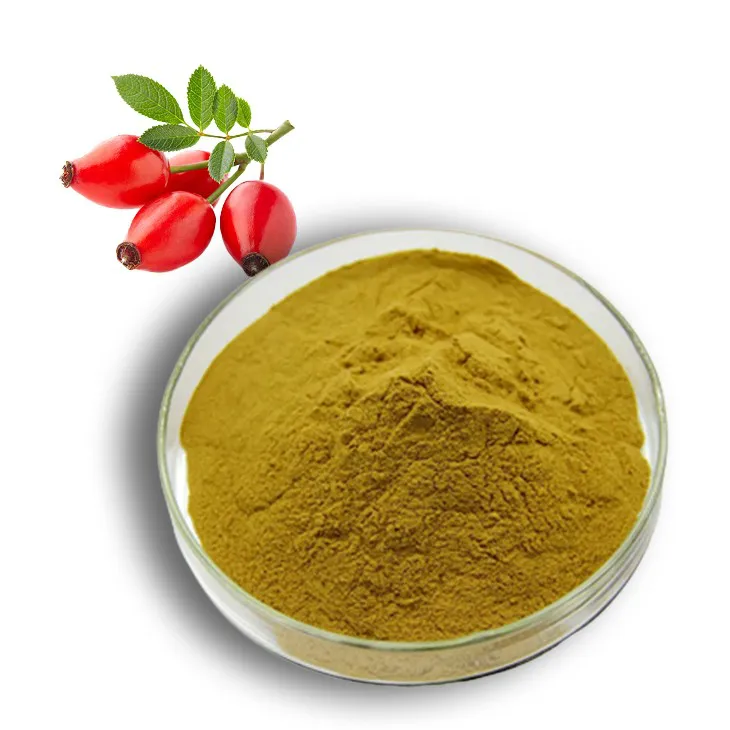
2.2 Flavonoids
Flavonoids are a diverse group of polyphenolic compounds present in rosehip extract. They are responsible for many of the extract's beneficial properties. Flavonoids have antioxidant, anti - inflammatory, and anti - microbial activities. Some common flavonoids in rosehip include Quercetin, kaempferol, and Rutin. Quercetin, for example, has been shown to have strong antioxidant effects, reducing oxidative damage in cells. It also has anti - inflammatory properties, which can be beneficial in conditions such as arthritis and skin inflammations. Kaempferol has been studied for its potential to protect against cardiovascular diseases, while Rutin is known for its ability to strengthen blood vessels.

2.3 Phenolic Acids
Phenolic acids in rosehip extract also contribute to its overall efficacy. These compounds, such as caffeic acid and ferulic acid, are potent antioxidants. They work in synergy with ascorbic acid and flavonoids to enhance the antioxidant capacity of the extract. Phenolic acids also have anti - inflammatory properties. For example, caffeic acid has been shown to inhibit the production of inflammatory mediators in the body. Ferulic acid, on the other hand, has been found to have photoprotective effects, protecting the skin from damage caused by ultraviolet (UV) radiation.
3. Efficacy of Rose Hip Extract

3.1 Skin Health
- Reducing wrinkles: The combination of ascorbic acid, flavonoids, and phenolic acids in rosehip extract makes it effective in reducing wrinkles. Vitamin C promotes collagen synthesis, which helps to fill in fine lines and wrinkles. Flavonoids and phenolic acids, with their antioxidant and anti - inflammatory properties, protect the skin from damage that can lead to premature aging.
- Enhancing wound healing: Rosehip extract has been shown to accelerate wound healing. Its components, such as ascorbic acid, play a role in collagen formation, which is essential for the repair of damaged tissues. The anti - inflammatory properties of the extract also help to reduce inflammation at the wound site, promoting a faster healing process.
- Skin rejuvenation: The antioxidant - rich nature of rosehip extract helps to rejuvenate the skin. It protects the skin cells from oxidative damage, keeping the skin looking healthy and youthful. Regular use of products containing rosehip extract can improve skin texture, tone, and overall appearance.
3.2 Combating Oxidative Stress in the Body
Oxidative stress is associated with many chronic diseases, including cancer, diabetes, and neurodegenerative disorders. The antioxidant components in rosehip extract, including ascorbic acid, flavonoids, and phenolic acids, work together to combat oxidative stress. By neutralizing free radicals, the extract helps to reduce the oxidative damage to cells and tissues. This, in turn, may play a role in preventing or delaying the onset of chronic diseases. For example, in vitro studies have shown that rosehip extract can protect cells from oxidative damage induced by various factors, such as chemicals and UV radiation.
3.3 Anti - Inflammatory Effects
Rosehip extract has significant anti - inflammatory effects. The flavonoids and phenolic acids in the extract are able to inhibit the production of inflammatory mediators, such as cytokines and prostaglandins. This makes it potentially useful in treating inflammatory conditions. For instance, in clinical trials, rosehip extract has been shown to reduce pain and inflammation in patients with osteoarthritis. It may also be beneficial in other inflammatory conditions, such as rheumatoid arthritis, skin inflammations, and inflammatory bowel diseases.
4. Scientific Research on Rose Hip Extract
- In vitro studies: Many in vitro studies have been conducted to investigate the chemical properties and biological activities of rosehip extract. These studies have shown the antioxidant, anti - inflammatory, and skin - rejuvenating effects of the extract at the cellular level. For example, cell culture studies have demonstrated that rosehip extract can protect skin cells from oxidative damage and promote collagen synthesis.
- Animal studies: Animal studies have provided further evidence of the efficacy of rosehip extract. In animal models of arthritis, for example, rosehip extract has been shown to reduce joint inflammation and pain. In addition, animal studies have investigated the effects of rosehip extract on wound healing, showing that it can accelerate the healing process.
- Clinical trials: Clinical trials in humans have also been carried out to evaluate the safety and effectiveness of rosehip extract. In clinical trials for skin health, participants who used products containing rosehip extract showed improvements in skin texture, reduction in wrinkles, and enhanced wound healing. In trials for inflammatory conditions, such as osteoarthritis, rosehip extract has been shown to reduce pain and improve joint function.
5. Conclusion
In conclusion, rosehip extract is a natural ingredient with a rich chemical composition that endows it with multiple efficacies. Its components, including ascorbic acid, flavonoids, and phenolic acids, contribute to its antioxidant, anti - inflammatory, and skin - rejuvenating properties. Scientific research, from in vitro studies to clinical trials, has demonstrated its potential in promoting skin health, combating oxidative stress, and reducing inflammation. As our understanding of rosehip extract continues to grow, it is likely to find even more applications in the fields of skincare, health supplements, and medicine. However, further research is still needed to fully explore its mechanisms of action and to optimize its use for different applications.
FAQ:
What are the main bioactive compounds in rosehip extract?
The main bioactive compounds in rosehip extract are ascorbic acid, flavonoids, and phenolic acids.
How does rosehip extract promote skin health?
Rosehip extract promotes skin health through its antioxidant, anti - inflammatory, and skin - rejuvenating properties. The bioactive compounds in it help reduce wrinkles and enhance wound healing.
What is the relationship between the antioxidant nature of rosehip extract and chronic diseases?
The antioxidant nature of rosehip extract helps combat oxidative stress in the body. Oxidative stress is linked to numerous chronic diseases, so by reducing it, rosehip extract may potentially have a positive impact on preventing or managing these diseases.
Can rosehip extract be used for anti - inflammatory purposes?
Yes, rosehip extract can be used for anti - inflammatory purposes. Its bioactive compounds, such as flavonoids and phenolic acids, contribute to its anti - inflammatory properties.
How does rosehip extract enhance wound healing?
The exact mechanism of how rosehip extract enhances wound healing is not fully understood, but it is believed to be related to its antioxidant, anti - inflammatory, and skin - rejuvenating properties. These properties may help in the regeneration of skin cells and the reduction of inflammation around the wound area.
Related literature
- The Chemical Composition and Bioactivity of Rosehip Extracts"
- "Rosehip Extract: A Review of Its Skin - Health - Promoting Effects"
- "Antioxidant and Anti - Inflammatory Properties of Rosehip Extract in the Context of Chronic Diseases"


-

Thunder God Vine Extract
2024-12-18
-

Konjac Powder
2024-12-18
-

Medicinal Marshmallow Extract
2024-12-18
-

Feverfew Extract
2024-12-18
-

Lycopene
2024-12-18
-

Polygonum Cuspidatum Extract
2024-12-18
-

Alisma Extract
2024-12-18
-

Natural grape seed extract
2024-12-18
-

Panax Ginseng Leaf Extract
2024-12-18
-

Agaricus Blazei Extract
2024-12-18