


1. Introduction
Lemon Extract is widely used in various industries, including food, beverage, cosmetics, and pharmaceuticals, due to its rich content of beneficial compounds. Understanding the extraction process of Lemon Extract is crucial for ensuring the quality and effectiveness of the final product. This article will delve into the detailed steps of Lemon Extract extraction, from raw material selection to the final purification and concentration.
2. Sourcing of Raw Materials
The quality of lemons as raw materials is of utmost importance. When sourcing lemons, several factors need to be considered.
2.1 Variety
Different lemon varieties may have variations in the content of key components such as flavonoids and citric acid. For example, the Eureka lemon and the Lisbon lemon are two common varieties. The Eureka lemon is known for its relatively high acidity and rich flavor, while the Lisbon lemon may have a different profile in terms of its chemical composition. Producers need to select the appropriate variety based on the intended use of the Lemon Extract.
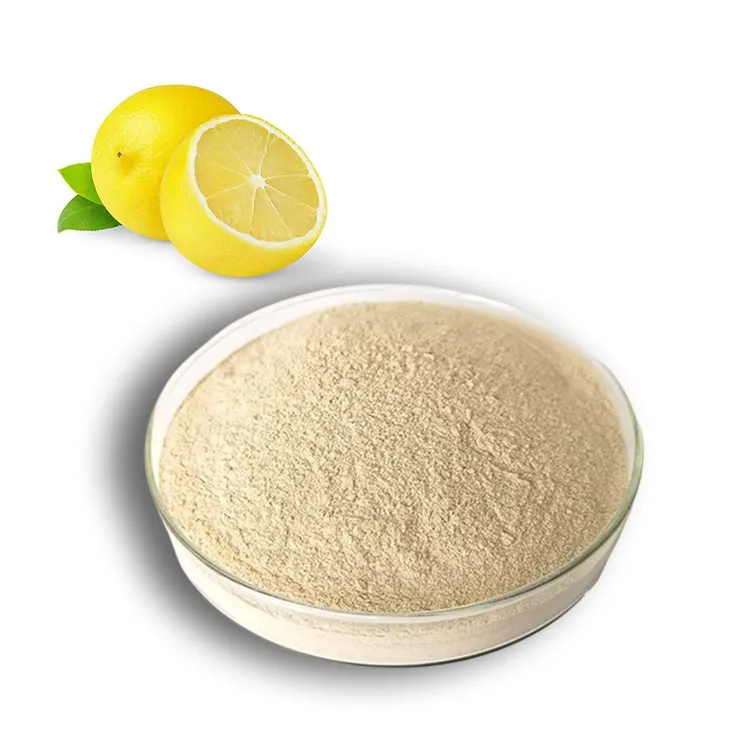
2.2 Maturity
The maturity of lemons also affects the extraction process. Mature lemons typically have a higher content of the desired compounds. Immature lemons may lack the full development of these components, resulting in a less effective extraction. The color, texture, and aroma of the lemon can be used as indicators of its maturity. For instance, a fully mature lemon usually has a bright yellow color, a smooth skin, and a strong citrus aroma.

2.3 Quality Control
During the sourcing stage, strict quality control measures are implemented. This includes inspection for physical damage, such as bruises or cuts on the lemon skin, which can lead to microbial contamination. Additionally, chemical analysis may be carried out to ensure that the lemons meet the required standards in terms of acidity, sugar content, and the presence of contaminants. Only high - quality lemons are selected for the extraction process.
3. Initial Mechanical Extraction
Once the suitable lemons are sourced, the first step in the extraction process is often mechanical extraction, mainly through pressing.

3.1 Pressing Mechanisms
There are different types of pressing mechanisms available. One common method is the use of a hydraulic press. The lemons are placed in a chamber, and pressure is applied evenly to extract the juice. Another option is a screw press, where a rotating screw forces the lemons against a perforated screen, separating the juice from the pulp. The choice of pressing mechanism depends on factors such as the scale of production and the desired quality of the initial extract.

3.2 Juice Yield and Quality
The efficiency of the pressing process affects the juice yield. A well - designed pressing system can maximize the amount of juice obtained from the lemons. However, it is also important to balance juice yield with quality. Excessive pressure may lead to the extraction of unwanted substances, such as bitter compounds from the peel or seeds. Therefore, the pressing conditions need to be carefully optimized to obtain a high - quality initial juice that contains a significant amount of the desired components, such as citric acid and some water - soluble flavonoids.
4. Chemical Extraction Techniques
While mechanical pressing can extract some of the beneficial compounds from lemons, chemical extraction techniques are often employed to target specific components more comprehensively.
4.1 Solvent Extraction
Solvent extraction is a commonly used chemical extraction method. Organic solvents such as ethanol or ethyl acetate are often used. The principle behind solvent extraction is that different components in the lemon have different solubilities in the chosen solvent. For example, flavonoids are more soluble in ethanol. The lemon material, which may be in the form of juice or pulp, is mixed with the solvent. After a period of extraction time, during which the solvent - solute interactions occur, the mixture is then separated. This can be achieved through methods such as filtration or centrifugation. The solvent - containing extract is then further processed to recover the desired components.
4.2 Acid - Base Extraction
Acid - base extraction is another technique that can be used for Lemon Extract extraction. Lemons are acidic in nature, and by adjusting the pH of the extraction system, different components can be selectively extracted. For instance, at a certain acidic pH, citric acid can be more effectively separated from other components. The addition of a base can also be used to precipitate certain compounds or to change their solubility characteristics. However, careful control of the acid - base conditions is required to avoid degradation or unwanted reactions of the desired components.
5. Filtration and Separation
After the extraction process, whether it is mechanical or chemical, filtration and separation steps are essential to obtain a pure Lemon Extract.
5.1 Filtration
Filtration is used to remove solid particles such as pulp, seeds, and other insoluble materials from the extract. There are different types of filtration methods, including gravity filtration, vacuum filtration, and membrane filtration. Gravity filtration is a simple method where the extract is poured through a filter medium, such as filter paper, under the force of gravity. Vacuum filtration uses a vacuum pump to increase the filtration rate by applying a negative pressure. Membrane filtration, on the other hand, can be more precise in separating particles based on their size, using membranes with specific pore sizes.
5.2 Separation of Solvents
If a solvent was used in the extraction process, the next step is to separate the solvent from the extract. This can be achieved through evaporation or distillation. In evaporation, the solvent is removed by heating the extract - solvent mixture under controlled conditions. The solvent vaporizes, leaving behind the concentrated extract. Distillation is a more precise method that takes advantage of the different boiling points of the solvent and the extract components. The solvent is vaporized and then condensed, allowing for its separation from the extract.
6. Concentration
To obtain a more concentrated Lemon Extract, concentration steps are carried out.
6.1 Evaporation - Based Concentration
Evaporation is a common method for concentration. The Lemon Extract is heated gently to evaporate the water or other volatile components. This can be done under reduced pressure to lower the boiling point of the liquid and prevent the degradation of heat - sensitive components. By carefully controlling the evaporation conditions, the desired concentration of the extract can be achieved. For example, in the production of Lemon Extract for use in the food industry, a specific concentration may be required to achieve the right flavor intensity.
6.2 Reverse Osmosis
Reverse osmosis is another technique for concentration. In this process, a semi - permeable membrane is used. Pressure is applied to the Lemon Extract, forcing water molecules to pass through the membrane while retaining the larger solute molecules. This results in a concentrated extract. Reverse osmosis has the advantage of being able to operate at lower temperatures compared to evaporation, which is beneficial for preserving the integrity of heat - sensitive compounds in the Lemon Extract.
7. Conclusion
The extraction process of Lemon Extract involves multiple steps, from sourcing high - quality raw materials to the final concentration of the extract. Each step plays a crucial role in obtaining a pure, high - quality Lemon Extract that can be used in a wide range of applications. By understanding and optimizing these steps, producers can ensure the consistent quality and effectiveness of their Lemon Extract products.
FAQ:
What are the main steps in the Lemon Extract extraction process?
The main steps include sourcing high - quality lemons as raw materials, using mechanical methods like pressing to obtain initial juice, applying chemical extraction techniques to target specific components, and then carrying out filtration and concentration steps to get the pure and concentrated Lemon Extract.
Why is quality control of lemons important in the extraction process?
Quality control of lemons is important because it directly affects the quality of the final Lemon Extract product. High - quality lemons are more likely to yield a better - quality extract with more beneficial compounds.
What mechanical methods are commonly used in Lemon Extract extraction?
Pressing is a commonly used mechanical method in Lemon Extract extraction. It helps to release the juice from the lemons which contains some of the desired substances for the extract.
What chemical extraction techniques are used for Lemon Extract?
There are various chemical extraction techniques used for Lemon Extract. These are designed to specifically target important components in the lemon such as flavonoids and citric acid, but the exact techniques may be proprietary in some cases or based on general extraction principles in the field of natural product extraction.
What are the applications of Lemon Extract?
Lemon Extract can be used in various applications. It can be used in the food and beverage industry for flavoring purposes, in the cosmetic industry for its antioxidant and skin - beneficial properties, and potentially in the pharmaceutical industry for its health - promoting components.
Related literature
- “Extraction of Bioactive Compounds from Lemon Peel: A Review”
- “Optimization of Lemon Extract Production for Therapeutic Applications”
- “Chemical Composition and Extraction of Lemon Juice Components”


-

Bilberry Extract
2024-12-06
-

Horse Chestnut Extract
2024-12-06
-

White Peony Extract
2024-12-06
-

Centella Asiatica Extract
2024-12-06
-

Polygonum Cuspidatum Extract
2024-12-06
-

Peppermint Extract Powder
2024-12-06
-

Elderberry Extract
2024-12-06
-

Hericium erinaceus extract powder
2024-12-06
-

L-Theanine Powder
2024-12-06
-

L-Citrullin-DL-malate
2024-12-06