


1. Introduction
White mustard seed extract has gained significant attention in various fields due to its unique properties and diverse applications. The extraction process, which is a crucial step in obtaining a high - quality extract, is rather complex and involves multiple steps. Understanding this process is essential for those interested in the production, research, or utilization of White mustard seed extract.
2. Selection and Cleaning of White Mustard Seeds
The first step in the extraction process of White mustard seed extract is the careful selection and cleaning of the white mustard seeds.
2.1 Selection Criteria
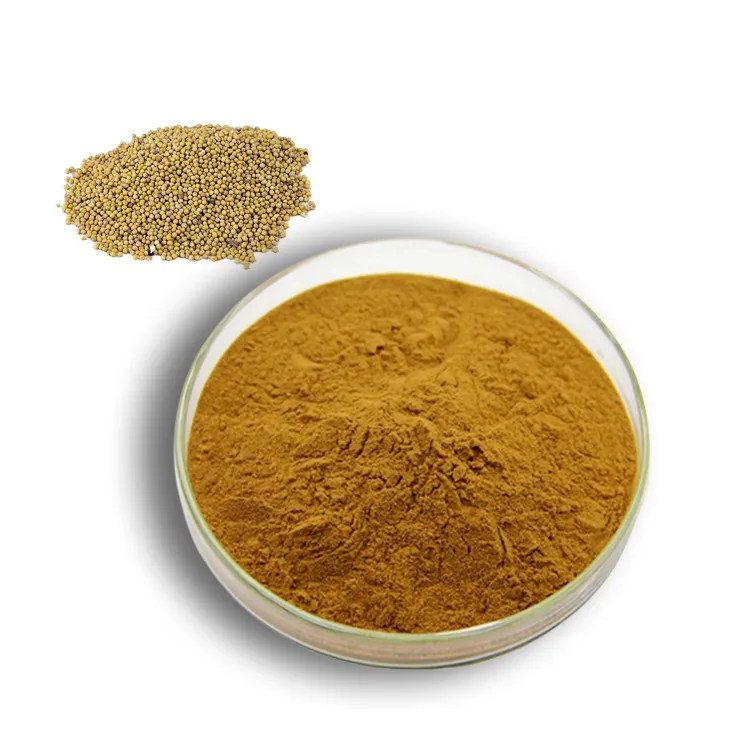
High - quality white mustard seeds are preferred for extraction. Seeds are selected based on several factors such as their origin, maturity, and overall quality. Seeds from reliable sources are more likely to yield a better extract. For example, seeds that are sourced from regions known for their favorable growing conditions for white mustard plants are often of higher quality. These regions may have the right climate, soil type, and agricultural practices that contribute to the healthy growth of the plants and the production of good - quality seeds.
2.2 Cleaning Process
Once the seeds are selected, they need to be thoroughly cleaned to remove any impurities. This is an important step as impurities can interfere with the extraction process and affect the quality of the final extract. The cleaning process typically involves removing dirt, debris, and any damaged or discolored seeds. Different methods can be used for cleaning, such as sieving to remove larger particles and air - blowing to get rid of lighter debris. In some cases, washing the seeds with water may also be part of the cleaning process, although this needs to be done carefully to avoid any water - related damage or spoilage of the seeds.
3. Grinding of White Mustard Seeds
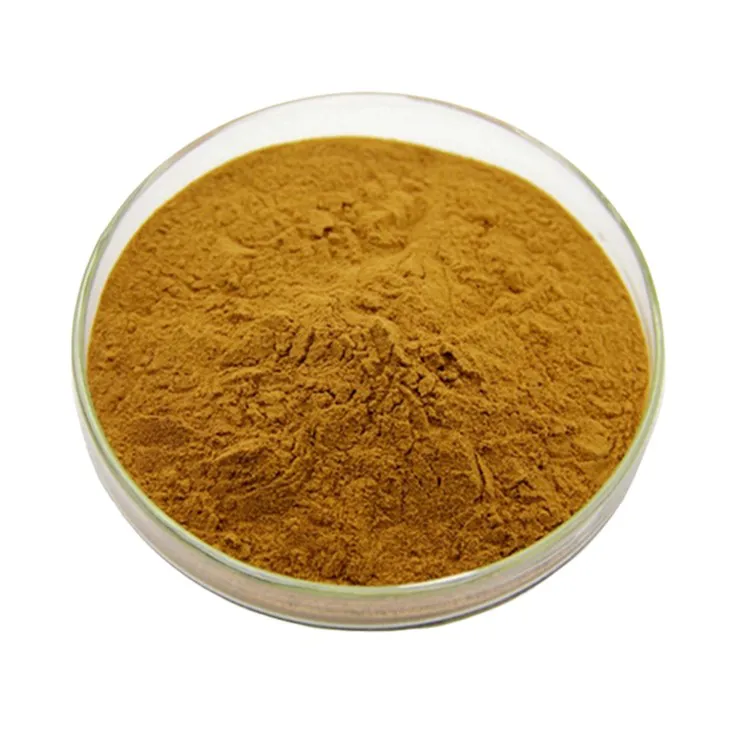
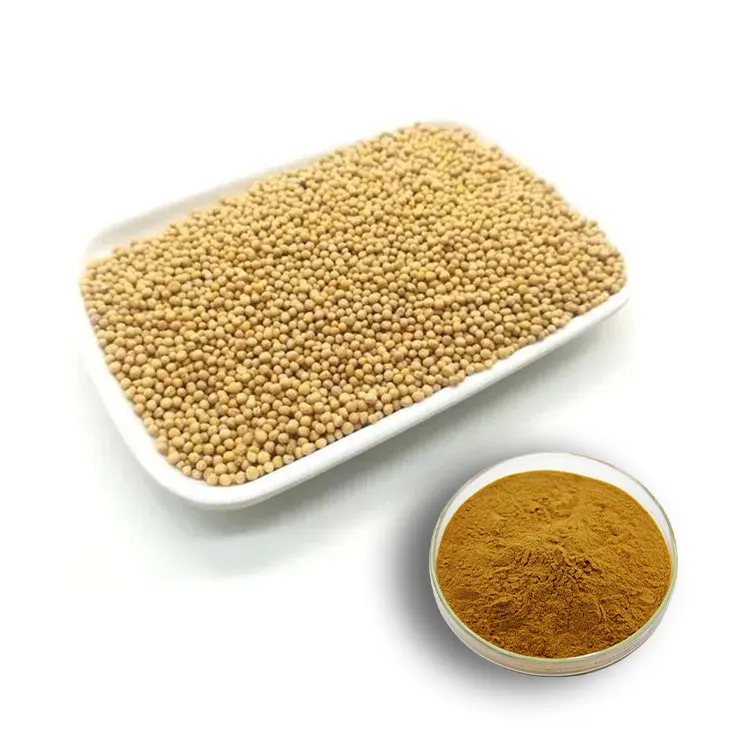
After the selection and cleaning, the white mustard seeds are usually ground into a fine powder. This step is crucial as it significantly increases the surface area available for extraction.
3.1 Purpose of Grinding
By grinding the seeds into a fine powder, the active compounds within the seeds are more accessible to the extraction solvent. A larger surface area means that more of the seed material is exposed to the solvent, allowing for a more efficient extraction process. This is similar to how a larger surface area of a sponge can absorb more liquid. In the case of White mustard seed extraction, the fine powder allows the solvent to penetrate more easily and dissolve the desired components.
3.2 Grinding Equipment and Techniques
Various types of grinding equipment can be used for this purpose. A common option is a mechanical grinder, which can be adjusted to achieve the desired fineness of the powder. The grinding process needs to be carefully controlled to ensure that the powder is fine enough without being over - processed, which could potentially damage the active compounds. For example, if the grinding is too intense, it may generate heat that could affect the chemical composition of the seeds. Therefore, proper cooling mechanisms may be required during grinding, especially for large - scale production.
4. Solvent Extraction
Solvent extraction is a common method used in the extraction of White mustard seed extract. This step involves the use of an appropriate solvent to dissolve the active compounds present in the ground white mustard seed powder.

4.1 Selection of Solvent
The choice of solvent is critical in the extraction process. Ethanol is one of the commonly used solvents for White mustard seed extraction. Ethanol has several advantages. It is relatively safe to handle, has a good solubility for many of the active compounds in white mustard seeds, and is also easily removable during the subsequent purification steps. However, other solvents may also be considered depending on the specific requirements of the extraction. For example, some researchers may explore the use of non - toxic and environmentally friendly solvents to meet the demands of green chemistry.
4.2 Extraction Process
During the extraction process, the selected solvent is added to the ground white mustard seed powder. The solvent penetrates the powder, interacting with the active compounds and dissolving them. This process may require agitation or stirring to ensure proper mixing and maximum contact between the solvent and the powder. The extraction time can vary depending on factors such as the type of solvent, the fineness of the powder, and the desired concentration of the extract. In general, longer extraction times may be required to achieve a more complete extraction, but this also needs to be balanced with the potential degradation of the active compounds over time.
5. Filtration
After the extraction process, filtration is carried out to separate the extract from the solid residue.
5.1 Filtration Methods
There are several filtration methods available for this purpose. One common method is gravity filtration, where the mixture of the extract and the solid residue is poured through a filter medium, such as filter paper or a porous membrane. The liquid extract passes through the filter while the solid particles are retained on the filter. Another method is vacuum filtration, which uses a vacuum pump to speed up the filtration process by applying a negative pressure. Vacuum filtration is often more efficient and can be used for larger - scale extractions. In addition, centrifugal filtration can also be considered, especially when dealing with small - volume extractions or when a more rapid separation is desired. Centrifugal force is used to separate the liquid and solid phases, with the liquid being collected at the outer part of the centrifuge tube.
5.2 Importance of Filtration
Filtration is an important step as it helps to remove any remaining solid particles from the extract. These solid particles, if not removed, can affect the quality and purity of the final White mustard seed extract. They may also cause clogging or fouling in subsequent processing steps, such as during concentration or purification. By obtaining a clear and particle - free extract through filtration, the quality of the final product is significantly enhanced.
6. Concentration and Purification
Subsequent to filtration, concentration and purification steps may be involved to obtain a high - quality White mustard seed extract rich in desired components.
6.1 Concentration
The concentration step aims to reduce the volume of the extract while increasing the concentration of the active compounds. This can be achieved through various methods, such as evaporation under reduced pressure or distillation. In evaporation under reduced pressure, the extract is heated gently while the pressure is reduced, allowing the solvent to evaporate more easily at a lower temperature. This helps to preserve the integrity of the active compounds as they are less likely to be degraded at lower temperatures compared to normal evaporation. Distillation is another option, especially when the solvent needs to be recovered for reuse. By carefully controlling the temperature and pressure during distillation, the solvent can be separated from the active compounds, and the extract can be concentrated.
6.2 Purification
Purification is essential to remove any impurities or unwanted components that may still be present in the extract after filtration. There are different purification methods available, such as chromatography. Chromatography techniques, such as column chromatography or high - performance liquid chromatography (HPLC), can be used to separate the different components in the extract based on their chemical properties. For example, in column chromatography, the extract is passed through a column filled with a stationary phase, and the different components are separated as they interact differently with the stationary and mobile phases. HPLC is a more advanced and precise chromatography method that can be used for high - resolution purification of White mustard seed extract, especially when a high - purity product is required.
7. Conclusion
In conclusion, the extraction process of White mustard seed extract is a multi - step and complex procedure. Starting from the careful selection and cleaning of white mustard seeds, followed by grinding, solvent extraction, filtration, and finally concentration and purification, each step plays a vital role in obtaining a high - quality extract. Understanding these steps is not only important for the production of White mustard seed extract but also for its further research and application in various fields such as medicine, food, and cosmetics.
FAQ:
What are the main steps in the extraction process of White mustard seed extract?
The main steps include selecting and cleaning high - quality white mustard seeds, grinding them into powder, using solvent extraction (such as with ethanol), filtration, and then may involve concentration and purification steps.
Why is it necessary to grind white mustard seeds into powder for extraction?
Grinding the seeds into powder is necessary because it increases the surface area. This allows the solvent to penetrate more effectively and dissolve the active compounds during the extraction process.
What kind of solvents are commonly used in the extraction of White mustard seed extract?
Ethanol is a commonly used solvent in the extraction of White mustard seed extract. The solvent can penetrate the powder and dissolve the active compounds.
What is the purpose of filtration in the extraction process?
The purpose of filtration in the extraction process is to separate the extract from the solid residue. This helps in obtaining a relatively pure extract.
Why are concentration and purification steps sometimes required?
Concentration and purification steps are sometimes required to obtain a high - quality White mustard seed extract rich in desired components. These steps can help remove unwanted substances and increase the concentration of the active compounds.
Related literature
- Extraction and Characterization of Bioactive Compounds from White Mustard Seeds"
- "Optimization of White mustard seed extract Production: A Review"
- "The Chemistry and Extraction of White mustard seed extract for Medicinal Applications"


-

Grape Seed Extract Powder
2024-12-05
-

Grapefruit Seed Extract Powder
2024-12-05
-

Bilberry Extract
2024-12-05
-

Bitter Melon Extract
2024-12-05
-

L-Arginine
2024-12-05
-

Moringa powder
2024-12-05
-

Red Vine Extract
2024-12-05
-

Diosmin
2024-12-05
-

Acai Berry Extract
2024-12-05
-

Reishi mushroom extract
2024-12-05