


1. Introduction to Cranberry Extract Powder
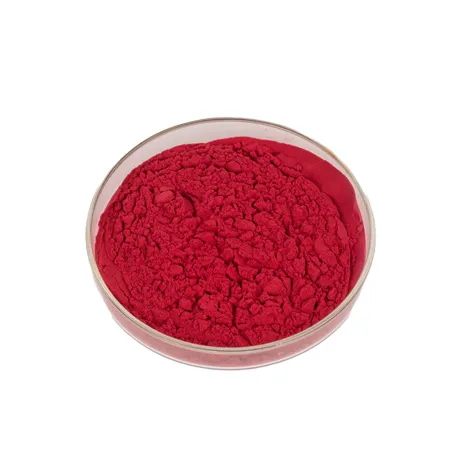
Cranberry Extract powder has been gaining significant attention in recent years. Cranberries, native to North America, are rich in various beneficial compounds. The extract powder is a concentrated form of these valuable components, which makes it more convenient for use in different applications. It contains proanthocyanidins, flavonoids, and organic acids, among other substances. These components contribute to its antioxidant, anti - inflammatory, and antibacterial properties.
2. Question 1: What are the Latest Processing Techniques?
2.1 Solvent Extraction
One of the traditional and still widely used methods is solvent extraction. This involves using solvents like ethanol or water to extract the active compounds from cranberries. Ethanol is often preferred as it can dissolve a wide range of compounds. The process typically starts with fresh or dried cranberries. The cranberries are first crushed to increase the surface area for better extraction. Then, the solvent is added, and the mixture is left for a certain period to allow the compounds to dissolve into the solvent. After that, the solvent is separated from the solid residue, and the resulting solution is concentrated to obtain the Cranberry Extract powder. However, one challenge with this method is ensuring complete removal of the solvent residues, as any remaining solvent can be a safety concern.

2.2 Supercritical Fluid Extraction
Supercritical fluid extraction (SFE) is a more advanced technique. Carbon dioxide (CO₂) is the most commonly used supercritical fluid in this process. Under specific pressure and temperature conditions, CO₂ reaches a supercritical state where it has properties of both a liquid and a gas. This allows it to penetrate the cranberry matrix effectively and extract the desired compounds. The advantage of SFE is that it is a relatively clean process as CO₂ is non - toxic, non - flammable, and leaves no solvent residues. It also provides better selectivity, meaning it can target specific compounds more precisely compared to solvent extraction. However, the equipment for SFE is more expensive, which can be a limiting factor for some small - scale producers.
3. Question 2: What are the Potential Challenges in Cranberry Extract Powder Processing?
3.1 Raw Material Variability
The quality and composition of cranberries can vary depending on factors such as the variety, growing conditions, and harvesting time. Different cranberry varieties may have different levels of active compounds. For example, some varieties may have a higher concentration of proanthocyanidins than others. Growing conditions like soil quality, climate, and irrigation also impact the cranberry's chemical makeup. Harvesting time is crucial as well. Cranberries harvested at the right maturity stage will have optimal levels of the desired compounds. If the raw material is not consistent, it can lead to variations in the quality of the final Cranberry Extract powder.

3.2 Maintaining Bioactivity
During processing, there is a risk of losing the bioactivity of the cranberry compounds. High temperatures, improper handling, or exposure to certain chemicals can degrade the active components. For instance, if the extraction process involves prolonged heating, the proanthocyanidins may break down, reducing their antioxidant and antibacterial properties. Therefore, it is essential to optimize the processing conditions to preserve the bioactivity of the extract powder. This requires careful control of temperature, time, and the use of appropriate extraction solvents or techniques.
4. Question 3: How is Quality Control Ensured in Cranberry Extract Powder Processing?
4.1 Raw Material Inspection
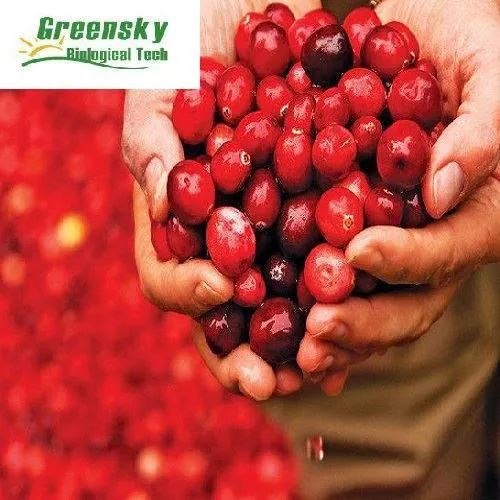
Quality control starts with the inspection of raw cranberries. Producers need to ensure that the cranberries are of high quality, free from contaminants such as pesticides, heavy metals, and mold. They may use various testing methods like chromatography to analyze the chemical composition of the cranberries before processing. This helps in selecting the right raw materials and rejecting any sub - standard batches.
4.2 In - process Monitoring
During the processing of Cranberry Extract powder, continuous monitoring is necessary. For example, in solvent extraction, the concentration of the solvent, the extraction time, and temperature need to be closely monitored. In supercritical fluid extraction, parameters such as pressure and flow rate of the supercritical fluid are critical. Any deviation from the optimal processing conditions can affect the quality of the final product. Therefore, advanced monitoring equipment and techniques are used to ensure that the process is running smoothly and within the specified parameters.
4.3 Final Product Testing
Once the Cranberry Extract powder is obtained, comprehensive testing is carried out. This includes testing for the presence and concentration of key active compounds such as proanthocyanidins. Spectrophotometric methods are often used to determine the antioxidant capacity of the extract powder. Microbiological testing is also essential to ensure that the product is free from harmful bacteria, yeasts, and molds. Only after passing all these tests can the Cranberry Extract powder be considered of acceptable quality.
5. Question 4: What is the Significance of Cranberry Extract Powder in the Food Industry?
5.1 As a Functional Ingredient
Cranberry Extract powder is used as a functional ingredient in the food industry. Its antioxidant properties help in preventing lipid oxidation in food products, thereby extending their shelf - life. For example, in bakery products, it can prevent the rancidity of fats, maintaining the freshness and flavor of the bread or cakes. In meat products, it can inhibit the growth of spoilage bacteria, reducing the need for artificial preservatives.
5.2 In Beverage Applications
Cranberry Extract powder is also popular in the beverage industry. It can be added to fruit juices, smoothies, and energy drinks. The unique flavor of cranberries gives a pleasant taste to these beverages, and the health - promoting properties attract health - conscious consumers. In addition, cranberry - based beverages are often associated with urinary tract health, which is another selling point for these products.
6. Question 5: What is the Significance of Cranberry Extract Powder in the Pharmaceutical Industry?
6.1 Antibacterial and Anti - inflammatory Properties
In the pharmaceutical industry, Cranberry Extract powder's antibacterial and anti - inflammatory properties are highly valued. Studies have shown that the proanthocyanidins in Cranberry Extract can prevent the adhesion of certain bacteria, such as Escherichia coli, to the urinary tract walls, reducing the risk of urinary tract infections (UTIs). This makes it a potential natural alternative to antibiotics in the prevention and treatment of UTIs. Moreover, the anti - inflammatory properties of the extract powder can be beneficial in managing conditions like arthritis and other inflammatory disorders.
6.2 Dietary Supplements
Cranberry Extract powder is widely used in dietary supplements. These supplements are often promoted for their potential health benefits, including improving urinary tract health, enhancing antioxidant status, and reducing inflammation. The powder can be formulated into capsules, tablets, or softgels, making it easy for consumers to take as part of their daily health regimen.
7. Question 6: What is the Significance of Cranberry Extract Powder in the Cosmetic Industry?
7.1 Antioxidant and Anti - aging Effects
In the cosmetic industry, Cranberry Extract powder is utilized for its antioxidant and anti - aging effects. The antioxidants in the extract can neutralize free radicals, which are responsible for skin damage and aging. By incorporating Cranberry Extract powder into skincare products such as creams, lotions, and serums, it can help in reducing wrinkles, improving skin elasticity, and maintaining a youthful complexion.
7.2 Skin Health Benefits
Furthermore, Cranberry Extract powder has other skin health benefits. Its antibacterial properties can help in treating acne and other skin infections. It can also soothe irritated skin and improve overall skin tone. This makes it a valuable ingredient in a variety of cosmetic products, from facial cleansers to anti - acne treatments.
8. Conclusion
Cranberry Extract powder processing is a complex but important area with wide - ranging implications. The latest processing techniques offer opportunities for more efficient and high - quality production, but also come with their own challenges. Quality control is crucial to ensure that the final product meets the required standards in different industries. The significance of Cranberry Extract powder in the food, pharmaceutical, and cosmetic industries cannot be overstated, as it provides a natural source of beneficial compounds for various applications. As research continues, we can expect further improvements in processing methods and an even greater utilization of Cranberry Extract powder in the future.
FAQ:
Question 1: What are the main raw materials used in Cranberry Extract powder processing?
The main raw material is, of course, cranberries. High - quality cranberries are carefully selected. These cranberries should be ripe, free from significant damage and diseases. Sometimes, specific varieties of cranberries are preferred depending on the desired properties of the extract powder, such as a particular balance of nutrients or bioactive compounds.
Question 2: What are the latest processing techniques in Cranberry Extract powder production?
One of the latest techniques is supercritical fluid extraction. This method uses supercritical carbon dioxide to extract the active components from cranberries. It has the advantage of being a relatively clean and efficient process, as it can selectively extract the desired compounds without leaving behind harmful residues. Another technique is membrane filtration, which can be used to purify and concentrate the Cranberry Extract. It helps in separating different molecular weight components and obtaining a more refined extract powder.
Question 3: What are the potential challenges in Cranberry Extract powder processing?
One challenge is maintaining the bioactivity of the compounds during processing. High temperatures, improper solvents, or long processing times can potentially degrade the beneficial components in cranberries. Another challenge is ensuring a consistent quality. Since cranberries can vary in their composition depending on factors like growing conditions and harvest time, it is difficult to produce a completely uniform extract powder every time. Contamination risks, both from environmental sources and during handling, also pose challenges.
Question 4: In which industries is Cranberry Extract powder significant?
Cranberry Extract powder is highly significant in the food and beverage industry. It is used as a natural flavoring agent and also for its potential health - promoting properties, such as in antioxidant - rich products. In the pharmaceutical industry, it is being studied for its role in preventing urinary tract infections and other health benefits, and may be used in supplement formulations. The cosmetic industry also values Cranberry Extract powder for its antioxidant and anti - inflammatory properties, which can be incorporated into skin care products like creams and lotions.
Question 5: How is the quality of Cranberry Extract powder determined?
The quality of Cranberry Extract powder can be determined through several methods. One is to analyze the content of key bioactive compounds, such as proanthocyanidins, which are known for their health benefits. Spectroscopic techniques can be used to identify and quantify these compounds. Another aspect is to check for purity, which involves ensuring that there are no excessive contaminants like heavy metals or pesticides. Microbiological tests are also important to ensure that the powder is free from harmful microorganisms. Additionally, physical properties such as solubility and particle size distribution can also affect the quality and usability of the extract powder.
Related literature
- Title: Advances in Cranberry Extract Processing for Nutraceutical Applications"
- Title: "The Role of Cranberry Extract in the Food and Pharmaceutical Industries"
- Title: "Quality Control in Cranberry Extract Powder Production"


-

Saw Palmetto Extract
2024-12-06
-

Phyllanthus Emblica Extract
2024-12-06
-

Beta Carotene
2024-12-06
-

Citrus Aurantii Extract
2024-12-06
-

Oyster Mushroom Extract Powder
2024-12-06
-

Black Rice Extract
2024-12-06
-

Sea buckthorn oil
2024-12-06
-

Curcumin
2024-12-06
-

Fig Extract
2024-12-06
-

Reishi mushroom extract
2024-12-06