


1. Introduction to Cordyceps
Cordyceps is a unique and precious fungus that has been highly regarded in traditional medicine for centuries. It is known for its complex life cycle, often parasitizing on insects. Cordyceps contains a variety of bioactive compounds, which are the main reasons for its increasing popularity in modern research and various industries.
2. Cordyceps Extract
2.1 Bioactive Compounds in Cordyceps Extract
The Cordyceps Extract is rich in bioactive compounds such as polysaccharides, nucleosides, and sterols. Polysaccharides are known for their immunomodulatory properties. They can enhance the immune system by activating immune cells like macrophages and lymphocytes. Nucleosides, on the other hand, play important roles in cellular metabolism. For example, adenosine has been shown to have anti - inflammatory and antioxidant effects. Sterols in Cordyceps also contribute to its overall health - promoting properties.

2.2 Potential Applications of Cordyceps Extract
- In the field of medicine, Cordyceps Extract has potential applications in treating various diseases. For example, it may be used in the treatment of respiratory diseases due to its anti - inflammatory and immune - enhancing properties. Some studies also suggest its potential in anti - cancer therapy, although more research is needed.
- In the health supplement industry, Cordyceps Extract is becoming increasingly popular. It is often used as an ingredient in dietary supplements to improve energy levels, enhance athletic performance, and support overall well - being. Athletes may use it to boost their endurance and recovery after exercise.
- In cosmetics, the antioxidant properties of Cordyceps Extract can be utilized. It can be added to skin - care products to prevent skin aging, reduce wrinkles, and improve skin elasticity.
3. Cultivation of Cordyceps

3.1 Traditional Cultivation Methods
Traditionally, Cordyceps was mainly collected from the wild. However, this method has several limitations. First, the wild Cordyceps is scarce and difficult to find. Second, over - harvesting from the wild can cause damage to the ecological environment. In some traditional cultivation attempts, natural substrates and environmental conditions similar to its natural habitat were used. For example, using specific types of soil and insect hosts in a semi - natural environment.
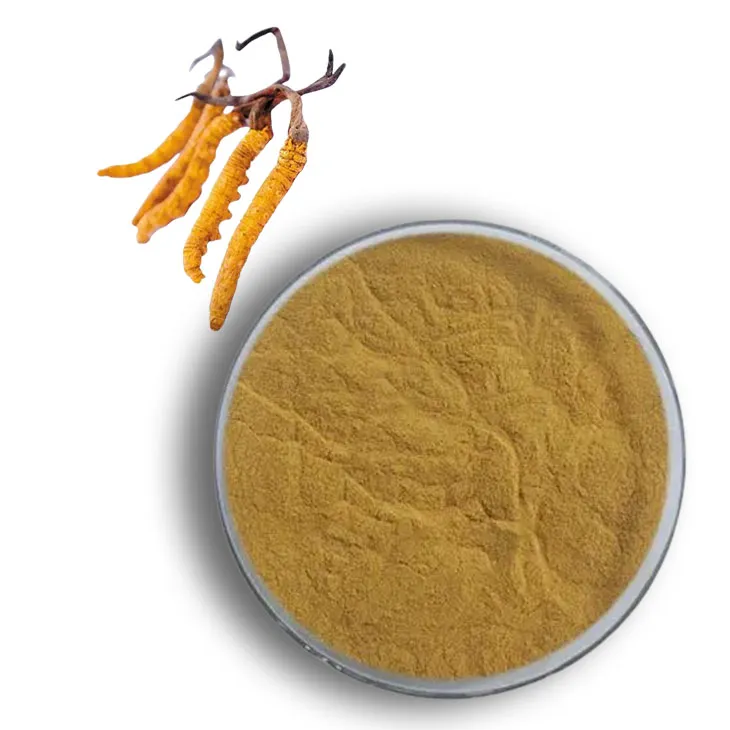
3.2 Modern Cultivation Techniques
- Tissue Culture Technique: This is a widely used modern method. It involves taking a small piece of Cordyceps tissue and culturing it in a sterile laboratory environment. The advantage of this method is that it can produce a large number of Cordyceps in a relatively short time and with high purity. However, it requires strict aseptic conditions and professional technical knowledge.
- Substrate - based Cultivation: In this method, a suitable substrate is prepared, which usually contains nutrients necessary for the growth of Cordyceps. The substrate can be made from various materials such as grains, sawdust, and plant extracts. Cordyceps spores or mycelium are inoculated onto the substrate, and then the cultivation environment, including temperature, humidity, and light, is carefully controlled.
3.3 Factors Affecting Cordyceps Cultivation
- Temperature: Cordyceps has specific temperature requirements for different growth stages. For example, during the mycelium growth stage, a relatively stable and lower temperature may be preferred, while during the fruiting body formation stage, a slightly higher temperature may be required.
- Humidity: High humidity is crucial for the growth of Cordyceps. Insufficient humidity can lead to slow growth or even death of the fungus. Maintaining appropriate humidity levels throughout the cultivation process is essential.
- Light: Although Cordyceps is a fungus, light also affects its growth. Different wavelengths and intensities of light can influence the development of mycelium and fruiting bodies.
4. Processing of Cordyceps
4.1 Harvesting
The timing of harvesting Cordyceps is very important. If harvested too early, the Cordyceps may not have fully developed and its content of bioactive compounds may be low. If harvested too late, it may start to deteriorate. Generally, when the fruiting body reaches a certain size and maturity, it is the optimal time for harvesting.
4.2 Drying
Drying is a crucial processing step. There are different drying methods, such as natural drying and artificial drying. Natural drying is simple and cost - effective, but it may be affected by environmental factors such as weather. Artificial drying, such as using a drying oven, can control the drying conditions more precisely, ensuring better preservation of the quality of Cordyceps. During drying, parameters such as temperature and air flow need to be carefully adjusted to avoid over - drying or under - drying.
4.3 Grinding and Extraction
After drying, Cordyceps is often ground into powder for further extraction. The grinding process should ensure that the particle size is fine enough to increase the extraction efficiency. There are various extraction methods for Cordyceps, including solvent extraction and supercritical fluid extraction. Solvent extraction is a common method, using solvents such as ethanol or water to extract bioactive compounds. Supercritical fluid extraction has the advantage of being more environmentally friendly and can obtain higher - purity extracts.
5. Technology in Cordyceps Production
5.1 Biotechnology in Cordyceps Cultivation
Biotechnology has played an important role in Cordyceps cultivation. Through genetic engineering techniques, scientists can improve the growth characteristics of Cordyceps, such as enhancing its resistance to diseases and pests, and increasing the yield of bioactive compounds. For example, gene editing can be used to modify the genes related to polysaccharide synthesis, thereby increasing the content of polysaccharides in Cordyceps.
5.2 Advanced Monitoring and Control Technologies
In modern Cordyceps cultivation, advanced monitoring and control technologies are used. Sensors can be installed in the cultivation environment to monitor parameters such as temperature, humidity, and light in real - time. Based on the data collected by these sensors, an automatic control system can adjust the environmental conditions accordingly. This ensures that Cordyceps grows in an optimal environment, improving the quality and yield of the final product.
6. The Market for Cordyceps
6.1 Current Market Demand
The market demand for Cordyceps is constantly increasing. In the traditional Chinese medicine market, Cordyceps has always been a high - value product. With the increasing recognition of its health benefits in the international market, the demand from overseas is also rising. In the health supplement market, Cordyceps - based products are becoming more and more popular among consumers who are interested in natural health products.
6.2 Market Trends
- Product Diversification: There is a trend towards more diversified Cordyceps products. In addition to traditional dried Cordyceps and Cordyceps Extract powders, there are now Cordyceps - containing capsules, tablets, and functional beverages.
- Quality Standardization: As the market grows, there is an increasing emphasis on quality standardization. Manufacturers are required to follow strict quality control standards to ensure the safety and effectiveness of Cordyceps products.
- Research - Driven Market Growth: Continued research on Cordyceps and its bioactive compounds is driving market growth. New research findings can lead to the development of new products and expand the application areas of Cordyceps.
6.3 Future Developments
Looking to the future, the Cordyceps market is expected to continue to grow. With the development of technology, more efficient cultivation and extraction methods may be developed, further reducing production costs. In addition, more in - depth research on Cordyceps may uncover new bioactive compounds and potential applications, opening up new markets. However, challenges such as environmental protection and sustainable development also need to be addressed to ensure the long - term development of the Cordyceps - related industries.
FAQ:
1. What are the main bioactive compounds in Cordyceps Extract?
Cordyceps Extract contains various bioactive compounds. Some of the main ones include cordycepin, adenosine, polysaccharides, and sterols. Cordycepin has shown potential anti - tumor and anti - inflammatory properties. Adenosine can have effects on the cardiovascular system. Polysaccharides are known for their immunomodulatory functions, and sterols contribute to the overall health - promoting effects of Cordyceps Extract.
2. How does traditional cultivation of Cordyceps differ from modern techniques?
Traditional cultivation of Cordyceps often involves natural habitats and is more dependent on environmental factors. For example, it is typically found in specific regions at certain altitudes and climates. Modern techniques, on the other hand, may include artificial culturing in controlled environments. This can involve using specialized substrates, precise temperature and humidity control, and optimized lighting conditions. Modern techniques aim to increase production efficiency and ensure consistent quality, while traditional cultivation may be more limited in terms of quantity and quality control.
3. What are the key processing procedures to retain the valuable properties of Cordyceps?
One important processing procedure is drying. Gentle drying methods at appropriate temperatures can help preserve the bioactive compounds. Another is extraction, where solvents are carefully chosen to ensure that the active ingredients are effectively isolated without being damaged. Purification steps may also be involved to remove impurities. Additionally, proper storage conditions, such as low - temperature and low - humidity storage, are crucial to maintain the stability of Cordyceps products and their valuable properties.
4. How do technological advancements improve Cordyceps cultivation and extraction?
Technological advancements have had a significant impact on Cordyceps cultivation and extraction. In cultivation, advanced sensors can monitor environmental conditions such as temperature, humidity, and CO2 levels in real - time, allowing for precise adjustments. Biotechnology techniques can be used to improve the genetic makeup of Cordyceps strains, enhancing their growth and productivity. In extraction, new extraction technologies like supercritical fluid extraction can provide more efficient and selective extraction of bioactive compounds compared to traditional methods, resulting in higher - quality extracts with greater purity.
5. What are the emerging trends in the Cordyceps market?
One emerging trend is the increasing use of Cordyceps in functional foods and nutraceuticals. Consumers are becoming more health - conscious and are interested in products that offer additional health benefits. Another trend is the expansion of Cordyceps - based products in the international market. There is also a growing interest in sustainable cultivation methods due to environmental concerns. Additionally, research into new applications of Cordyceps in areas such as cosmetics and pharmaceuticals is on the rise.
Related literature
- The Bioactive Compounds and Pharmacological Effects of Cordyceps"
- "Modern Cultivation Techniques for Cordyceps: A Review"
- "Processing and Preservation of Cordyceps for Optimal Bioactivity"
- "Technological Innovations in Cordyceps Extraction"
- "Market Trends and Future Prospects of Cordyceps - related Products"


-

Jujube Extract
2024-12-06
-

L-Arginine alpha-ketoglutarate
2024-12-06
-

Bitter Melon Extract
2024-12-06
-

Black Garlic Extract
2024-12-06
-

L-Arginine
2024-12-06
-

Mangosteen extract powder
2024-12-06
-

Mango flavored powder
2024-12-06
-

Centella Asiatica Extract
2024-12-06
-

Pueraria Lobata Extract
2024-12-06
-

Artichoke Leaf Extract
2024-12-06