


1. Introduction
Rose Hip Extract has emerged as a highly versatile substance with a wide range of applications in various industries. Derived from the fruit of the rose plant, it contains a rich cocktail of bioactive compounds that contribute to its diverse functionality. This extract has been the subject of increasing research in recent years, as its potential benefits are being explored more thoroughly.
2. Medical Applications
2.1 Wound Healing
The potential of Rose Hip Extract in wound healing is a significant area of study. Its antibacterial and antioxidant properties play crucial roles in this regard.
The antibacterial nature of Rose Hip Extract helps in preventing infection in wounds. Bacteria can impede the normal wound - healing process by causing inflammation and further tissue damage. By inhibiting the growth of bacteria, the extract creates a more favorable environment for the wound to heal. For example, certain bacteria - resistant strains have been shown to be sensitive to the antibacterial components present in Rose Hip Extract in laboratory studies.
Moreover, its antioxidant properties are essential for promoting tissue regeneration. Oxidative stress can occur at the site of a wound due to the presence of free radicals. These free radicals can damage cells and tissues, delaying the healing process. Rose Hip Extract, with its antioxidant compounds, can neutralize these free radicals, protecting the cells involved in tissue repair and regeneration. In clinical trials, patients with minor wounds treated with rose hip - based ointments showed faster rates of epithelialization and overall wound closure compared to those treated with standard dressings.
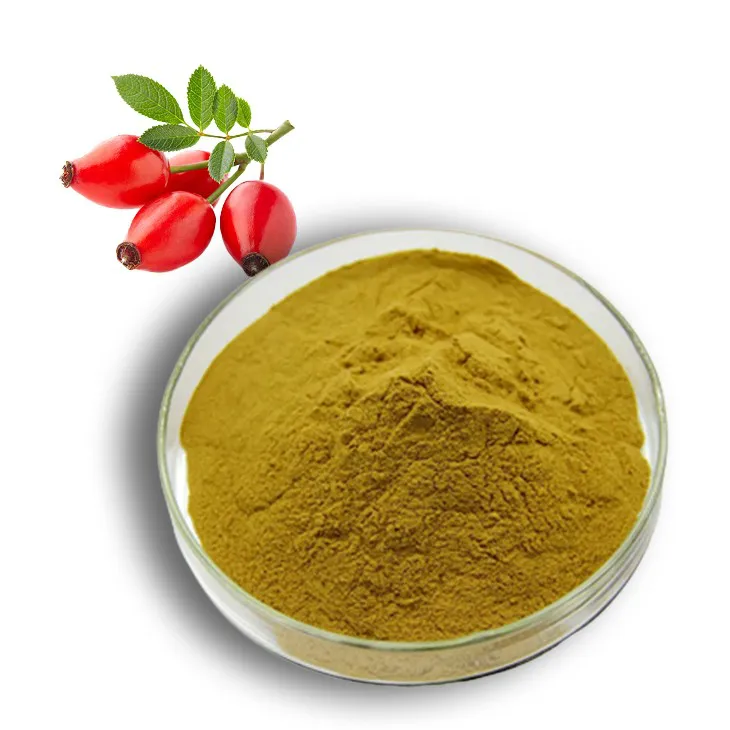
2.2 Anti - Inflammatory Effects
Another important medical application of Rose Hip Extract is its anti - inflammatory effect. Chronic inflammation is associated with a variety of diseases, including arthritis and certain autoimmune disorders.
Rose Hip Extract contains compounds that can modulate the body's inflammatory response. It can inhibit the production of pro - inflammatory cytokines, which are signaling molecules that promote inflammation. In the case of arthritis, for instance, studies have shown that regular consumption of Rose Hip Extract supplements can reduce joint pain and stiffness. This is attributed to its ability to dampen the inflammatory processes within the joints. Additionally, in some autoimmune diseases where the immune system mistakenly attacks the body's own tissues, the anti - inflammatory properties of Rose Hip Extract may potentially help in alleviating symptoms by reducing the overall inflammatory state.
3. Beauty and Personal Care Applications

3.1 Skin Exfoliation
In the beauty and personal care industry, Rose Hip Extract is considered a valuable ingredient. One of its key functions is skin exfoliation.
Rose Hip Extract contains natural acids that gently dissolve the bonds between dead skin cells. This process helps in removing the outer layer of dead skin, revealing fresher, more radiant skin underneath. Unlike some harsh chemical exfoliants, rose hip - based exfoliators are less likely to cause irritation, making them suitable for a variety of skin types, including sensitive skin. For example, many high - end facial scrubs now incorporate Rose Hip Extract as a key exfoliating component, providing a luxurious and effective exfoliation experience.
3.2 Unclogging Pores
Another important role of Rose Hip Extract in skincare is unclogging pores.
As the extract helps in exfoliating the skin, it also clears away the debris and sebum that can accumulate within pores. Clogged pores can lead to a variety of skin problems, such as blackheads and acne. By keeping the pores clean, Rose Hip Extract can contribute to a clearer complexion. Many skincare products, such as cleansers and masks, use Rose Hip Extract to target pore - related issues. These products often claim to reduce the appearance of enlarged pores and prevent future clogging, leading to smoother - looking skin.
3.3 Fading Acne Scars
Rose Hip Extract is also known for its ability to fade acne scars.
The extract contains vitamins and other nutrients that can stimulate collagen production in the skin. Collagen is essential for skin repair and regeneration. When applied to areas with acne scars, Rose Hip Extract can help to gradually fill in the depressed areas caused by scarring. Over time, this can lead to a reduction in the visibility of acne scars. Some topical creams containing Rose Hip Extract have been specifically formulated for this purpose and have shown promising results in clinical and consumer trials.
3.4 Anti - Aging Benefits
The anti - oxidative effects of Rose Hip Extract also offer significant anti - aging benefits.
As mentioned earlier, free radicals can cause skin damage, leading to premature aging signs such as wrinkles and fine lines. By combating free radicals, Rose Hip Extract helps to protect the skin from this type of damage. Additionally, it can improve the skin's elasticity and hydration levels. Many anti - aging skincare products, including serums and moisturizers, include Rose Hip Extract to help maintain a youthful - looking complexion. These products often claim to reduce the appearance of wrinkles, improve skin firmness, and enhance overall skin texture.
4. Agricultural Applications
4.1 Natural Biostimulant
In the agricultural sector, Rose Hip Extract can be used as a natural biostimulant.
When applied to plants, it can enhance various aspects of plant growth. It contains nutrients and bioactive compounds that can be absorbed by plants and utilized for their development. For example, it can stimulate root growth, which is crucial for the plant's ability to absorb water and nutrients from the soil. Stronger root systems can lead to more vigorous plant growth overall.
4.2 Pest and Disease Resistance
Rose Hip Extract also plays a role in improving resistance to pests and diseases in plants.
Some of the compounds in the extract can act as natural deterrents to pests. For instance, certain insects may be repelled by the smell or taste of the extract when it is sprayed on plants. Additionally, the extract can boost the plant's own immune system, making it more resistant to diseases. This is achieved through the activation of the plant's defense mechanisms, such as the production of phytoalexins, which are compounds that help plants fight off pathogens. In field trials, crops treated with Rose Hip Extract - based formulations have shown reduced incidence of pest infestations and diseases compared to untreated crops.
4.3 Crop Yield Increase
Finally, the use of Rose Hip Extract can lead to an increase in crop yields.
By enhancing plant growth and improving resistance to pests and diseases, the extract ultimately contributes to a higher quantity and quality of produce. Plants that are healthier and more productive are more likely to produce larger amounts of fruits, vegetables, or grains. This has significant implications for agricultural productivity, especially in the context of sustainable farming practices. Farmers can potentially benefit from using Rose Hip Extract as a natural and environmentally - friendly alternative to some synthetic fertilizers and pesticides.
5. Conclusion
The multiple applications of Rose Hip Extract across the medical, beauty and personal care, and agricultural sectors highlight its importance and potential for further research and development. Its diverse range of properties, from antibacterial and antioxidant in the medical field to exfoliating and anti - aging in skincare, and from being a natural biostimulant to enhancing pest and disease resistance in agriculture, make it a valuable resource. Continued research is needed to fully understand the mechanisms behind its various effects and to explore new applications in different fields. As our understanding of natural products and their benefits grows, Rose Hip Extract is likely to play an even more prominent role in the future.
FAQ:
What are the main antibacterial mechanisms of Rose Hip Extract in wound healing?
Rose Hip Extract contains certain active compounds. Some of these compounds can disrupt the cell membranes of bacteria, interfere with their metabolic processes, or inhibit the synthesis of essential bacterial components. For example, phenolic compounds in the extract may play a role in inhibiting bacterial growth. However, the exact antibacterial mechanisms are still being studied comprehensively.
How does Rose Hip Extract exfoliate the skin?
Rose Hip Extract contains natural acids, such as citric acid and malic acid, albeit in mild concentrations. These acids can help break down the bonds between dead skin cells on the surface of the skin. As a result, the dead skin cells are sloughed off more easily, which is how it exfoliates the skin without being overly harsh like some chemical exfoliants.
Can Rose Hip Extract be used for all skin types in personal care?
Generally, Rose Hip Extract is suitable for most skin types. For dry skin, its moisturizing and antioxidant properties can help improve skin hydration and protect against environmental damage. For oily skin, it can unclog pores and regulate sebum production. However, individuals with very sensitive skin may need to do a patch test first, as in rare cases, some people may have a mild allergic reaction to it.
What are the specific ways Rose Hip Extract enhances plant growth in agriculture?
Rose Hip Extract can influence plant growth in several ways. It may contain growth - promoting substances that can stimulate root development, for example. It can also enhance the plant's ability to take up nutrients from the soil. Additionally, it may boost the plant's natural defense mechanisms, which in turn allows the plant to allocate more energy towards growth rather than just defense against pests and diseases.
How can the antioxidant properties of Rose Hip Extract be measured?
There are several methods to measure the antioxidant properties of Rose Hip Extract. One common method is the DPPH (2,2 - diphenyl - 1 - picrylhydrazyl) assay. In this assay, the extract is mixed with DPPH solution. If the extract has antioxidant properties, it will donate electrons to the DPPH radical, causing a color change that can be measured spectrophotometrically. Another method is the ABTS (2,2' - azinobis - (3 - ethylbenzothiazoline - 6 - sulfonic acid)) assay, which also measures the ability of the extract to scavenge free radicals based on a color change reaction.
Related literature
- The Therapeutic Potential of Rose Hip Extract in Wound Management"
- "Rose Hip Extract: A Promising Ingredient in Skin Care"
- "Rose Hip Extract as a Natural Biostimulant in Agriculture: Current Research and Future Perspectives"


-

Pine bark Extract Powder
2024-12-17
-

Alfalfa Meal
2024-12-17
-

Propolis Extract Powder
2024-12-17
-

Acerola Extract
2024-12-17
-

Tamarind extract powder
2024-12-17
-

Longan Extract
2024-12-17
-

Curcumin
2024-12-17
-

Shikonin
2024-12-17
-

Tongkat Ali Extract Powder
2024-12-17
-

Motherwort Extract
2024-12-17