


1. Introduction
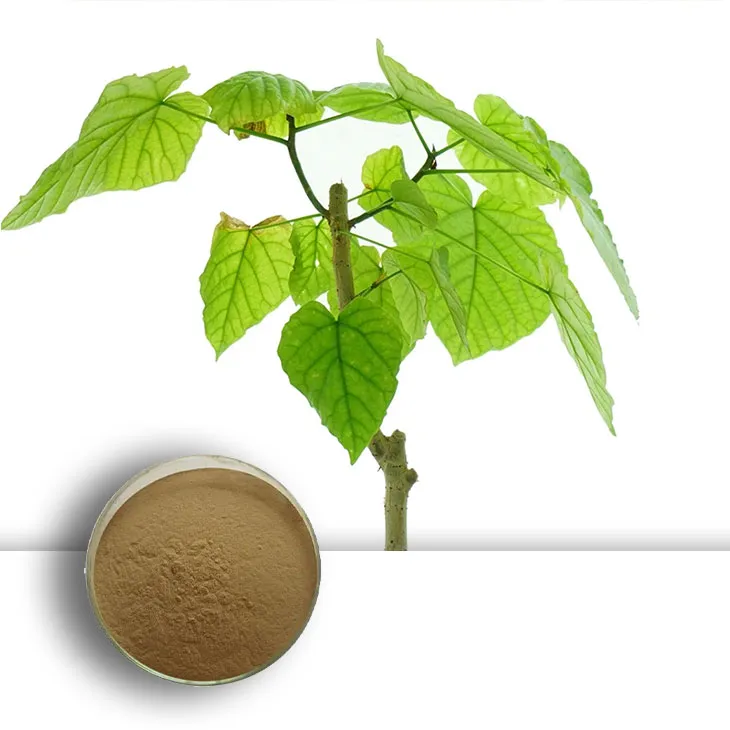
Deoxynojirimycin (DNJ) is a significant bioactive compound found in Mulberry leaf Extracts. It has attracted much attention due to its potential health - promoting properties, such as its role in blood - glucose regulation. Therefore, understanding the extraction process, separation, and identification of DNJ from Mulberry leaf Extracts is of great importance for both scientific research and potential industrial applications.
2. Extraction Process
2.1 Solvent Selection
The choice of solvent is crucial in the extraction of DNJ from mulberry leaves. - Water: Water is a commonly used solvent. It is relatively safe, environmentally friendly, and can extract DNJ to a certain extent. However, the extraction efficiency may not be as high as some organic solvents. - Ethanol: Ethanol is another popular solvent. It has a good solubility for DNJ and can also help in the extraction of other related compounds. Different concentrations of ethanol can be used, for example, 70% - 80% ethanol has been found to be effective in many studies. The ethanol - based extraction can be carried out under reflux conditions to enhance the extraction efficiency. - Methanol: Methanol also shows a relatively high solubility for DNJ. But it is more toxic compared to ethanol, so special care should be taken during the extraction process when using methanol.

2.2 Extraction Techniques
- Soxhlet Extraction: This is a traditional and widely used extraction method. In Soxhlet extraction, the mulberry leaf sample is placed in a Soxhlet extractor, and the solvent is continuously recycled through the sample. This method can ensure a relatively thorough extraction. However, it usually takes a long time, which may lead to the degradation of some thermally - sensitive compounds. - Ultrasonic - Assisted Extraction: Ultrasonic - assisted extraction has become increasingly popular in recent years. By applying ultrasonic waves to the extraction system, it can disrupt the cell walls of the mulberry leaves more effectively, thus increasing the release of DNJ. This method is relatively fast and can be carried out at a relatively low temperature, which is beneficial for the extraction of thermally - sensitive compounds. - Microwave - Assisted Extraction: Microwave - assisted extraction utilizes microwave energy to heat the extraction system. It can quickly increase the temperature inside the sample, promoting the extraction of DNJ. However, careful control of the microwave power and extraction time is required to avoid over - extraction or the decomposition of DNJ.
3. Separation Methods
3.1 Chromatography
Chromatography is one of the most important separation methods for DNJ in Mulberry leaf Extracts. - High - Performance Liquid Chromatography (HPLC): HPLC is widely used for the separation and quantification of DNJ. It offers high separation efficiency and good reproducibility. A suitable stationary phase and mobile phase need to be selected. For example, a C18 column can be used as the stationary phase, and a mixture of water - methanol or water - acetonitrile as the mobile phase. By adjusting the ratio of the mobile phase components, the separation of DNJ from other components in the extract can be optimized. - Gas Chromatography (GC): GC can also be used for the separation of DNJ, but it usually requires the derivatization of DNJ because DNJ is a polar compound and not very volatile in its original form. Derivatization can convert DNJ into a more volatile compound, which is suitable for GC analysis. However, the derivatization process can be complex and may introduce some errors. - Ion - Exchange Chromatography: Ion - exchange chromatography is based on the difference in the ionic properties of DNJ and other components in the extract. If DNJ has ionic groups, it can be separated from other non - ionic or differently - charged components by ion - exchange chromatography. This method can be very effective for the purification of DNJ, especially when combined with other chromatographic methods.
3.2 Other Separation Techniques
- Filtration: Filtration is a simple but necessary step in the separation process. After the extraction, the extract may contain some insoluble particles. By using filters with different pore sizes, such as filter paper or membrane filters, these insoluble particles can be removed, which can improve the purity of the extract and facilitate further separation and analysis. - Centrifugation: Centrifugation can also be used to separate the solid - liquid phases in the extract. By applying centrifugal force, the heavier particles will sediment at the bottom, and the supernatant can be easily separated. This method is especially useful when dealing with extracts that contain a large amount of suspended solids.
4. Identification Techniques
4.1 Spectroscopy
Spectroscopy is a powerful tool for the identification of DNJ. - Infrared Spectroscopy (IR): IR spectroscopy can provide information about the functional groups present in DNJ. Different functional groups will absorb infrared light at specific wavelengths, so by analyzing the IR spectrum of the sample, the presence of characteristic functional groups of DNJ, such as hydroxyl groups and amino groups, can be determined. - Nuclear Magnetic Resonance (NMR) Spectroscopy: NMR spectroscopy is very useful for determining the molecular structure of DNJ. Both ¹H - NMR and ¹³C - NMR can be used. ¹H - NMR can provide information about the hydrogen atoms in the molecule, such as their chemical environment and the number of equivalent hydrogen atoms. ¹³C - NMR can give information about the carbon atoms in the molecule. By combining the information from both NMR spectra, the complete molecular structure of DNJ can be elucidated. - Mass Spectrometry (MS): MS can determine the molecular weight of DNJ. It can also provide information about the fragmentation pattern of DNJ, which is very helpful for confirming its molecular structure. By ionizing the sample and analyzing the mass - to - charge ratio of the ions formed, the molecular weight and possible structural features of DNJ can be determined.
4.2 Chemical Tests
- Colorimetric Tests: Some colorimetric tests can be used to preliminarily identify DNJ. For example, DNJ can react with certain reagents to produce a characteristic color change. However, these colorimetric tests are not very specific and may be affected by other components in the extract. - Derivatization and Subsequent Analysis: As mentioned before in the context of GC, derivatization can be used not only for separation but also for identification. After derivatization, the derivatized product can be analyzed by other techniques such as HPLC or MS, which can provide more accurate information about DNJ.
5. Conclusion
In conclusion, the extraction process, separation, and identification of DNJ from Mulberry leaf Extracts are complex but important processes. The choice of extraction solvents and techniques can significantly affect the extraction efficiency of DNJ. Chromatography - based separation methods play a crucial role in obtaining pure DNJ, and spectroscopy - based identification techniques are essential for accurately characterizing DNJ. Further research is still needed to optimize these processes, especially in terms of improving extraction efficiency, separation selectivity, and identification accuracy, in order to fully explore the potential of DNJ in various fields such as medicine and food.
FAQ:
What are the common solvents used in the extraction of 1 - Deoxynojirimycin from Mulberry leaf Extract?
Common solvents include water, ethanol, methanol, etc. Water can be used as a polar solvent to extract polar components from Mulberry leaf Extract. Ethanol and methanol are also often used due to their good solubility for many organic compounds. Different solvents may affect the extraction efficiency and selectivity of 1 - Deoxynojirimycin.
What chromatography techniques are suitable for the separation of 1 - Deoxynojirimycin?
High - performance liquid chromatography (HPLC) is a very suitable technique. It can provide high - resolution separation based on the different interactions between the analyte (1 - Deoxynojirimycin) and the stationary phase. Gas chromatography (GC) may also be applicable in some cases if the compound can be vaporized without decomposition. Thin - layer chromatography (TLC) can be used for preliminary separation and screening.
How does spectroscopy help in the identification of 1 - Deoxynojirimycin?
Spectroscopy techniques such as infrared spectroscopy (IR) can identify the functional groups present in 1 - Deoxynojirimycin. Nuclear magnetic resonance spectroscopy (NMR) provides detailed information about the structure of the compound, including the types and positions of atoms. Mass spectrometry (MS) can determine the molecular weight and fragmentation pattern of 1 - Deoxynojirimycin, which is very useful for identification and structural elucidation.
What factors can affect the extraction process of 1 - Deoxynojirimycin from Mulberry leaf Extract?
The extraction time, temperature, solvent - to - sample ratio, and particle size of the mulberry leaf sample can all affect the extraction process. Longer extraction times may increase the extraction yield up to a certain point. Higher temperatures can sometimes enhance solubility but may also cause degradation of the target compound. An appropriate solvent - to - sample ratio ensures efficient extraction, and a smaller particle size can increase the surface area available for extraction.
Why is the separation of 1 - Deoxynojirimycin important?
The separation of 1 - Deoxynojirimycin is important because Mulberry leaf Extract is a complex mixture containing many different compounds. Separating 1 - Deoxynojirimycin allows for its purification, accurate quantification, and further study. Without proper separation, interference from other components may occur during identification and analysis, and it would be difficult to determine its biological activities and potential applications accurately.
Related literature
- “Extraction and Characterization of Bioactive Compounds from Mulberry Leaves”
- “Advanced Separation Techniques for Natural Product Isolation: Focus on Mulberry Leaf Components”
- “Identification of Phytochemicals in Mulberry leaf Extracts using Spectroscopic Methods”


-

Dan Shen Root Extract/Salvia Root Extract
2024-12-08
-

Europen Bilberry Extract
2024-12-08
-

Maitake Mushroom Extract
2024-12-08
-

Golden Seal Extract
2024-12-08
-

Sugarcane Extract
2024-12-08
-

Eyebright Extract
2024-12-08
-

Senna Leaf Extract
2024-12-08
-

Cordyceps Extract
2024-12-08
-

Aguaje Extract
2024-12-08
-

Licorice Root Extract Powder
2024-12-08