


1. Introduction
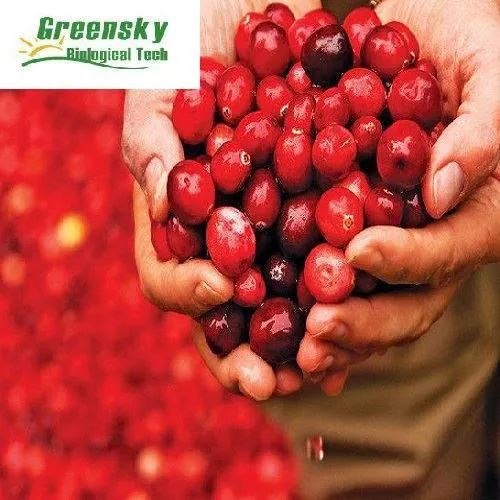
Cranberries are well - known for their rich content of anthocyanins. Anthocyanins are a class of flavonoid pigments that are widely distributed in plants. In cranberries, these anthocyanins not only contribute to the characteristic red - purple color but also possess a variety of health - beneficial properties. They have antioxidant, anti - inflammatory, and anti - microbial activities, among others. Therefore, the extraction, separation, and identification of anthocyanins from Cranberry Extract are crucial for understanding their chemical composition and exploring their potential applications in the fields of food, medicine, and cosmetics.
2. Extraction methods
2.1 Solvent extraction
Solvent extraction is one of the most commonly used methods for extracting anthocyanins from Cranberry Extract. The choice of solvent is a critical factor that can significantly influence the extraction efficiency.
- Solvent type: Different solvents have different affinities for anthocyanins. Commonly used solvents include methanol, ethanol, and acetone. Ethanol is often preferred due to its relatively low toxicity and wide availability. For example, a study found that using 70% ethanol as a solvent could achieve a relatively high extraction yield of cranberry anthocyanins.
- Extraction time: The extraction time also plays an important role. Generally, as the extraction time increases, the amount of anthocyanins extracted initially increases. However, after a certain period, the extraction rate may reach a plateau or even decline due to the degradation of anthocyanins. For instance, in some experiments, an extraction time of 2 - 3 hours was found to be optimal for obtaining a high yield of cranberry anthocyanins when using ethanol as a solvent.
- Extraction temperature: Temperature affects the solubility of anthocyanins in the solvent and the rate of chemical reactions. Higher temperatures can usually increase the extraction rate, but excessive heat may cause the degradation of anthocyanins. A moderate temperature range, such as 40 - 60°C, is often considered suitable for the extraction of cranberry anthocyanins. For example, when extracting cranberry anthocyanins with 70% ethanol, an extraction temperature of 50°C was found to result in a relatively high extraction yield while minimizing the degradation of anthocyanins.

2.2 Other extraction methods
Besides solvent extraction, there are also other methods for extracting anthocyanins from Cranberry Extract.
- Supercritical fluid extraction: This method uses supercritical fluids, such as supercritical carbon dioxide, as the extraction medium. Supercritical fluids have the properties of both gases and liquids, which can provide high extraction efficiency and selectivity. However, this method requires relatively high - end equipment and strict operating conditions, so its application is relatively limited at present.
- Ultrasonic - assisted extraction: Ultrasonic waves can cause cavitation in the solvent, which helps to break the cell walls of cranberries and release anthocyanins more effectively. This method can significantly shorten the extraction time and improve the extraction efficiency. For example, in some studies, ultrasonic - assisted extraction of cranberry anthocyanins was found to be able to reduce the extraction time from several hours to dozens of minutes compared with traditional solvent extraction.
- Microwave - assisted extraction: Microwave radiation can heat the solvent and cranberry materials rapidly and uniformly, which can also enhance the extraction efficiency. However, similar to supercritical fluid extraction, it also requires special equipment and careful control of operating parameters to avoid over - heating and degradation of anthocyanins.
3. Separation techniques
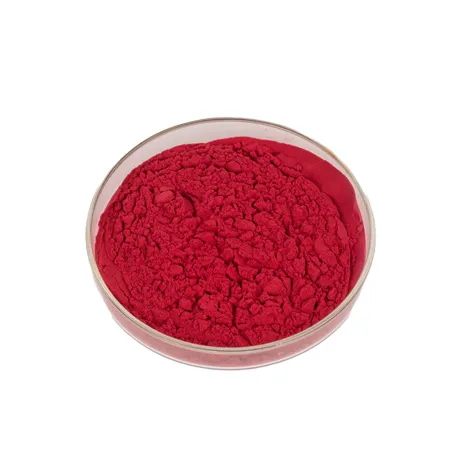
3.1 Chromatography
Chromatography is a powerful tool for separating anthocyanins in Cranberry Extract.
- High - performance liquid chromatography (HPLC): HPLC is widely used for the separation and quantification of anthocyanins. It can achieve high - resolution separation based on the differences in the chemical properties of anthocyanins, such as polarity and molecular size. In HPLC, different columns and mobile phases can be selected according to the specific requirements of the analysis. For example, a C18 column and a mobile phase consisting of water - acetic acid - methanol can be used to separate various anthocyanins in Cranberry Extract effectively.
- Thin - layer chromatography (TLC): TLC is a simple and rapid separation method. It is based on the differential migration of anthocyanins on a thin - layer plate coated with a stationary phase. TLC can be used for preliminary screening and identification of anthocyanins in Cranberry Extract. For example, by spotting the Cranberry Extract on a silica gel TLC plate and developing it with an appropriate solvent system, different anthocyanin components can be separated and visualized by their characteristic colors.

3.2 Other separation techniques
In addition to chromatography, there are other separation techniques that can be used for anthocyanins in Cranberry Extract.
- Centrifugal partition chromatography (CPC): CPC is a liquid - liquid chromatography technique that does not require a solid stationary phase. It can achieve continuous separation of anthocyanins with high efficiency and good reproducibility. However, it also requires relatively specialized equipment and skilled operation.
- Capillary electrophoresis (CE): CE is based on the differential migration of charged analytes in an electric field. It can provide high - resolution separation of anthocyanins, especially for the separation of isomeric forms. However, the sample injection volume in CE is relatively small, which may limit its application in some cases.
4. Identification methods
4.1 Spectroscopy
Spectroscopy is an important method for the identification of anthocyanins in Cranberry Extract.
- Ultraviolet - visible (UV - Vis) spectroscopy: Anthocyanins have characteristic absorption peaks in the UV - Vis region. By measuring the absorption spectra of Cranberry Extract in the UV - Vis range, the presence of anthocyanins can be preliminarily determined. For example, anthocyanins usually show absorption peaks in the range of 500 - 550 nm, which can be used as an important indicator for their identification.
- Fourier transform infrared (FT - IR) spectroscopy: FT - IR spectroscopy can provide information about the functional groups in anthocyanins. By analyzing the FT - IR spectra of Cranberry Extract, the types of anthocyanins can be inferred based on the characteristic absorption bands of different functional groups. For example, the presence of hydroxyl groups and carbonyl groups in anthocyanins can be detected by FT - IR spectroscopy.
- Nuclear magnetic resonance (NMR) spectroscopy: NMR spectroscopy can provide detailed information about the molecular structure of anthocyanins. It can be used to determine the chemical shift, coupling constant, and other parameters of the nuclei in anthocyanins, which are crucial for accurately identifying their molecular structure. However, NMR spectroscopy requires relatively pure samples and high - end equipment, so its application is relatively limited in some cases.
4.2 Other identification methods
Besides spectroscopy, there are other methods for identifying anthocyanins in Cranberry Extract.
- Mass spectrometry (MS): MS can determine the molecular weight and fragmentation pattern of anthocyanins. By combining MS with chromatography, such as HPLC - MS, it can provide more accurate identification of anthocyanins in Cranberry Extract. For example, in HPLC - MS analysis, the molecular ions and fragment ions of anthocyanins can be detected, which can be used to determine their molecular formula and structural characteristics.
- Chemical derivatization: Chemical derivatization can be used to modify anthocyanins to make them more easily identifiable. For example, by reacting anthocyanins with certain reagents, new functional groups can be introduced, which can change their chromatographic and spectroscopic properties, thereby facilitating their identification.
5. Conclusion
The extraction, separation, and identification of anthocyanins in Cranberry Extract are complex but important processes. Different extraction methods, such as solvent extraction, supercritical fluid extraction, ultrasonic - assisted extraction, and microwave - assisted extraction, have their own advantages and limitations. Chromatography and other separation techniques can effectively separate anthocyanins in Cranberry Extract, while spectroscopy and other identification methods can accurately identify their chemical composition. In future research, further optimization of these methods is needed to improve the extraction efficiency, separation resolution, and identification accuracy of anthocyanins in Cranberry Extract, so as to better explore their potential applications in various fields.
FAQ:
What are the common solvent types used in the solvent extraction of anthocyanins from Cranberry Extract?
Common solvent types include acidic solvents such as acidified methanol or ethanol. Acid is added to help maintain the stability of anthocyanins during extraction. Water can also be used in combination with organic solvents to adjust the polarity and extraction efficiency.
How does extraction time affect the yield of anthocyanins in Cranberry Extract?
Generally, as the extraction time increases, the yield of anthocyanins may initially increase. However, after a certain point, the yield may reach a plateau or even decrease due to possible degradation or interference of other compounds. Longer extraction times may also lead to the extraction of unwanted substances.
What is the role of temperature in the extraction of anthocyanins from Cranberry Extract?
Temperature has a significant impact. Moderate temperatures can enhance the solubility of anthocyanins and thus increase the extraction efficiency. But if the temperature is too high, it can cause the degradation of anthocyanins, reducing their quantity and quality.
Which chromatography techniques are suitable for the separation of anthocyanins in Cranberry Extract?
High - performance liquid chromatography (HPLC) is a very suitable technique. It can effectively separate different types of anthocyanins based on their different chemical properties such as polarity. Thin - layer chromatography (TLC) can also be used for preliminary separation and identification.
How does spectroscopy help in the identification of anthocyanins in Cranberry Extract?
For example, ultraviolet - visible (UV - Vis) spectroscopy can be used. Anthocyanins have characteristic absorption peaks in the UV - Vis range, which can be used to identify their presence. Mass spectrometry (MS) can also provide information about the molecular weight and structure of anthocyanins, helping in accurate identification.
Related literature
- Anthocyanin Extraction and Analysis from Berries: A Review"
- "Optimization of Anthocyanin Extraction from Cranberries Using Response Surface Methodology"
- "Separation and Identification of Anthocyanins in Fruit Extracts by Advanced Chromatographic and Spectroscopic Techniques"


-

Quercetin
2024-12-06
-

Dan Shen Root Extract/Salvia Root Extract
2024-12-06
-

Hedyotis Diffusa Extract
2024-12-06
-

Bitter Melon Extract
2024-12-06
-

Coenzyme Q10
2024-12-06
-

Green Tea Extract
2024-12-06
-

L-Tyrosine
2024-12-06
-

Alfalfa Meal
2024-12-06
-

Sea buckthorn Juice Powder
2024-12-06
-

Yohimbine Bark Extract
2024-12-06