


1. Introduction
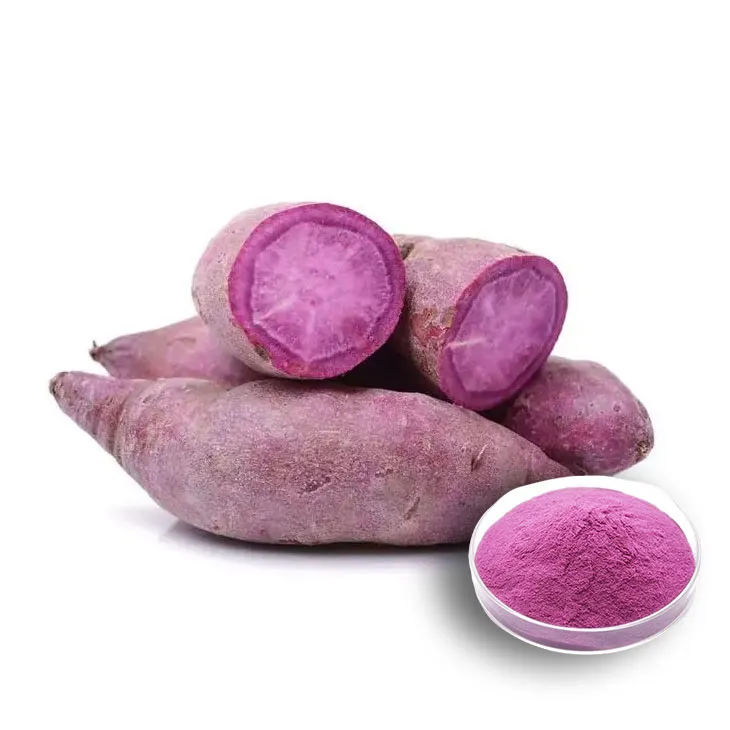
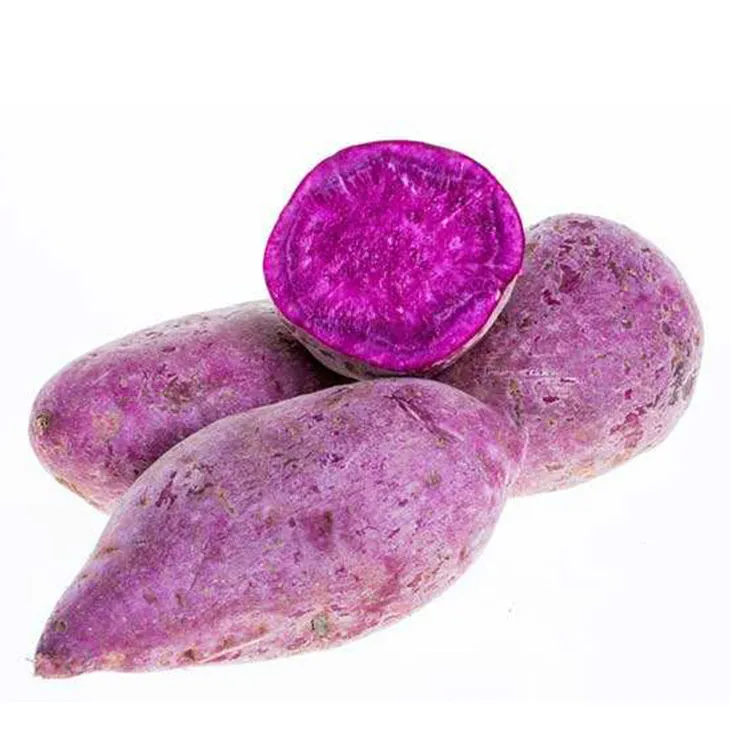
Anthocyanins are a class of water - soluble pigments that are widely distributed in plants. Purple sweet potato is a rich source of anthocyanins. These pigments not only give the purple sweet potato its characteristic color but also possess various beneficial biological activities, such as antioxidant, anti - inflammatory, and anti - cancer properties. Therefore, the extraction, separation, and identification of anthocyanins from purple sweet potato extract are of great significance for their further utilization in the food, pharmaceutical, and cosmetic industries.
2. Extraction of Anthocyanins from Purple Sweet Potato
2.1. Selection of Solvents
The choice of solvent is crucial for the extraction of anthocyanins. Common solvents used for anthocyanin extraction include water, ethanol, methanol, and their mixtures. Water is a relatively safe and environmentally friendly solvent, but the extraction efficiency may be lower compared to organic solvents. Ethanol is widely used due to its good solubility for anthocyanins and its relatively low toxicity. A mixture of ethanol and water, such as a 50:50 (v/v) ratio, is often a good choice as it can balance the extraction efficiency and safety.

2.2. Influence of Extraction Conditions
- Temperature: The extraction temperature can significantly affect the yield and quality of anthocyanins. Generally, a higher temperature can increase the extraction rate, but it may also cause degradation of anthocyanins. For purple sweet potato anthocyanin extraction, a temperature range of 40 - 60°C is often considered appropriate.
- Time: The extraction time also plays an important role. Longer extraction times may lead to higher yields, but excessive extraction time can also cause degradation or impurity absorption. Usually, an extraction time of 1 - 3 hours is commonly used.
- Solid - Liquid Ratio: The ratio of purple sweet potato material to the solvent (solid - liquid ratio) affects the extraction efficiency. A higher solid - liquid ratio may increase the concentration of anthocyanins in the extract, but it may also lead to difficulties in filtration and separation. A common solid - liquid ratio for purple sweet potato anthocyanin extraction is 1:5 - 1:10 (w/v).
2.3. Extraction Methods
- Maceration: This is a simple and traditional extraction method. The purple sweet potato is crushed and then soaked in the solvent for a certain period. However, this method may have a relatively long extraction time and lower extraction efficiency.
- Soxhlet Extraction: Soxhlet extraction can continuously extract anthocyanins with a relatively high efficiency. But it requires special equipment and may cause over - extraction and degradation of anthocyanins under long - term high - temperature conditions.
- Ultrasonic - Assisted Extraction: Ultrasonic waves can enhance the mass transfer between the purple sweet potato and the solvent, thereby increasing the extraction efficiency. This method is relatively fast, can reduce the extraction time, and is more suitable for industrial applications.
- Microwave - Assisted Extraction: Microwave - assisted extraction can also improve the extraction efficiency by using microwave energy to heat the solvent - purple sweet potato mixture rapidly. It has the advantages of short extraction time and high efficiency, but the equipment cost may be relatively high.
3. Separation of Anthocyanins

3.1. Column Chromatography
Column chromatography is a commonly used method for separating anthocyanins. Silica gel column chromatography and C18 reverse - phase column chromatography are two typical types. In silica gel column chromatography, different anthocyanin components can be separated based on their different polarities. C18 reverse - phase column chromatography is more suitable for separating anthocyanins with different hydrophobicities. The mobile phase used in column chromatography usually consists of a mixture of solvents, such as methanol - water or acetonitrile - water mixtures, and the proportion of the solvents can be adjusted according to the separation requirements.
3.2. High - Performance Liquid Chromatography (HPLC)
HPLC is a highly efficient and accurate separation method for anthocyanins. It can separate different anthocyanin components based on their different retention times in the column. The columns used in HPLC for anthocyanin separation are usually C18 columns. The mobile phase composition and flow rate need to be optimized for different anthocyanin samples. For example, a mobile phase of methanol - acetic acid - water mixture may be used, and the flow rate can be set at 0.5 - 1.5 mL/min. HPLC can not only separate anthocyanins but also be used for the subsequent quantification of anthocyanin components.
4. Identification of Anthocyanins
4.1. Spectroscopic Methods
- UV - Visible Spectroscopy: Anthocyanins have characteristic absorption peaks in the UV - visible region. The absorption peaks usually occur at around 270 - 280 nm (due to the benzene ring) and 500 - 550 nm (due to the conjugated system of anthocyanins). By analyzing the position and intensity of these absorption peaks, the presence of anthocyanins can be preliminarily determined, and some information about their structures can be inferred.
- Fourier Transform Infrared Spectroscopy (FT - IR): FT - IR can provide information about the functional groups in anthocyanins. Different functional groups, such as hydroxyl groups, carbonyl groups, and aromatic rings, will show characteristic absorption bands in the FT - IR spectrum. This method can help in identifying the types of anthocyanins and understanding their chemical structures.
4.2. Mass Spectrometry (MS)
Mass spectrometry is a powerful tool for identifying anthocyanins. By ionizing anthocyanin molecules and analyzing the mass - to - charge ratio (m/z) of the generated ions, the molecular weight and fragmentation patterns of anthocyanins can be determined. Electrospray ionization (ESI) and matrix - assisted laser desorption/ionization (MALDI) are two common ionization methods used in anthocyanin mass spectrometry. The obtained mass spectrometry data can be compared with the known anthocyanin databases to identify the specific types of anthocyanins present in the Purple Sweet Potato Extract.
5. Conclusion
The extraction, separation, and identification of anthocyanins from Purple Sweet Potato Extract are complex but important processes. Through the optimization of extraction conditions and the selection of appropriate separation and identification methods, we can obtain high - quality anthocyanin products. These anthocyanins have great potential for applications in various fields, such as food coloring, health - promoting products, and cosmetics. Future research can focus on further improving the extraction efficiency, exploring new separation and identification techniques, and studying the biological activities of anthocyanins in more detail.
FAQ:
What are the main factors affecting the extraction yield of anthocyanins from Purple Sweet Potato Extract?
The main factors include the extraction method (such as solvent extraction, enzymatic extraction, etc.), the type of solvent used, extraction time, extraction temperature, and the ratio of raw materials to solvent. For example, using a more suitable solvent like acid - ethanol can increase the solubility of anthocyanins, and proper control of extraction time and temperature can ensure the highest yield without degrading the anthocyanins.
Which methods are commonly used for the separation of anthocyanins in Purple Sweet Potato Extract?
Commonly used separation methods include chromatography techniques. For example, column chromatography can be used to separate anthocyanins based on their different affinities to the stationary phase. High - performance liquid chromatography (HPLC) is also widely used, which can achieve high - resolution separation of different anthocyanin components in the extract.
How can the purity of anthocyanins extracted from purple sweet potato be determined?
The purity can be determined by various methods. One common way is through spectroscopic analysis, such as UV - Vis spectroscopy. By comparing the absorption spectra of the sample with that of pure anthocyanin standards, an estimate of purity can be made. Another method is using chromatographic techniques. The ratio of the peak area of the anthocyanin component to the total peak area in the chromatogram can also indicate the purity.
What are the advantages of studying anthocyanins from Purple Sweet Potato Extract?
Anthocyanins from Purple Sweet Potato Extract have several advantages. Firstly, they are natural pigments, which are more acceptable in the food and cosmetic industries compared to synthetic pigments. Secondly, they have potential health - promoting effects, such as antioxidant, anti - inflammatory, and anti - cancer properties. Studying them can also contribute to the utilization of purple sweet potato, a widely available agricultural product.
What are the challenges in the extraction, separation, and identification of anthocyanins from Purple Sweet Potato Extract?
One challenge in extraction is to achieve high yield and purity simultaneously while minimizing the degradation of anthocyanins. In separation, separating complex mixtures of anthocyanins with similar structures can be difficult. For identification, the presence of interfering substances in the extract may affect the accuracy of identification methods, and the need for expensive equipment and specialized techniques in some identification methods can also be a limitation.
Related literature
- Anthocyanin Extraction from Purple Sweet Potato: Optimization and Characterization"
- "Separation and Identification of Anthocyanins in Purple Sweet Potato by High - Performance Liquid Chromatography"
- "The Role of Anthocyanins in Purple Sweet Potato: From Extraction to Health Benefits"


-

Chaste Berry Extract
2024-12-08
-

Pine bark Extract Powder
2024-12-08
-

Aguaje Extract
2024-12-08
-

Hops Extract
2024-12-08
-

Lycopene
2024-12-08
-

Peppermint Oil
2024-12-08
-

Polygonum Cuspidatum Extract
2024-12-08
-

Senna Leaf Extract
2024-12-08
-

Calendula Extract
2024-12-08
-

Black Pepper Extract
2024-12-08