


1. Introduction
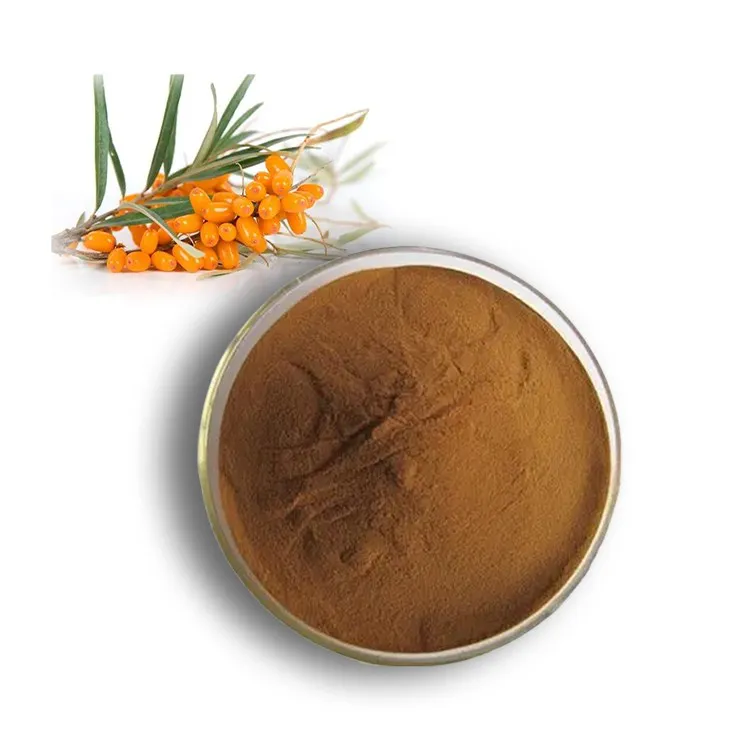
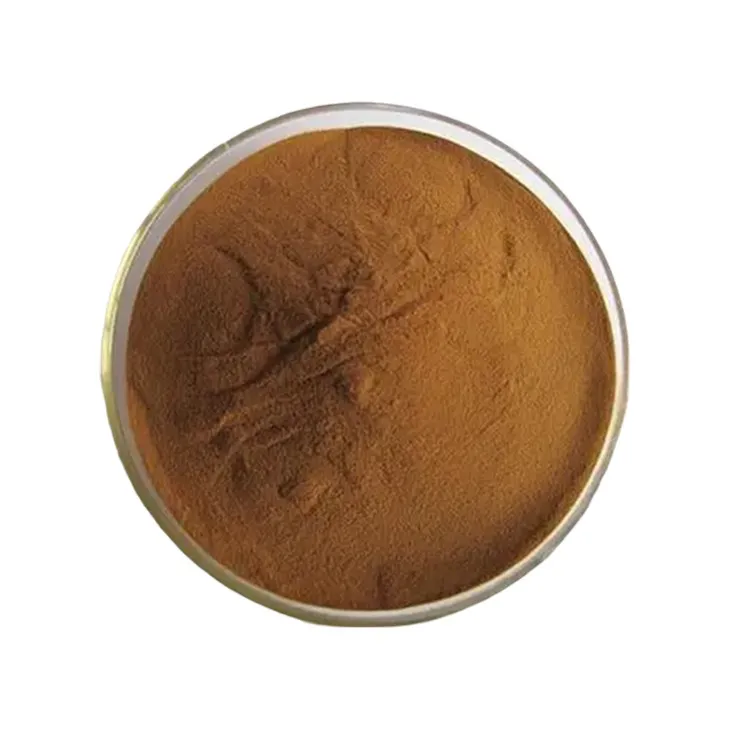
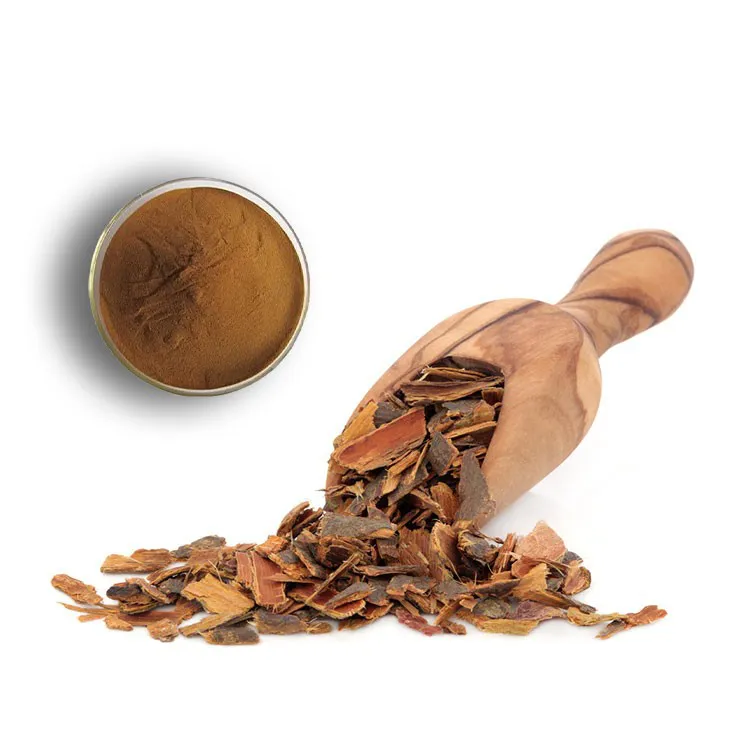
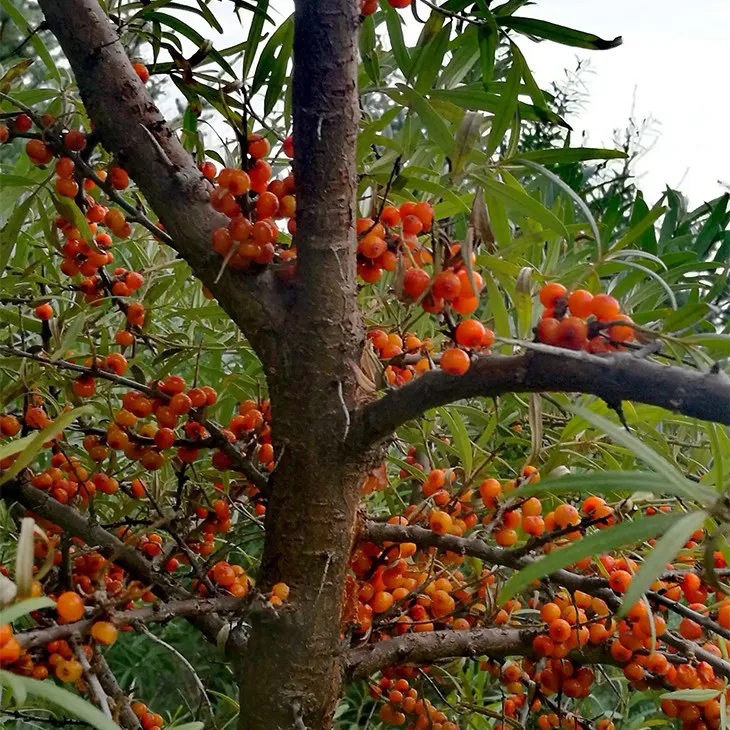
Seabuckthorn (Hippophae rhamnoides L.) is a remarkable plant species that has been garnering increasing attention in recent years. Seabuckthorn flavonoids, which are abundant in seaBuckthorn bark extract, possess a wide range of biological activities such as antioxidant, anti - inflammatory, and cardioprotective effects. Therefore, the in - depth study of the extraction, separation, and identification of seabuckthorn flavonoids is of great significance for fully exploiting the potential of seabuckthorn resources.
2. Extraction of Seabuckthorn Flavonoids
2.1 Solvent Extraction
- Solvent selection: Ethanol is one of the most commonly used solvents for extracting seabuckthorn flavonoids. It has good solubility for flavonoids and is relatively safe and easy to obtain. Water - ethanol mixtures are also frequently employed. For example, a mixture of 70% ethanol has been shown to be effective in extracting a relatively high yield of flavonoids from seabuckthorn bark.
- Extraction process: The seabuckthorn bark is first dried and ground into a fine powder. Then, the powder is mixed with the selected solvent in a certain ratio, usually with a solid - to - solvent ratio of around 1:10 - 1:20. The mixture is then subjected to extraction under reflux or by Soxhlet extraction. Reflux extraction involves heating the mixture at a certain temperature (usually around 60 - 80°C) for a period of time, typically 2 - 4 hours. Soxhlet extraction is a continuous extraction method that can ensure more complete extraction, but it may take longer time, usually 6 - 12 hours.
- Optimization factors: The extraction efficiency can be affected by several factors. The particle size of the seabuckthorn bark powder plays a role. Finer powder generally leads to better extraction results as it provides a larger surface area for solvent - solute interaction. The extraction time and temperature also need to be optimized. Longer extraction time and appropriate temperature can increase the yield of flavonoids, but excessive time or too high temperature may lead to the degradation of flavonoids.
2.2 Microwave - Assisted Extraction
- Principle: Microwave - assisted extraction utilizes microwave energy to heat the solvent and the seabuckthorn bark sample rapidly. This causes the cells in the bark to rupture more quickly, facilitating the release of flavonoids into the solvent. The microwaves can penetrate the sample and generate heat evenly, which can significantly shorten the extraction time.
- Procedure: The seabuckthorn bark powder is placed in a microwave - compatible container with the extraction solvent. The power of the microwave and the extraction time are two important parameters. For example, a power of 400 - 600 watts and an extraction time of 5 - 15 minutes can be used. After extraction, the mixture is cooled and filtered to obtain the flavonoid - rich extract.
- Advantages: Compared with traditional solvent extraction, microwave - assisted extraction has the advantages of shorter extraction time, higher extraction efficiency, and lower solvent consumption. It can also be more energy - efficient in some cases.
2.3 Ultrasonic - Assisted Extraction
- Mechanism: Ultrasonic - assisted extraction is based on the cavitation effect of ultrasonic waves. When ultrasonic waves are applied to the solvent - seabuckthorn bark system, cavitation bubbles are formed and then collapse violently. This creates high - pressure and high - temperature micro - environments, which can break the cell walls of the seabuckthorn bark and promote the transfer of flavonoids from the solid phase to the liquid phase.
- Extraction conditions: The frequency of the ultrasonic waves, the extraction time, and the solvent - to - sample ratio are key factors. For instance, an ultrasonic frequency of 20 - 50 kHz, an extraction time of 20 - 60 minutes, and a solvent - to - sample ratio of 10 - 20:1 can be considered. The seabuckthorn bark powder and the solvent are placed in an ultrasonic bath, and after extraction, the extract is separated by filtration.
- Benefits: Ultrasonic - assisted extraction can improve the extraction efficiency, reduce the extraction time, and is a relatively environmentally friendly extraction method as it does not require high - temperature heating for a long time, which can avoid the degradation of some heat - sensitive flavonoids.
3. Separation of Seabuckthorn Flavonoids
3.1 Column Chromatography
- Silica Gel Column Chromatography: Silica gel is a commonly used stationary phase in column chromatography for separating seabuckthorn flavonoids. The flavonoid - rich extract is loaded onto the silica gel column, and then a series of solvents with different polarities are used as eluents. For example, a non - polar solvent like hexane can be used first to elute non - polar impurities, followed by a solvent with medium polarity such as ethyl acetate - hexane mixture to separate different flavonoid fractions. The flavonoids are separated based on their different affinities for the silica gel and the eluents.
- Polyamide Column Chromatography: Polyamide has a strong affinity for flavonoids due to the presence of amide groups. In polyamide column chromatography, the seabuckthorn flavonoid extract is applied to the polyamide column. The elution process is carried out using solvents with different polarities. Water - ethanol mixtures are often used as eluents. The separation is achieved because different flavonoids interact differently with the polyamide matrix depending on their chemical structures.
3.2 High - Performance Liquid Chromatography (HPLC)
- Separation Principle: HPLC is a highly efficient and precise separation technique. It separates seabuckthorn flavonoids based on their different affinities for the stationary phase and the mobile phase in the chromatographic column. The mobile phase, which is a mixture of solvents with different polarities, flows through the column at a high pressure, and the flavonoids are separated as they move at different speeds through the column.
- Column and Mobile Phase Selection: For seabuckthorn flavonoid separation, reversed - phase columns such as C18 columns are often used. The mobile phase can be a mixture of acetonitrile and water, sometimes with the addition of a small amount of acid (such as formic acid or acetic acid) to improve the separation. The ratio of acetonitrile to water and the flow rate of the mobile phase need to be optimized according to the specific flavonoid composition to be separated.
- Detection and Quantification: HPLC is usually equipped with a detector, such as a UV - Vis detector. Flavonoids have characteristic absorption peaks in the UV - Vis region, which can be used for detection and quantification. By comparing the retention times and peak areas of the sample flavonoids with those of known standards, the identity and quantity of the flavonoids in the seaBuckthorn bark extract can be determined.
4. Identification of Seabuckthorn Flavonoids
4.1 Spectroscopic Methods
- UV - Vis Spectroscopy: As mentioned above, flavonoids have characteristic absorption spectra in the UV - Vis range. Different types of flavonoids show different absorption maxima. For example, flavones typically have absorption maxima around 240 - 280 nm and 320 - 350 nm. By comparing the UV - Vis spectra of the seabuckthorn flavonoid extract with the spectra of known flavonoid standards, a preliminary identification of the flavonoid types can be made.
- Infrared Spectroscopy (IR): IR spectroscopy can provide information about the functional groups present in seabuckthorn flavonoids. The stretching and bending vibrations of different functional groups such as hydroxyl groups (-OH), carbonyl groups (C = O), and aromatic rings give characteristic absorption bands in the IR spectrum. For example, the presence of a broad absorption band around 3200 - 3600 cm - 1 indicates the presence of hydroxyl groups. By analyzing the IR spectrum of the flavonoid extract, the presence of certain functional groups can be determined, which is helpful for the identification of flavonoids.
- Nuclear Magnetic Resonance (NMR) Spectroscopy: NMR spectroscopy is a powerful tool for the structural determination of seabuckthorn flavonoids. 1H - NMR and 13C - NMR spectra can provide detailed information about the hydrogen and carbon atoms in the flavonoid molecules, respectively. For example, the chemical shifts of the hydrogen atoms in different positions of the flavonoid ring can be used to determine the substitution pattern of the ring. By comparing the NMR spectra of the sample flavonoids with those of known standards or by analyzing the NMR data based on the knowledge of flavonoid structural characteristics, the exact structure of the seabuckthorn flavonoids can be identified.
4.2 Mass Spectrometry (MS)
- Principle: Mass spectrometry measures the mass - to - charge ratio (m/z) of ions. In the case of seabuckthorn flavonoids, the flavonoid molecules are first ionized (either by electron ionization (EI), electrospray ionization (ESI), or other ionization methods) to form ions. These ions are then separated according to their m/z values in the mass spectrometer.
- Identification of Molecular Weight and Fragmentation Patterns: The molecular weight of the seabuckthorn flavonoids can be directly determined from the mass spectrum. In addition, the fragmentation patterns of the flavonoid ions can provide important information about the structure of the flavonoids. Different flavonoid structures will produce different fragmentation patterns upon ionization. By comparing the mass spectra and fragmentation patterns of the sample flavonoids with those of known standards or by using mass spectral databases, the identity of the seabuckthorn flavonoids can be determined.
5. Conclusion
The extraction, separation, and identification of seabuckthorn flavonoids from seaBuckthorn bark extract are important aspects for the comprehensive utilization of seabuckthorn resources. Through various extraction methods such as solvent extraction, microwave - assisted extraction, and ultrasonic - assisted extraction, seabuckthorn flavonoids can be effectively extracted. Column chromatography and HPLC are effective separation techniques, and spectroscopic methods and mass spectrometry are powerful tools for identification. Future research should focus on further optimizing these processes, exploring new extraction and separation techniques, and deepening the understanding of the biological activities and pharmacological mechanisms of seabuckthorn flavonoids.
FAQ:
What are the common extraction methods for seabuckthorn flavonoids from seaBuckthorn bark extract?
Common extraction methods include solvent extraction. For example, using ethanol as a solvent. Maceration extraction is often used, where the seaBuckthorn bark extract is soaked in the solvent for a certain period to extract the flavonoids. Another method is Soxhlet extraction, which can continuously extract flavonoids more efficiently.
What are the main separation strategies for seabuckthorn flavonoids?
One of the main separation strategies is chromatography. Column chromatography can be used, such as silica gel column chromatography, which separates seabuckthorn flavonoids based on their different affinities to the stationary phase and mobile phase. High - performance liquid chromatography (HPLC) is also very effective for separating flavonoids with high precision and selectivity.
How can seabuckthorn flavonoids be identified?
There are several identification methods. Spectroscopic methods are commonly used. For example, ultraviolet - visible spectroscopy (UV - Vis) can be used to detect the characteristic absorption peaks of seabuckthorn flavonoids. Nuclear magnetic resonance (NMR) spectroscopy can provide detailed information about the molecular structure of flavonoids for identification.
What are the potential applications of seabuckthorn flavonoids?
Seabuckthorn flavonoids have potential applications in the pharmaceutical field. They may have antioxidant, anti - inflammatory, and antibacterial properties, which can be used for developing drugs. In the cosmetics industry, they can be added to skincare products due to their antioxidant properties to protect the skin from damage.
What factors may affect the extraction of seabuckthorn flavonoids?
Factors such as the type of solvent, extraction time, and extraction temperature can affect the extraction of seabuckthorn flavonoids. Different solvents may have different extraction efficiencies. Longer extraction time may increase the yield to a certain extent, but there may also be the risk of extracting other impurities. Higher extraction temperature may also enhance the extraction rate, but excessive temperature may cause degradation of flavonoids.
Related literature
- Extraction and Characterization of Flavonoids from Seabuckthorn: A Review"
- "Separation and Purification of Seabuckthorn Flavonoids: Recent Advances"
- "Identification and Quantification of Seabuckthorn Flavonoids Using Advanced Analytical Techniques"


-

Pomegranate Extract
2024-12-07
-

Kidney Bean Extract
2024-12-07
-

Konjac Powder
2024-12-07
-

Genistein
2024-12-07
-

Alfalfa Meal
2024-12-07
-

Tongkat Ali Extract
2024-12-07
-

Okra Extract
2024-12-07
-

Reishi mushroom extract
2024-12-07
-

Cactus Extract
2024-12-07
-

Chaste Berry Extract
2024-12-07