


1. Introduction
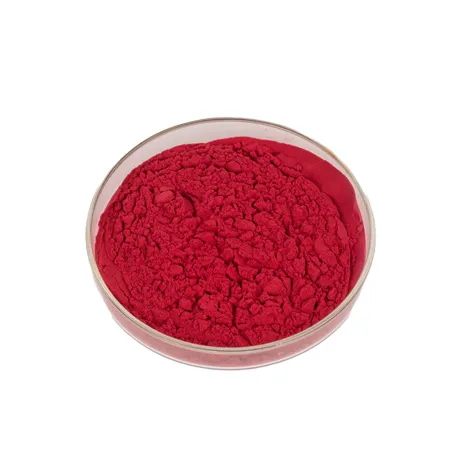
Cranberries are well - known for their numerous health benefits, which are mainly attributed to the various bioactive compounds present in them. Cranberry Extract has gained significant popularity in the fields of food, pharmaceuticals, and cosmetics. To obtain pure isolates from cranberries, proper processing and extraction techniques are crucial. This article will comprehensively discuss these techniques, covering aspects from raw material selection to final purification.
2. Raw Material Selection
2.1. Cranberry Varieties
There are different varieties of cranberries, such as American cranberry (Vaccinium macrocarpon) and European cranberry (Vaccinium oxycoccos). The choice of variety can significantly influence the quality and composition of the extract. American cranberries are more commonly used in commercial extraction due to their larger size and higher yield. However, European cranberries also possess unique bioactive profiles that may be preferred for certain applications.
2.2. Quality of Raw Cranberries
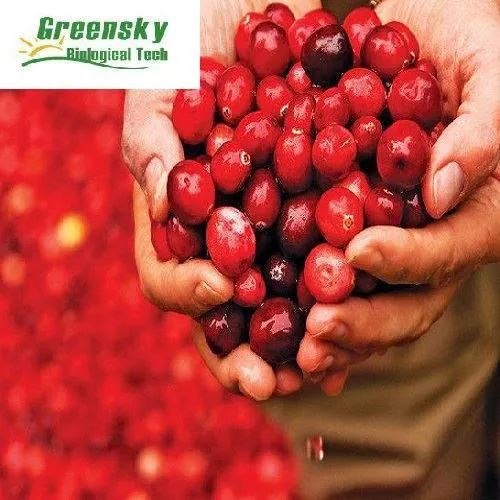
When selecting raw cranberries, factors like ripeness, freshness, and freedom from contaminants are of utmost importance. Ripe cranberries typically contain higher levels of bioactive compounds. Freshly harvested cranberries are preferred as they have not undergone significant degradation of their active ingredients. Additionally, cranberries should be free from pesticides, heavy metals, and microbial contaminants. This can be ensured through proper agricultural practices and quality control during harvesting and storage.3. Extraction Methods
3.1. Solvent Extraction
- Solvent extraction is one of the most traditional and widely used methods for Cranberry Extract production.
-
3.1.1. Selection of Solvents
Different solvents can be used depending on the target compounds. Commonly used solvents include ethanol, methanol, and water. Ethanol is a popular choice as it is relatively safe, has good solubility for many cranberry components, and can be easily removed during the purification process. Methanol, although more effective in extracting certain polar compounds, is toxic and requires careful handling. Water is a green solvent option, but it may not be as effective in extracting non - polar compounds. -
3.1.2. Extraction Process
The cranberries are first crushed or ground into a pulp. Then, the selected solvent is added in a certain ratio (e.g., 1:5, cranberry pulp to solvent). The mixture is stirred or shaken for a specific period, usually several hours to days at a controlled temperature. This allows the solvent to penetrate the cranberry cells and dissolve the bioactive compounds. After extraction, the mixture is filtered to separate the liquid extract from the solid residue.

3.2. Supercritical Fluid Extraction (SFE)
-
3.2.1. Principle of SFE
Supercritical fluid extraction utilizes a supercritical fluid, most commonly carbon dioxide (CO₂). A supercritical fluid has properties between those of a liquid and a gas. CO₂ in its supercritical state has excellent solvent properties, especially for non - polar and low - polar compounds. It can penetrate the cranberry matrix effectively and dissolve the target compounds. -
3.2.2. SFE Process
The cranberries are placed in an extraction vessel. Supercritical CO₂ is introduced at a high pressure (usually above 7.38 MPa) and a controlled temperature (around 31.1 °C). The CO₂ flows through the cranberry material, extracting the bioactive compounds. The extract - laden CO₂ is then passed through a separator where the pressure is reduced, causing the CO₂ to return to its gaseous state and the extract to be collected. SFE has several advantages, including being a non - toxic process, producing a cleaner extract with no solvent residues, and having a relatively short extraction time.
4. Purification Processes
4.1. Filtration
After extraction, the crude extract contains not only the desired bioactive compounds but also impurities such as cell debris, proteins, and undissolved solids. Filtration is the first step in purification. Different types of filters can be used, such as membrane filters, filter papers, or filter cartridges. For example, a 0.45 - μm membrane filter can effectively remove larger particles and some proteins, while a 0.22 - μm filter can further purify the extract by removing smaller impurities.4.2. Centrifugation
Centrifugation can be used to separate heavier impurities from the extract. By spinning the extract at a high speed (e.g., 5000 - 10000 rpm), the denser particles are forced to the bottom of the centrifuge tube, while the purified extract remains on top. This method is especially useful for removing larger cell fragments and insoluble materials.4.3. Chromatographic Purification
-
4.3.1. Column Chromatography
Column chromatography is a powerful technique for purifying Cranberry Extracts. Different stationary phases can be used depending on the nature of the target compounds. For example, silica gel columns can be used for separating polar compounds, while reversed - phase columns (such as C18 columns) are effective for non - polar compounds. The crude extract is loaded onto the column, and then a mobile phase (a solvent or a solvent mixture) is passed through the column. The different components in the extract will interact differently with the stationary and mobile phases, resulting in their separation as they elute from the column at different times. -
4.3.2. High - Performance Liquid Chromatography (HPLC)
HPLC is a more advanced form of chromatography. It offers high resolution and precise separation of Cranberry Extract components. In HPLC, a high - pressure pump is used to force the mobile phase through a very fine - particle - sized column. The elution of components is monitored by a detector, such as a UV - Vis detector. HPLC can be used to isolate specific bioactive compounds with high purity, which is crucial for applications in pharmaceuticals and high - end cosmetics.
5. Quality Control and Analysis
5.1. Chemical Analysis
To ensure the quality of Cranberry Extracts, various chemical analysis methods are employed. These include spectrophotometric methods to determine the total phenolic content, HPLC for the identification and quantification of individual bioactive compounds (such as proanthocyanidins, flavonoids), and gas chromatography - mass spectrometry (GC - MS) for analyzing volatile compounds. Chemical analysis helps in verifying the composition of the extract and ensuring that it meets the required standards.5.2. Microbiological Testing
Microbiological testing is essential to ensure that the Cranberry Extract is free from harmful microorganisms. Tests for total plate count, yeast and mold count, and the presence of specific pathogens (such as Salmonella, Escherichia coli) are carried out. If any microbial contamination is detected, the extract must be further processed or discarded to ensure product safety.5.3. Stability Testing
Cranberry Extracts may degrade over time, especially under certain environmental conditions. Stability testing involves storing the extract at different temperatures and humidity levels and monitoring the changes in its chemical and physical properties over a period. This helps in determining the shelf - life of the extract and the appropriate storage conditions.6. Conclusion
Producing pure isolates from Cranberry Extract requires a comprehensive understanding of the entire process, from raw material selection to final purification and quality control. By carefully choosing the appropriate cranberry variety, applying the right extraction method (such as solvent extraction or supercritical fluid extraction), and implementing effective purification processes, high - quality Cranberry Extracts can be obtained. These pure isolates have a wide range of applications in the food, pharmaceutical, and cosmetic industries, offering the potential for various health - promoting products.
FAQ:
What are the key factors in raw material selection for Cranberry Extract processing?
When selecting raw materials for Cranberry Extract processing, several factors are crucial. Firstly, the quality and ripeness of the cranberries matter. Ripe cranberries tend to have a higher content of the desired bioactive compounds. Secondly, the origin of the cranberries can influence their composition. Cranberries from different regions may have variations in nutrient levels due to differences in soil, climate, and farming practices. Additionally, the absence of contaminants such as pesticides and heavy metals is essential to ensure a pure and safe extract.
How does solvent extraction work in Cranberry Extract production?
Solvent extraction in Cranberry Extract production involves using a suitable solvent to dissolve the desired compounds from the cranberry matrix. Commonly used solvents include ethanol or water - ethanol mixtures. The cranberry material is first ground or mashed to increase the surface area. Then, the solvent is added, and the mixture is stirred or agitated for a period. This allows the solvent to penetrate the cells and dissolve the target compounds like polyphenols. After that, the mixture is filtered to separate the liquid extract (containing the dissolved compounds) from the solid residue.
What are the advantages of supercritical fluid extraction over solvent extraction in Cranberry Extract processing?
Supercritical fluid extraction has several advantages over solvent extraction in Cranberry Extract processing. Firstly, supercritical fluids, often carbon dioxide, are more environmentally friendly compared to traditional solvents as they are non - toxic and can be easily removed from the final product. Secondly, supercritical fluid extraction can operate at lower temperatures, which helps to preserve the heat - sensitive bioactive compounds in cranberries. It also provides a more selective extraction, resulting in a purer extract with fewer impurities compared to solvent extraction.
What purification processes are typically involved in making pure cranberry isolates?
Typical purification processes in making pure cranberry isolates include filtration, chromatography, and crystallization. Filtration helps to remove large particles and undissolved solids from the initial extract. Chromatography, such as high - performance liquid chromatography (HPLC), can be used to separate different compounds based on their chemical properties, allowing for the isolation of specific bioactive components. Crystallization can be employed to further purify and obtain the desired cranberry isolates in a more concentrated and pure form.
How can one ensure the quality of the Cranberry Extract during the production process?
To ensure the quality of the Cranberry Extract during the production process, several measures can be taken. Quality control starts with the raw material inspection, ensuring that only high - quality cranberries are used. During extraction, strict control of parameters such as temperature, extraction time, and solvent concentration (in solvent extraction) or pressure and temperature (in supercritical fluid extraction) is necessary. Regular analysis of the intermediate and final products using techniques like spectroscopy and chromatography can also help to monitor the composition and purity of the extract. Additionally, following good manufacturing practices (GMP) helps to ensure overall quality and consistency.
Related literature
- Cranberry Bioactive Compounds: Isolation, Identification and Biological Activity"
- "Advanced Extraction Technologies for Cranberry Phytochemicals"
- "Purification and Characterization of Cranberry Extracts for Therapeutic Applications"


-

Apricot Powder
2024-12-08
-

Natural grape seed extract
2024-12-08
-

Cassia Seed Extract
2024-12-08
-

Dandelion Root Extract
2024-12-08
-

Saponin Extract
2024-12-08
-

Maca Extract
2024-12-08
-

Lemon Extract
2024-12-08
-

Resveratrol Extract
2024-12-08
-

Bladder horn extract powder
2024-12-08
-

Bilberry Extract
2024-12-08