


1. Introduction
Natural Rose Hip Extract is rich in various beneficial components such as vitamins, antioxidants, and essential fatty acids. However, its stability is often a concern, which can limit its wide application in various fields like cosmetics, food, and pharmaceuticals. Understanding and quickly solving the stability defects of Rose Hip Extract are crucial for maximizing its potential.
2. Analyzing the factors affecting stability
2.1 Chemical composition
The chemical composition of Rose Hip Extract plays a significant role in its stability. Vitamin C, for example, is highly sensitive to oxidation. In the Rose Hip Extract, it can easily react with oxygen in the air, leading to a decrease in its content and activity.
Another important component, polyunsaturated fatty acids, is prone to lipid peroxidation. This process not only reduces the nutritional value of the extract but also may generate harmful substances.
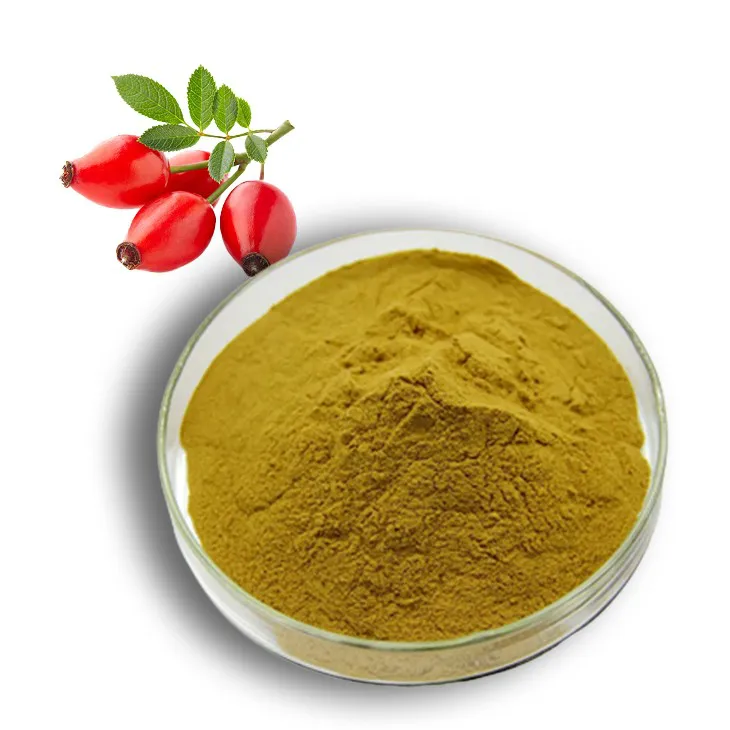
2.2 Environmental factors
Temperature has a profound impact on the stability of Rose Hip Extract. High temperatures can accelerate chemical reactions such as oxidation and degradation. For instance, during storage or processing at elevated temperatures, the active components in the extract may be rapidly lost.
Light, especially ultraviolet light, can also initiate photochemical reactions in the Rose Hip Extract. These reactions can break down the chemical bonds of the active components, thereby reducing their effectiveness.
Moisture is another environmental factor to consider. Excessive moisture can promote the growth of microorganisms and cause hydrolysis of some components in the extract.
3. Physical methods to improve stability

3.1 Encapsulation
Encapsulation is a very effective physical method. It involves enclosing the Rose Hip Extract within a protective shell or matrix. This can protect the active components from external factors such as oxygen, light, and moisture.
There are different types of encapsulation materials available. For example, liposomes can be used as encapsulation carriers. Liposomes have a lipid bilayer structure similar to cell membranes, which can effectively encapsulate hydrophilic and hydrophobic components in the Rose Hip Extract.
Another option is polymeric microcapsules. These microcapsules can be designed to have different release properties, allowing for controlled release of the Rose Hip Extract components over time.

3.2 Spray - drying
Spray - drying is a common method in the food and pharmaceutical industries. In this process, the Rose Hip Extract is atomized into small droplets and then dried rapidly in a hot air stream. This results in the formation of fine powder particles.
The advantage of spray - drying is that it can quickly remove moisture from the extract, reducing the risk of hydrolysis and microbial growth. Moreover, the dried powder has a relatively stable physical form, which is convenient for storage and transportation.
4. Role of additives in improving stability
4.1 Antioxidants
Adding antioxidants is an important way to improve the stability of Rose Hip Extract. Antioxidants can scavenge free radicals and prevent the oxidation of sensitive components such as Vitamin C and polyunsaturated fatty acids.
Common antioxidants used in Rose Hip Extract include vitamin E, which has strong antioxidant properties. It can form a protective layer around the active components in the extract, inhibiting the oxidation process.
Another antioxidant is ascorbic acid palmitate. This compound combines the antioxidant properties of Vitamin C with the lipophilicity of palmitate, making it suitable for protecting both hydrophilic and hydrophobic components in the Rose Hip Extract.
4.2 Chelating agents
Chelating agents can also play a role in improving the stability of Rose Hip Extract. These agents can bind metal ions in the extract. Metal ions such as iron and copper can catalyze oxidation reactions, so by chelating these ions, the rate of oxidation can be reduced.
For example, ethylenediaminetetraacetic acid (EDTA) is a widely used chelating agent. It has a high affinity for metal ions and can effectively prevent metal - catalyzed oxidation in the Rose Hip Extract.
5. Quality control and monitoring during the process
To ensure the effectiveness of the methods for improving the stability of Rose Hip Extract, strict quality control and monitoring are required throughout the production and storage processes.
5.1 Analytical techniques
Various analytical techniques can be used to monitor the stability of the extract. For example, high - performance liquid chromatography (HPLC) can be used to analyze the content of active components in the Rose Hip Extract over time. This technique can accurately detect changes in the concentration of key components such as vitamins and antioxidants.
Gas chromatography - mass spectrometry (GC - MS) is another useful tool. It can be used to identify and quantify volatile components in the extract, which is important for understanding any changes in the chemical composition due to stability issues.
5.2 Standardization
Standardization of the production process is also essential. Establishing standard operating procedures for extraction, processing, and storage can ensure consistent quality of the Rose Hip Extract. This includes controlling parameters such as temperature, time, and the use of additives.
6. Conclusion
In conclusion, the stability defects of natural Rose Hip Extract can be rapidly addressed through a combination of approaches. By analyzing the factors affecting stability, applying physical methods such as encapsulation and spray - drying, using additives like antioxidants and chelating agents, and implementing strict quality control and monitoring, the stability of Rose Hip Extract can be significantly improved. This will not only expand its application range in various industries but also ensure that its beneficial properties are fully utilized.
FAQ:
Question 1: What are the main chemical components in natural Rose Hip Extract that may affect its stability?
Natural Rose Hip Extract contains various components such as vitamins (e.g., Vitamin C), phenolic compounds, and flavonoids. Vitamin C is relatively unstable and can be easily oxidized, which may lead to the instability of the entire extract. Phenolic compounds may also react with other substances in certain conditions, affecting the stability of the extract.
Question 2: How does encapsulation help to solve the stability defect of natural Rose Hip Extract?
Encapsulation can protect the Rose Hip Extract from external factors such as oxygen, light, and moisture. By enclosing the extract within a protective shell (e.g., a polymer-based capsule), it limits the exposure of the active components to these destabilizing factors. This helps to maintain the integrity of the chemical components in the extract and thus improves its stability.
Question 3: What types of additives can be used to enhance the stability of natural Rose Hip Extract?
Antioxidants are commonly used additives. For example, tocopherols (vitamin E) can be added. Vitamin E has antioxidant properties and can prevent the oxidation of components like Vitamin C in the Rose Hip Extract. Additionally, some stabilizers such as certain gums or polysaccharides can also be used. They can help in maintaining the physical and chemical stability of the extract by interacting with the active components.
Question 4: Are there any specific storage conditions that can help with the stability of natural Rose Hip Extract?
Yes, storing the natural Rose Hip Extract in a cool, dark, and dry place is beneficial. Low temperature can slow down chemical reactions that may cause instability. Darkness helps to prevent photodegradation, especially for light - sensitive components like some phenolic compounds. Keeping it dry is crucial as moisture can promote hydrolysis or other unwanted reactions.
Question 5: How can we monitor the stability of natural Rose Hip Extract during processing and storage?
Various methods can be used. Spectroscopic techniques such as UV - Vis spectroscopy can be employed to monitor the changes in the characteristic absorption of the active components. High - performance liquid chromatography (HPLC) can also be used to analyze the changes in the concentration of key components over time. Additionally, physical properties such as viscosity and solubility can be monitored as indicators of stability.
Related literature
- Stability Studies of Rose Hip Extract: A Comprehensive Review"
- "Chemical Composition and Stability of Natural Rose Hip Extracts"
- "Enhancing the Stability of Rose Hip Extract: New Approaches and Findings"


-

Nettle Root Extract
2024-12-12
-

Chasteberry Extract
2024-12-12
-
Rose Hip Extract
2024-12-12
-

Bitter Melon Extract
2024-12-12
-

Grape Seed Extract Powder
2024-12-12
-

N-Acetyl-L-cysteine(NAC)
2024-12-12
-

Carrageenan Extract Powder
2024-12-12
-

Cordyceps Extract
2024-12-12
-

L-carnitine
2024-12-12
-

S-Adenosyl L-methionine(SAMe)
2024-12-12