


1. Introduction
Silkworm Mulberry leaf Extract has been increasingly in the spotlight across various industries in recent years. This extract is rich in a variety of bioactive components, which endow it with multiple functions and great application potential. However, the entire chain from mulberry leaf cultivation to its final extraction and market application is a complex yet interesting process.
2. Mulberry Leaf Cultivation
2.1 Environmental Requirements
Mulberry trees, the source of mulberry leaves, are relatively adaptable but still have some preferences for environmental conditions. Sunlight is crucial for their growth. Adequate sunlight exposure ensures efficient photosynthesis, which promotes the growth of mulberry leaves and the accumulation of nutrients. Generally, mulberry trees require at least 6 - 8 hours of direct sunlight per day.
Regarding soil, well - drained and fertile soil is preferred. Sandy loam soil with a good structure can provide a stable root - growing environment. The soil pH should be around 6.0 - 7.5. Too acidic or alkaline soil may affect the absorption of nutrients by mulberry trees.
Temperature also plays an important role. Mulberry trees are typically suitable for growth in relatively warm climates. They can tolerate a certain degree of cold in winter, but extremely low temperatures for a long time may damage the trees. The optimal growth temperature range is usually between 15 - 30 °C.

2.2 Cultivation Techniques
Propagation methods mainly include seed propagation and vegetative propagation. Seed propagation is relatively simple but may take longer for the trees to reach maturity. Vegetative propagation, such as cuttings and grafting, can preserve the excellent characteristics of the mother plants and enable faster growth of new plants.
Irrigation management is essential. Mulberry trees need regular watering, especially during the dry season. However, over - irrigation should be avoided to prevent waterlogging, which can lead to root rot. A proper irrigation schedule should be formulated according to the local climate and soil moisture conditions.
Fertilization is another key aspect. Organic fertilizers, such as compost and manure, are excellent choices as they can improve soil fertility and structure in the long term. In addition, appropriate amounts of chemical fertilizers, such as nitrogen, phosphorus, and potassium fertilizers, can be applied according to the growth stage of mulberry trees. For example, nitrogen fertilizers are more needed during the leaf - growing period to promote leaf growth.
3. Processing of Mulberry Leaves into Extracts
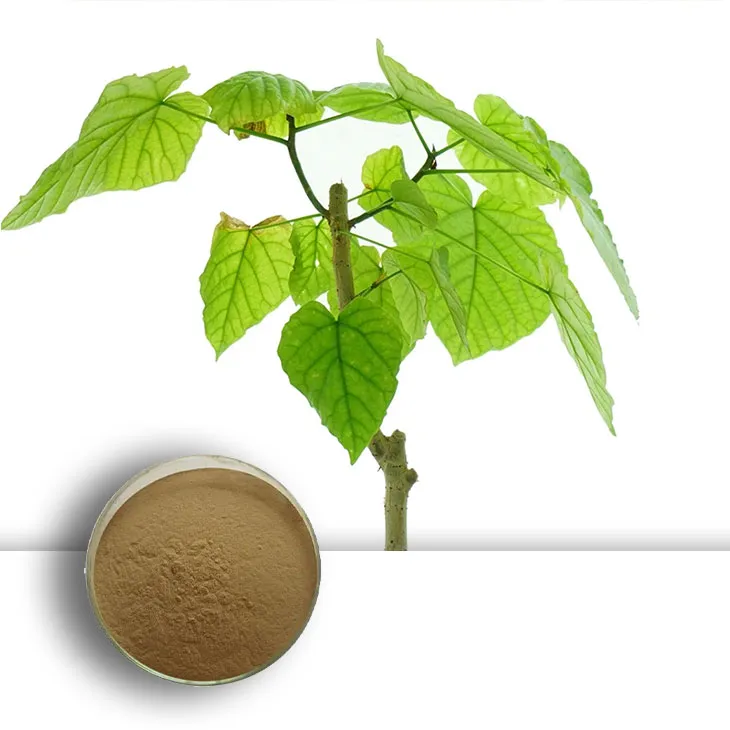
3.1 Pretreatment of Mulberry Leaves
Before extraction, mulberry leaves need to be pretreated. Firstly, the fresh mulberry leaves are harvested and then carefully sorted to remove any damaged or diseased leaves. Cleaning is an important step to remove dirt, dust, and other impurities on the leaf surface. This can be achieved by gently washing the leaves with clean water.
After cleaning, the leaves may need to be dried. Drying methods include natural drying and artificial drying. Natural drying is simple and cost - effective, but it is time - consuming and may be affected by weather conditions. Artificial drying, such as using drying ovens or dehydrators, can control the drying conditions more precisely and is more suitable for large - scale production.
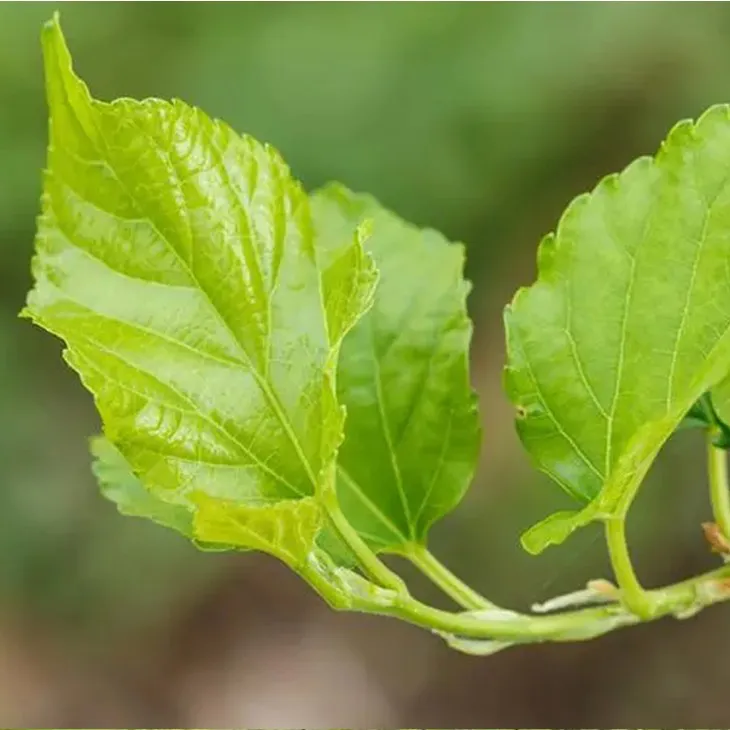
3.2 Extraction Technologies
There are several modern extraction methods to obtain Mulberry leaf Extract. Solvent extraction is a commonly used method. Organic solvents such as ethanol or methanol can be used to dissolve the active components in mulberry leaves. However, the choice of solvent needs to be carefully considered to ensure food - grade or pharmaceutical - grade quality of the extract and also to meet safety and environmental requirements.
Supercritical fluid extraction is another advanced technology. Using supercritical carbon dioxide as the extraction medium has many advantages. It can operate at relatively low temperatures, which helps to preserve the active components better. Moreover, supercritical carbon dioxide is non - toxic, non - flammable, and easy to separate from the extract, resulting in a purer product.
Ultrasonic - assisted extraction is also an emerging technology. By applying ultrasonic waves, the cell walls of mulberry leaves can be disrupted more effectively, increasing the release rate of active components. This method can significantly shorten the extraction time and improve the extraction efficiency.
4. Technology Assurance for High - Quality Extracts
4.1 Quality Control during Extraction
During the extraction process, strict quality control is necessary to ensure the high - quality of Mulberry leaf Extract. Monitoring of extraction parameters such as temperature, pressure (in the case of supercritical fluid extraction), and extraction time is crucial. Deviations in these parameters may affect the yield and quality of the extract.
Purity analysis of the extract is also an important part of quality control. Methods such as high - performance liquid chromatography (HPLC) can be used to analyze the composition and purity of the extract. This helps to ensure that the extract contains the desired active components in the appropriate amounts and is free from harmful impurities.
4.2 Standardization of Extract Production
To ensure the consistency of product quality, the standardization of production processes is essential. This includes formulating strict production standards for each step from raw material selection to final product packaging. For example, establishing clear criteria for the quality of mulberry leaves used, the extraction methods and conditions, and the quality inspection procedures.
Certifications and compliance also play a significant role. Mulberry leaf Extract products intended for different applications, such as in the food, pharmaceutical, or cosmetic industries, need to comply with relevant industry standards and regulations. Obtaining certifications such as Good Manufacturing Practice (GMP) and ISO quality management system certifications can enhance the credibility and market competitiveness of the products.
5. The Expanding Market for Mulberry leaf Extract
5.1 Applications in the Medical Field
Mulberry leaf Extract has shown potential in the medical field. Some studies have suggested that it may have hypoglycemic effects. The active components in the extract may help regulate blood sugar levels, which is of great significance for diabetic patients. It may also have hypolipidemic effects, contributing to the reduction of blood lipid levels and potentially preventing cardiovascular diseases.
Furthermore, the extract may possess antioxidant and anti - inflammatory properties. These properties can play a role in protecting cells from oxidative damage and reducing inflammation in the body, which may be beneficial for various health conditions.
5.2 Applications in Health Products
In the health product market, Mulberry leaf Extract is increasingly used. It can be made into dietary supplements in various forms, such as tablets, capsules, and powders. These products are often promoted for their potential health - promoting effects, including improving digestion, enhancing immunity, and promoting overall well - being.
Some health products containing Mulberry leaf Extract also target specific consumer groups. For example, products for the elderly may focus on its potential benefits for joint health and cardiovascular health, while products for women may emphasize its antioxidant properties for skin health.
5.3 Applications in the Cosmetic Field
The cosmetic industry has also recognized the value of Mulberry leaf Extract. Due to its antioxidant and anti - inflammatory properties, it can be used in skin care products. Skin - whitening products often contain Mulberry leaf Extract as it may inhibit the production of melanin, helping to brighten the skin tone.
It can also be used in anti - aging products. The extract can help improve skin elasticity, reduce wrinkles, and protect the skin from environmental damage. In addition, Mulberry leaf Extract may be used in hair care products to promote hair growth and improve hair quality.
6. Conclusion
The development of Mulberry leaf Extract involves multiple aspects from cultivation to market application. With the continuous improvement of cultivation techniques, extraction technologies, and quality control measures, the production of high - quality Mulberry leaf Extract is becoming more and more reliable. The expanding market in the fields of medicine, health products, and cosmetics also indicates its great potential for development. However, further research is still needed to fully explore the functions and applications of Mulberry leaf Extract, and continuous efforts are required to promote its sustainable development in the global market.
FAQ:
What are the suitable environmental conditions for mulberry leaf cultivation?
Mulberry trees generally prefer warm and humid climates. They need sufficient sunlight, usually at least 6 - 8 hours of sunlight per day. Well - drained soil is also essential, and a soil pH between 6.0 - 7.5 is considered favorable for their growth.
What are the scientific cultivation techniques for mulberry leaves?
Proper spacing between mulberry trees is important during planting to ensure good air circulation and sunlight exposure. Regular watering is necessary, especially during dry periods. Pruning is also a key technique, which helps to control the shape of the tree, promote new growth, and improve the quality of mulberry leaves. Additionally, appropriate fertilization with a balanced mix of nutrients like nitrogen, phosphorus, and potassium can enhance the growth and nutrient content of the leaves.
What are the main active components in Mulberry leaf Extract?
The main active components in Mulberry leaf Extract include flavonoids, alkaloids, and polysaccharides. Flavonoids have antioxidant properties. Alkaloids may have certain physiological regulatory functions. Polysaccharides are often associated with immune - enhancing effects.
How do modern extraction methods ensure the quality of Mulberry leaf Extract?
Modern extraction methods such as supercritical fluid extraction and ultrasonic - assisted extraction are used. Supercritical fluid extraction can precisely control the extraction conditions, such as temperature and pressure, to selectively extract the active components while minimizing the extraction of impurities. Ultrasonic - assisted extraction can enhance the mass transfer rate, making the extraction process more efficient and ensuring a higher yield and better quality of the extract.
What are the future trends in the market for Mulberry leaf Extract?
The market for Mulberry leaf Extract is likely to continue to expand. In the medical field, more research may lead to the discovery of new pharmacological effects, which will drive its demand. In the health product and cosmetics industries, as consumers' awareness of natural products increases, the demand for Mulberry leaf Extract - based products will also grow. There may also be an increase in the development of high - value - added products and more strict quality control standards.
Related literature
- The Cultivation and Utilization of Mulberry Trees"
- "Advances in Mulberry leaf Extract Technology"
- "The Market Potential of Mulberry leaf Extract in the Health Industry"


-

Hericium erinaceus extract powder
2024-12-06
-

Angelica sinensis extract
2024-12-06
-

Cranberry Extract
2024-12-06
-

Bamboo Leaf extract
2024-12-06
-

Eyebright Extract
2024-12-06
-

Wheat Germ Extract
2024-12-06
-

Europen Bilberry Extract
2024-12-06
-

Grapefruit Seed Extract Powder
2024-12-06
-

Kupilu Extract
2024-12-06
-

Vitamin D3
2024-12-06