


1. Introduction
Panax ginseng, a well - known and highly valued plant in traditional medicine, has been used for centuries due to its numerous health - promoting properties. The production of 80 - 100 mesh Panax Ginseng Root Extract powder is of great significance as it is widely used in the pharmaceutical, health - care, and cosmetic industries. This powder form allows for easy incorporation into various products, and the specific mesh size (80 - 100) provides the right balance between particle size and surface area, which is crucial for its effectiveness and usability.
2. Selection of Ginseng Roots
Quality of the Roots: The first and foremost step in producing high - quality Ginseng Root Extract powder is the careful selection of ginseng roots. The roots should be sourced from reliable growers or suppliers. High - quality ginseng roots are typically those that are of a certain age, as younger roots may not have fully developed the desired active ingredients. For example, in general, ginseng roots that are at least 4 - 6 years old are considered more suitable for extraction purposes.
Variety Consideration: There are different varieties of Panax ginseng, such as Korean ginseng, Chinese ginseng, etc. Each variety may have slightly different chemical compositions and properties. The choice of variety depends on the intended application of the extract powder. For instance, Korean ginseng is often associated with higher levels of certain ginsenosides, which are important active components.
3. Pretreatment of Ginseng Roots
3.1 Washing
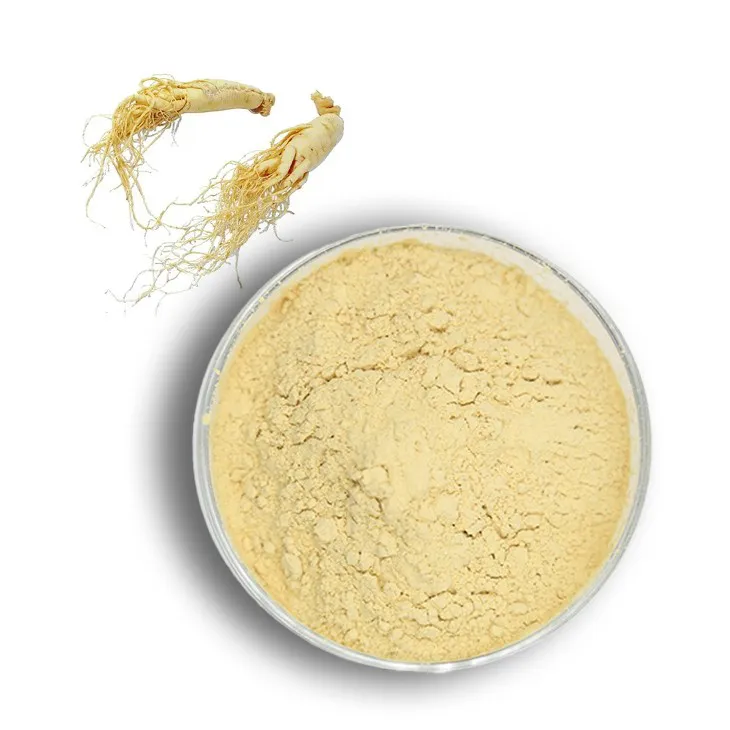
Once the suitable ginseng roots are selected, the next step is washing. Washing is crucial to remove dirt, soil, and other impurities that may be adhered to the roots. This is typically done using clean water. Gentle agitation may be required to ensure thorough cleaning, but care must be taken not to damage the roots. After washing, the roots are drained to remove excess water.
3.2 Drying
After washing, the ginseng roots need to be dried. Drying helps to reduce the moisture content of the roots, which is essential for subsequent processing steps. There are different drying methods available, such as air drying, sun drying, and drying in a controlled - environment dryer.
- Air Drying: This is a traditional method where the roots are placed in a well - ventilated area. It is a relatively slow process but can be cost - effective. However, it is important to ensure that the drying environment is clean to prevent contamination.
- Sun Drying: Sun drying can be an option in suitable climates. However, it requires careful monitoring as excessive sunlight can cause degradation of some of the active ingredients in the ginseng roots.
- Controlled - environment Drying: This method uses a dryer with controlled temperature and humidity. It allows for more precise control of the drying process, ensuring that the roots are dried evenly and without significant loss of active ingredients. The drying temperature is usually set within a certain range, typically between 30 - 50 °C, depending on the specific requirements.
4. Crushing of Ginseng Roots
After drying, the ginseng roots are ready for crushing. Crushing is necessary to break down the roots into smaller particles, which is a prerequisite for the extraction process. The crushed particles should be in the range suitable for the extraction method to be used. For the production of 80 - 100 mesh powder, the crushing process needs to be carefully controlled to achieve the appropriate particle size.
- Mechanical Crushing: This is the most common method of crushing ginseng roots. It can be done using crushers or grinders. Different types of crushers, such as hammer mills or roller mills, can be used depending on the desired particle size distribution. For example, a hammer mill can be adjusted to produce particles in a relatively wide size range, while a roller mill may be more suitable for achieving a more uniform particle size.
- Precision Crushing: In some cases, especially when a more precise particle size is required, precision - crushing techniques may be employed. This may involve using more advanced equipment with finer control over the crushing process, such as micronizers.
5. Extraction of Ginseng Roots
The extraction process is a key step in obtaining the Ginseng Root Extract powder. There are several extraction methods available, each with its own advantages and limitations.

5.1 Solvent Extraction
Solvent extraction is one of the most widely used methods.
- Choice of Solvent: Different solvents can be used for the extraction of ginseng roots. Commonly used solvents include ethanol, water, or a combination of both. Ethanol is often preferred as it can effectively extract a wide range of active ingredients, such as ginsenosides. The concentration of ethanol can vary depending on the specific requirements, typically ranging from 50% - 95% ethanol in water.
- Extraction Procedure: The dried and crushed ginseng roots are mixed with the solvent in a suitable container. The mixture is then stirred or shaken for a certain period of time, usually several hours to days, depending on the scale of the extraction and the desired yield. After the extraction, the mixture is filtered to separate the liquid extract from the solid residue.

5.2 Supercritical Fluid Extraction
Supercritical fluid extraction is a more advanced extraction method.
- Supercritical Fluids: Carbon dioxide (CO₂) is commonly used as a supercritical fluid in this method. At a certain temperature and pressure above its critical point, CO₂ exhibits properties between those of a gas and a liquid, which makes it an excellent solvent for extraction. It has the advantage of being non - toxic, non - flammable, and can be easily removed from the extract after the extraction process.
- Extraction Process: The dried and crushed ginseng roots are placed in an extraction vessel, and the supercritical CO₂ is passed through the roots. The pressure and temperature are carefully controlled to optimize the extraction of active ingredients. After the extraction, the pressure is released, and the CO₂ returns to its gaseous state, leaving behind the purified extract.
6. Quality Control in the Production of Ginseng Root Extract Powder
Quality control is of utmost importance throughout the production process of Ginseng Root Extract powder.

6.1 Active Ingredient Analysis
The content of active ingredients, such as ginsenosides, must be carefully monitored.
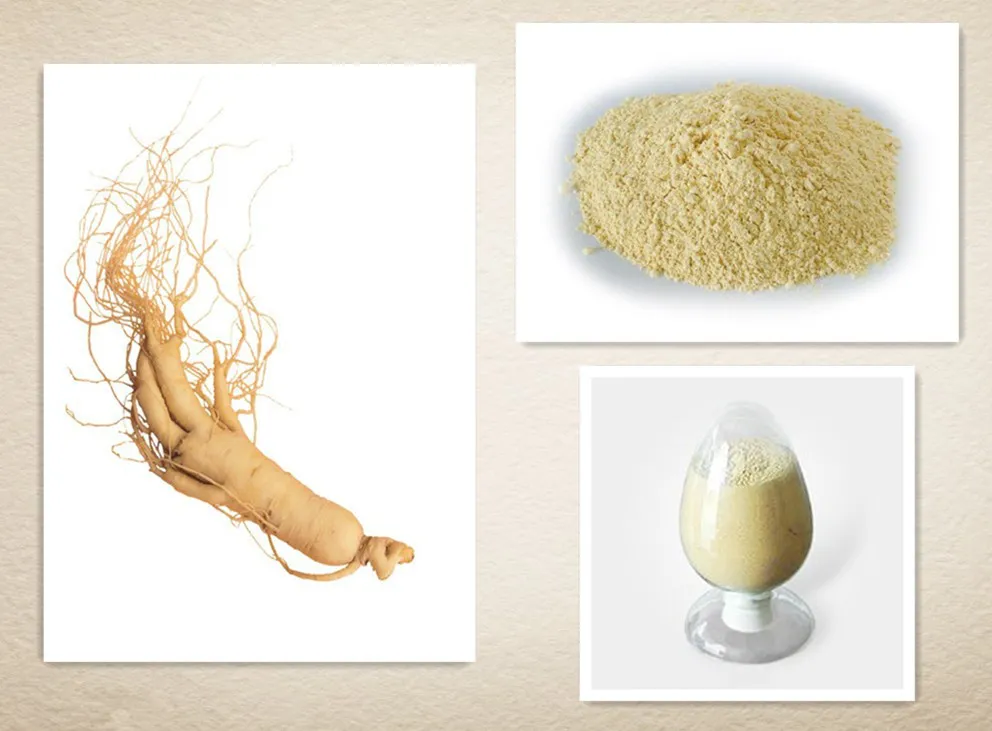
- Analysis Methods: High - performance liquid chromatography (HPLC) is a commonly used method for analyzing the content of ginsenosides in Ginseng Root Extract powder. This method can accurately separate and quantify different ginsenosides present in the extract.
- Standardization: To ensure the consistency of the product, the content of active ingredients should be standardized. For example, a certain product may be required to contain a specific amount of total ginsenosides within a defined range.
6.2 Impurity Detection
Detection and control of impurities are also crucial.
- Types of Impurities: Impurities may include heavy metals, pesticides residues, and microbial contaminants. Heavy metals such as lead, mercury, and cadmium can be toxic and must be within the acceptable limits. Pesticide residues may be present if the ginseng roots were treated with pesticides during cultivation, and these must also meet the regulatory requirements. Microbial contaminants, such as bacteria and fungi, can affect the safety and stability of the product.
- Testing Methods: For heavy metals, atomic absorption spectrometry or inductively coupled plasma - mass spectrometry can be used for detection. Pesticide residues are typically detected using gas chromatography - mass spectrometry or liquid chromatography - mass spectrometry. Microbial contaminants can be detected through microbiological testing methods, such as plate count methods for bacteria and yeast and mold count methods for fungi.
7. Applications of 80 - 100 Mesh Ginseng Root Extract Powder
The 80 - 100 mesh Ginseng Root Extract powder has a wide range of applications in different industries.
7.1 Pharmaceutical Industry
In the pharmaceutical industry, Ginseng Root Extract powder is used in the formulation of various drugs.
- Medicinal Properties: Ginseng has been shown to have adaptogenic properties, which means it can help the body adapt to stress. It may also have potential benefits in improving cognitive function, enhancing the immune system, and regulating blood sugar levels. The extract powder can be incorporated into tablets, capsules, or syrups for these medicinal purposes.
- Drug Development: Research is ongoing to explore the use of Ginseng Root Extract powder in the development of new drugs. For example, scientists are investigating its potential in treating certain chronic diseases, such as neurodegenerative diseases.
7.2 Health - care Industry
In the health - care industry, the Ginseng Root Extract powder is a popular ingredient in dietary supplements.
- Nutritional Supplements: It is often added to multivitamin and mineral supplements, as well as single - ingredient ginseng supplements. These supplements are marketed for their potential to boost energy, improve stamina, and support overall well - being.
- Functional Foods: Ginseng Root Extract powder can also be incorporated into functional foods, such as energy bars and drinks. These products are designed to provide not only basic nutrition but also additional health benefits associated with ginseng.
7.3 Cosmetic Industry
In the cosmetic industry, Ginseng Root Extract powder is used in various skin - care and hair - care products.
- Skin - care Products: Ginseng has antioxidant properties that can help protect the skin from free radical damage. It may also have anti - aging effects, such as reducing the appearance of wrinkles and improving skin elasticity. The extract powder can be found in creams, lotions, and serums.
- Hair - care Products: In hair - care products, Ginseng Root Extract powder may promote hair growth, strengthen hair follicles, and improve the overall health of the hair. It can be included in shampoos, conditioners, and hair masks.
FAQ:
What are the key factors in choosing the right ginseng roots for 80 - 100 mesh Panax Ginseng Root Extract powder production?
The key factors include the origin of the ginseng roots. Roots from regions with suitable climate and soil conditions are often preferred. Also, the age of the ginseng is important. Older ginseng usually contains more active ingredients. The appearance should be intact without obvious signs of disease or damage.
What are the common extraction methods for Panax Ginseng Root Extract powder?
Common extraction methods include solvent extraction, such as using ethanol or water as solvents. Supercritical fluid extraction is also used in some cases. Solvent extraction can effectively extract the active ingredients, while supercritical fluid extraction has the advantage of leaving less solvent residue.
How is quality control carried out during the production of 80 - 100 mesh Panax Ginseng Root Extract powder?
Quality control involves multiple aspects. Firstly, the raw materials are inspected for their quality. During the production process, the extraction efficiency and the content of active ingredients are monitored. Tests are also carried out to detect impurities, ensuring that they are within the safe limits. At the end, the particle size distribution is checked to ensure it meets the 80 - 100 mesh standard.
What are the main active ingredients in Panax Ginseng Root Extract powder?
The main active ingredients include ginsenosides. Ginsenosides have various pharmacological effects, such as enhancing immunity, improving cardiovascular function, and having anti - fatigue properties. There are also other components like polysaccharides which also contribute to its health - promoting effects.
Why is 80 - 100 mesh Panax Ginseng Root Extract powder highly valued in the pharmaceutical, health - care and cosmetic industries?
In the pharmaceutical industry, its active ingredients can be used to develop drugs for treating various diseases. In the health - care industry, it can be made into supplements to improve people's health. In the cosmetic industry, it can be added to products for its anti - aging and skin - nourishing properties. The 80 - 100 mesh powder has a suitable particle size, which is easy to process and mix in different products.
Related literature
- Studies on the Extraction and Quality Control of Panax Ginseng Root Extract"
- "Active Ingredients in Panax Ginseng Root and Their Applications"
- "The Production Process of High - Quality Panax Ginseng Root Extract Powder"


-

Konjac Powder
2024-12-18
-

White Willow Bark Extract
2024-12-18
-

American Ginseng Root Extract
2024-12-18
-

Shikone Extract
2024-12-18
-

Ginkgo Biloba Extract
2024-12-18
-

Antler Extract
2024-12-18
-

Hericium erinaceus extract powder
2024-12-18
-

Phyllanthus Emblica Extract
2024-12-18
-

Red Vine Extract
2024-12-18
-

Vitamin K2
2024-12-18