


1. Introduction to White mustard seed extract
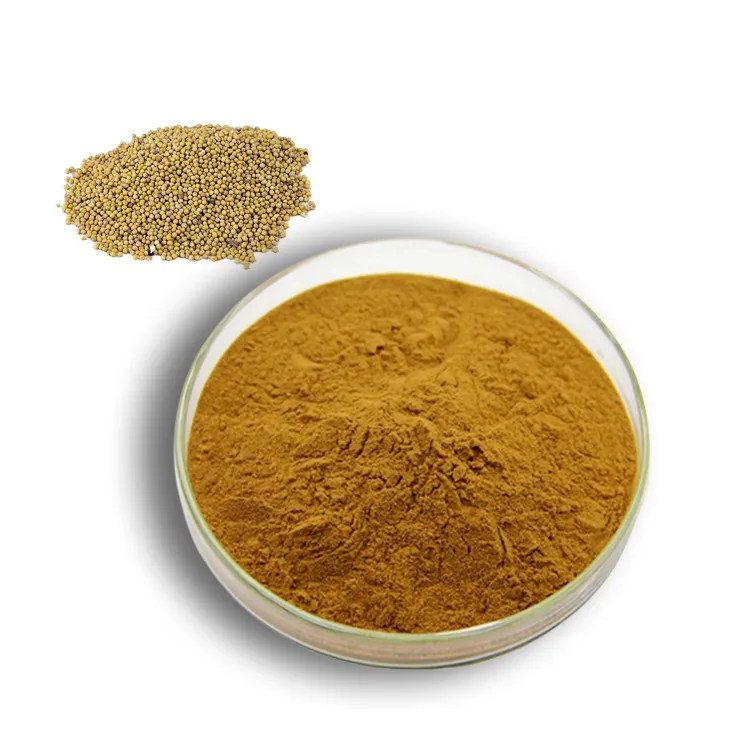
White mustard seed extract has emerged as a highly significant component in a diverse range of industries. Mustard seeds, in general, have been known for their various properties for centuries. The white mustard seed, in particular, contains a plethora of bioactive compounds that make its extract valuable.
These bioactive compounds include glucosinolates, which are sulfur - containing glycosides. They are responsible for many of the health - promoting and functional properties associated with the White mustard seed extract. In addition, the extract also contains proteins, enzymes, and other minor components that contribute to its overall complexity and potential applications.
2. Importance of Reducing Particle Size
Reducing the particle size of White mustard seed extract is not just a simple processing step but a crucial aspect that has far - reaching implications.
2.1 Solubility Enhancement
One of the primary benefits is the enhancement of solubility. Larger particles often have a limited surface area available for interaction with solvents. When the particle size is reduced, the surface - to - volume ratio increases significantly. This allows for better interaction between the extract particles and the solvent, whether it is water in the case of food or beverage applications or other solvents in the pharmaceutical or cosmetic industries.
For example, in the production of a White mustard seed extract - based dietary supplement, if the particle size is large, the extract may not dissolve completely in the liquid medium. This can lead to issues such as sedimentation and inconsistent dosing. However, with reduced particle size, a homogeneous solution can be achieved, ensuring accurate and effective dosing.
2.2 Bioavailability Improvement
Reduced particle size also plays a vital role in improving the bioavailability of the White mustard seed extract. Bioavailability refers to the proportion of a drug or nutrient that enters the circulation and is thus available at the site of action.
In the case of White mustard seed extract, smaller particles can be more easily absorbed by the body. The digestive system can more efficiently break down and assimilate the extract when it is in a form of smaller particles. This is especially important in the pharmaceutical industry, where the effectiveness of a drug or supplement depends on its bioavailability.
2.3 Expansion of Application Range
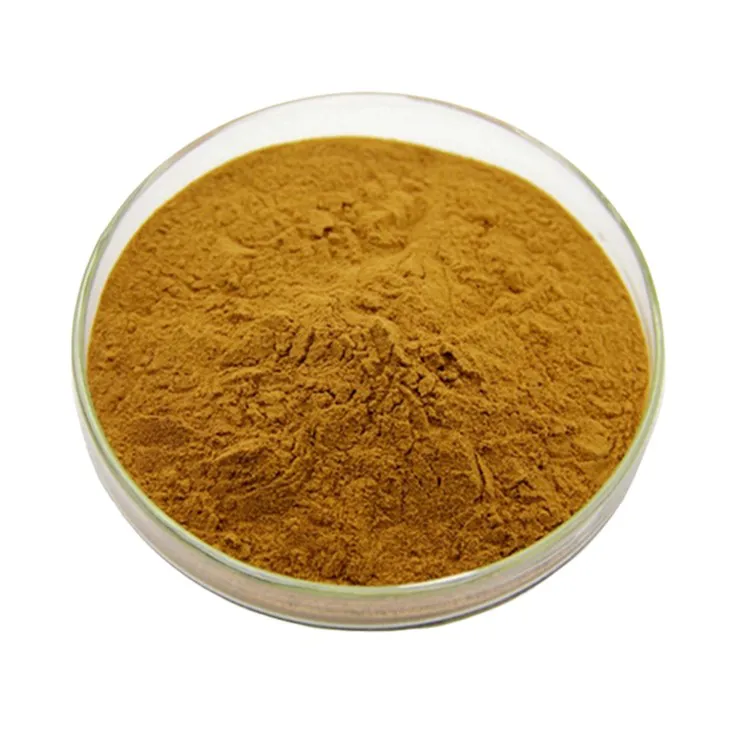
The improved solubility and bioavailability resulting from reduced particle size widen the application range of White mustard seed extract. In the food industry, it can be used in a wider variety of products. For instance, it can be incorporated into clear beverages, where the presence of large particles would be unacceptable.
In the cosmetics industry, the extract with reduced particle size can be used in formulations such as lotions and creams. It can penetrate the skin more effectively, providing better results in terms of skin health and appearance. In the pharmaceutical industry, it can be used in more advanced drug delivery systems, such as nanoparticles, which require small particle sizes for targeted delivery.
3. Advanced Techniques for Reducing Particle Size
Several advanced techniques are employed in the professional processing of White mustard seed extract to reduce particle size.
3.1 Grinding and Milling
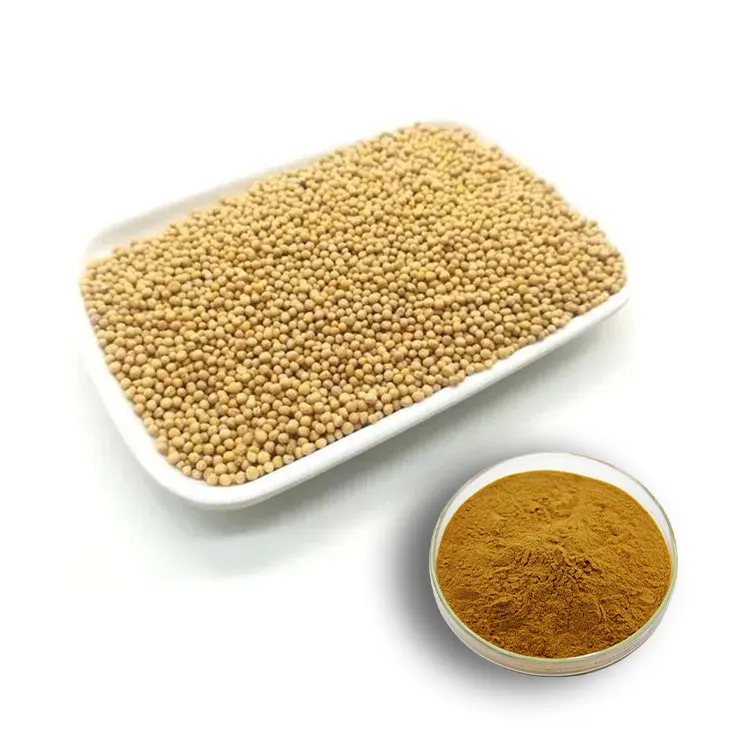
Grinding and milling are traditional yet still effective methods. Ball milling is a commonly used technique. In ball milling, small balls (usually made of stainless steel or ceramic) are placed in a container along with the White mustard seed extract. As the container rotates, the balls collide with the extract, gradually breaking it into smaller particles.
Another type of milling is jet milling. Jet milling uses high - velocity jets of gas (usually air or nitrogen) to impact the particles of the extract. The high - speed gas streams cause the particles to collide with each other and break apart. Jet milling is often preferred when a very fine and uniform particle size is required, as it can produce particles in the sub - micron range.

3.2 Ultrasonic Treatment
Ultrasonic treatment is an innovative technique for particle size reduction. Ultrasonic waves are applied to the White mustard seed extract. These waves create alternating high - pressure and low - pressure regions in the liquid medium containing the extract.
The resulting cavitation bubbles formed during the low - pressure cycles collapse violently during the high - pressure cycles. This collapse generates intense shock waves and shear forces that break the particles of the extract into smaller sizes. Ultrasonic treatment is a non - thermal process, which is advantageous as it does not cause thermal degradation of the heat - sensitive components in the extract.
3.3 High - Pressure Homogenization
High - pressure homogenization is another effective method. The White mustard seed extract is forced through a narrow orifice at very high pressure. As the extract passes through the orifice, it experiences intense shear forces, turbulence, and cavitation.
These forces cause the particles to break up into smaller sizes. High - pressure homogenization can be repeated multiple times to achieve the desired particle size reduction. It is widely used in the food and pharmaceutical industries due to its ability to produce a narrow particle size distribution and maintain the stability of the product.
4. Quality Control in Particle Size Reduction
Quality control is of utmost importance during the process of reducing the particle size of White mustard seed extract.
4.1 Particle Size Analysis
One of the key aspects of quality control is particle size analysis. There are various methods available for measuring the particle size of the extract. Laser diffraction is a widely used technique. It measures the angular distribution of light scattered by the particles in the extract. Based on this measurement, the particle size distribution can be determined.
Another method is dynamic light scattering, which is particularly useful for measuring very small particles (in the nanometer range). By regularly analyzing the particle size during the processing, any deviation from the desired size range can be detected early, allowing for timely adjustments to the processing parameters.
4.2 Monitoring of Functional Properties
It is also essential to monitor the functional properties of the White mustard seed extract during and after particle size reduction. This includes testing its solubility, bioavailability, and any other relevant properties depending on the intended application.
For example, in the food industry, the sensory properties such as taste and texture may also need to be evaluated. If the particle size reduction process affects the taste or texture in an unacceptable way, the process may need to be modified. In the pharmaceutical industry, in - vitro and in - vivo studies may be conducted to ensure that the bioavailability and efficacy of the extract are not compromised.
5. Challenges and Solutions in Particle Size Reduction
The process of reducing the particle size of White mustard seed extract is not without challenges.
5.1 Agglomeration
One of the main challenges is agglomeration. Small particles have a tendency to stick together and form larger aggregates. This can occur due to various factors such as electrostatic forces, surface moisture, or the presence of certain substances in the extract.
To overcome agglomeration, additives can be used. For example, surfactants can be added to the extract to reduce the surface tension and prevent the particles from sticking together. Another solution is to control the processing conditions, such as humidity and temperature, to minimize the factors that promote agglomeration.
5.2 Equipment Maintenance
The equipment used for particle size reduction requires regular maintenance. For example, in ball milling, the balls can wear out over time, affecting the efficiency of the milling process. In high - pressure homogenizers, the orifice can become clogged, leading to inconsistent particle size reduction.
Regular inspection and replacement of worn - out parts are necessary. Additionally, proper cleaning of the equipment between batches is crucial to prevent cross - contamination and ensure consistent performance.
6. Future Perspectives
The field of White mustard seed extract processing, especially in relation to particle size reduction, is likely to see further developments in the future.
6.1 Nanotechnology Applications
Nanotechnology offers great potential for the processing of White mustard seed extract. Nanoparticles of the extract can be developed, which may have enhanced properties compared to larger - sized particles. For example, nanoparticles can be designed for targeted drug delivery in the pharmaceutical industry or for improved skin penetration in the cosmetics industry.
Research in this area is likely to focus on optimizing the production of nanoparticles from White mustard seed extract and exploring their unique properties and applications.
6.2 Green Processing Technologies
There is also a growing trend towards green processing technologies. These technologies aim to reduce the environmental impact of the processing while maintaining or improving the quality of the product.
For example, the use of supercritical fluids in place of traditional solvents for extraction and particle size reduction may become more prevalent. Supercritical fluids, such as supercritical carbon dioxide, have the advantage of being non - toxic, non - flammable, and easily recoverable, making them more environmentally friendly options.
FAQ:
1. What are the main reasons for reducing the particle size of White mustard seed extract?
Reducing the particle size of White mustard seed extract can enhance its solubility, bioavailability, and overall functionality. This makes it more effective in various applications such as in medicine, cosmetics, and food.
2. What advanced techniques are used in reducing the particle size of White mustard seed extract?
There are several advanced techniques used. For example, mechanical milling methods can be employed to break down the particles. High - pressure homogenization is also a common technique. Additionally, some modern technologies like microfluidization can be used to precisely control and reduce the particle size.
3. How does reducing the particle size affect the bioavailability of White mustard seed extract?
Smaller particle size means a larger surface area. This allows for better interaction with biological systems. When the White mustard seed extract has a reduced particle size, it can be more easily absorbed by the body, thus enhancing its bioavailability.
4. In which medical applications can the reduced - particle - size White mustard seed extract be used?
It can potentially be used in drug delivery systems. For example, if the extract has anti - inflammatory properties, the enhanced solubility and bioavailability due to reduced particle size can make it more effective in treating inflammatory diseases. It may also be used in topical medications where better penetration of the skin is required.
5. How does reducing the particle size widen the application range in the cosmetics industry?
In cosmetics, reduced - particle - size White mustard seed extract can be more evenly distributed in formulations. It can also penetrate better into the skin, enhancing its efficacy in skin - care products such as moisturizers or anti - aging creams. This wider application range is due to the improved physical and chemical properties resulting from the reduced particle size.
Related literature
- Advances in Particle Size Reduction Techniques for Botanical Extracts"
- "The Impact of Particle Size on the Bioactivity of White mustard seed extract"
- "White mustard seed extract: Processing and Its Influence on Solubility and Applications"


-

Red Clover Extract
2024-12-08
-

Plantain extract
2024-12-08
-

Tamarind extract powder
2024-12-08
-

L-Citrullin-DL-malate
2024-12-08
-

Saw Palmetto Extract
2024-12-08
-

Sea buckthorn oil
2024-12-08
-

Avocado Extract Powder
2024-12-08
-

Troxerutin
2024-12-08
-

Beta Carotene
2024-12-08
-

N-Acetyl-L-cysteine(NAC)
2024-12-08