


1. Introduction to Curcumin
Curcumin is a valuable bioactive compound that has gained significant attention in recent years. It is derived from turmeric, a bright yellow - orange spice commonly used in cooking, especially in Asian cuisine. Curcumin has a wide range of potential applications, including in the fields of health supplements, skincare products, and even in some pharmaceutical research due to its antioxidant, anti - inflammatory, and anti - cancer properties.
2. The Source: Turmeric
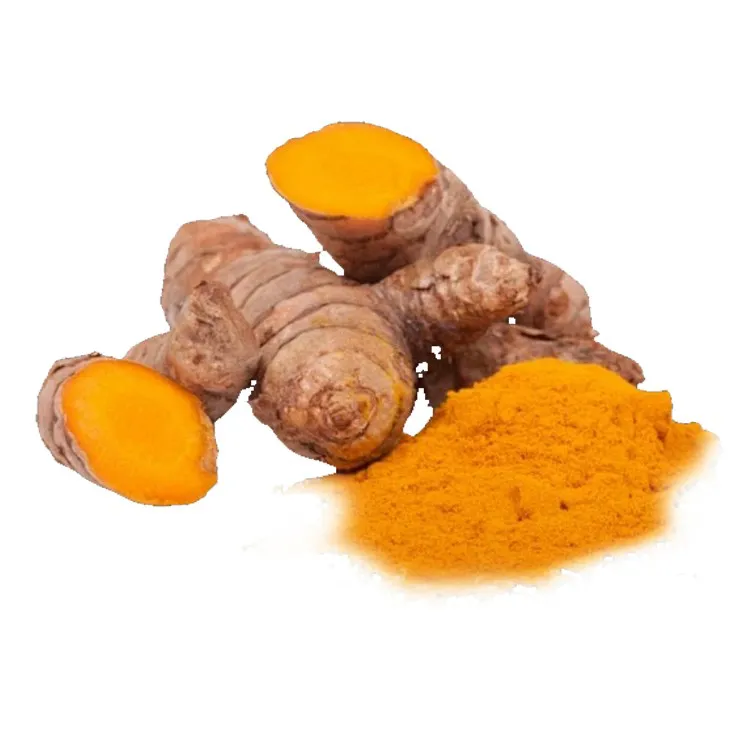
Turmeric (Curcuma longa) is a perennial herbaceous plant of the ginger family. The rhizomes (underground stems) of turmeric are the main source for Curcumin extraction. These rhizomes are rich in Curcuminoids, of which Curcumin is the most important and abundant component. Turmeric is cultivated in many tropical and subtropical regions around the world, such as India, Indonesia, and parts of China.
3. Extraction Solvents
3.1. Traditional Solvents
- Ethanol: Ethanol is one of the most commonly used solvents for Curcumin extraction. It has several advantages. Firstly, it is relatively safe to handle compared to some other solvents. Ethanol can dissolve Curcumin effectively, especially when the extraction is carried out under appropriate conditions. For example, a certain concentration of ethanol (usually around 70 - 90%) can be used. The solubility of Curcumin in ethanol is related to its polarity. Ethanol's polarity allows it to interact with the polar groups in Curcumin molecules, facilitating the extraction process. - Acetone: Acetone is also a polar solvent that can be used for Curcumin extraction. It has a relatively high volatility, which means that it can be easily removed from the extract after the extraction process. However, acetone is more flammable and toxic than ethanol, so more precautions need to be taken during the extraction process.

3.2. Emerging Solvents
- Ionic Liquids: Ionic liquids are a new class of solvents that have shown potential in Curcumin extraction. They have unique properties such as low volatility, high thermal stability, and tunable solubility. The structure of ionic liquids can be adjusted to enhance their interaction with Curcumin, thus improving the extraction efficiency. However, the cost of ionic liquids is relatively high at present, which limits their large - scale application in Curcumin extraction. - Supercritical Fluids: Supercritical carbon dioxide (scCO₂) is a popular supercritical fluid used in Curcumin extraction. It has the advantages of being non - toxic, non - flammable, and having a relatively low critical temperature and pressure. Under supercritical conditions, scCO₂ has properties similar to both a gas and a liquid, which allows it to penetrate the turmeric matrix effectively and extract Curcumin. Moreover, the extraction using scCO₂ can be easily controlled by adjusting the pressure and temperature.
4. The Role of Temperature in Extraction
Temperature plays a crucial role in the Curcumin extraction process. In general, an increase in temperature can enhance the solubility of Curcumin in the solvent, which can lead to a higher extraction yield. However, if the temperature is too high, it may cause degradation of Curcumin. For example, when using ethanol as a solvent, a temperature range of around 50 - 70°C is often considered optimal. At this temperature range, the solubility of Curcumin in ethanol is relatively high, while the risk of Curcumin degradation is relatively low.
When using supercritical fluids like scCO₂, temperature also affects the extraction efficiency. As the temperature increases within a certain range, the density of the supercritical fluid decreases, which can change its solvating power. However, if the temperature is too high, it may cause the supercritical fluid to lose its supercritical state, resulting in a decrease in extraction efficiency.
5. The Role of Pressure in Extraction
Pressure is another important factor in Curcumin extraction, especially when using supercritical fluids. In the case of scCO₂, increasing the pressure can increase the density of the supercritical fluid, which in turn increases its solvating power. This means that more Curcumin can be dissolved in the supercritical fluid under higher pressure. For example, a pressure range of around 10 - 30 MPa is often used in scCO₂ extraction of Curcumin.
However, increasing the pressure also requires more energy input and more sophisticated equipment. Moreover, if the pressure is too high, it may cause some unwanted chemical reactions or physical changes in the turmeric matrix or the Curcumin itself.
6. Extraction Methods

6.1. Soxhlet Extraction
The Soxhlet extraction method is a classic extraction technique. In this method, the turmeric sample is placed in a Soxhlet extractor. The solvent is continuously recycled through the sample. The solvent vaporizes in the distillation flask, rises to the condenser, and then drips back onto the sample, continuously extracting Curcumin. This method is relatively simple and can be used with various solvents. However, it is a time - consuming process, and the extraction efficiency may not be as high as some modern extraction methods.

6.2. Maceration
Maceration is a traditional extraction method. In this method, the turmeric is soaked in the solvent for a certain period of time. During this period, the solvent gradually penetrates the turmeric matrix and dissolves Curcumin. The advantage of this method is its simplicity and low cost. However, it also has a relatively long extraction time and may not be able to extract Curcumin completely.
6.3. Ultrasonic - Assisted Extraction
Ultrasonic - assisted extraction utilizes ultrasonic waves to enhance the extraction process. The ultrasonic waves create cavitation bubbles in the solvent, which collapse and generate high - pressure and high - temperature micro - environments. These micro - environments can disrupt the cell walls of the turmeric, allowing the solvent to more easily access and dissolve Curcumin. This method can significantly reduce the extraction time and improve the extraction efficiency compared to traditional methods such as maceration.

6.4. Microwave - Assisted Extraction
Microwave - assisted extraction uses microwaves to heat the solvent and the turmeric sample. The microwaves can directly interact with the polar molecules in the sample and the solvent, causing rapid heating. This rapid heating can increase the solubility of Curcumin in the solvent and also disrupt the cell structure of the turmeric, facilitating Curcumin extraction. Microwave - assisted extraction is relatively fast and can achieve high extraction yields.
7. Purification of Extracted Curcumin
After the extraction process, the obtained Curcumin extract usually contains impurities such as other Curcuminoids, lipids, and pigments. Therefore, purification is necessary to obtain high - quality Curcumin for various applications.
7.1. Column Chromatography
Column chromatography is a common purification method. In this method, a column is filled with a stationary phase (such as silica gel). The Curcumin extract is loaded onto the top of the column, and then a mobile phase (usually a solvent or a solvent mixture) is passed through the column. Different components in the extract will have different affinities for the stationary and mobile phases, and thus will be separated as they move through the column. Curcumin can be collected at a specific fraction, achieving purification.
7.2. Recrystallization
Recrystallization is another purification method. This method is based on the difference in solubility of Curcumin in different solvents at different temperatures. The Curcumin extract is dissolved in a suitable solvent at a high temperature, and then the solution is cooled slowly. As the temperature decreases, Curcumin will recrystallize out of the solution, while impurities will remain in the solution, thus achieving purification.
8. Applications of Curcumin
8.1. Health Supplements
Curcumin is widely used in health supplements due to its antioxidant and anti - inflammatory properties. It can help reduce oxidative stress in the body, which is associated with many chronic diseases such as heart disease, diabetes, and cancer. Many people take Curcumin supplements to improve their overall health and well - being.
8.2. Skincare Products
In the field of skincare, Curcumin has anti - inflammatory and antioxidant effects. It can be used to treat skin inflammation, such as acne and eczema. Moreover, Curcumin can also protect the skin from damage caused by ultraviolet radiation and environmental pollutants. Therefore, it is increasingly used in various skincare products, such as creams, lotions, and serums.
8.3. Pharmaceutical Research
Curcumin has also shown potential in pharmaceutical research. It has been studied for its anti - cancer properties, including its ability to inhibit the growth and spread of cancer cells. Although more research is needed, Curcumin may become an important component in future cancer therapies.
9. Conclusion
The extraction process of Curcumin is a complex but important process. Understanding the different extraction solvents, the role of temperature and pressure, and the purification methods is crucial for obtaining high - quality Curcumin for various applications. With the development of new extraction technologies and solvents, the extraction efficiency and quality of Curcumin are expected to be further improved, which will bring more benefits to the fields of health, skincare, and pharmaceutical research.
FAQ:
What are the common extraction solvents for Curcumin?
Common extraction solvents for Curcumin include organic solvents such as ethanol, acetone, and ethyl acetate. Ethanol is often favored due to its relatively low toxicity and good solubility properties. Acetone can also effectively extract Curcumin, but it has higher volatility. Ethyl acetate is another option, which can provide a good extraction yield under appropriate conditions.
How does temperature affect the Curcumin extraction process?
Temperature plays a crucial role in Curcumin extraction. Generally, increasing the temperature can enhance the solubility of Curcumin in the extraction solvent, which may lead to a higher extraction yield. However, if the temperature is too high, it may cause the degradation of Curcumin or the evaporation of the solvent too quickly. So, an optimal temperature range needs to be determined to balance extraction efficiency and product quality.
What is the significance of pressure in Curcumin extraction?
Pressure can influence the Curcumin extraction process. In some extraction methods, applying pressure can help the solvent penetrate into the turmeric matrix more effectively, increasing the contact between the solvent and Curcumin. This can potentially improve the extraction rate. However, high - pressure extraction also requires specialized equipment and careful control to avoid potential safety risks and ensure the quality of the extracted Curcumin.
How can the extracted Curcumin be purified?
There are several methods for purifying extracted Curcumin. One common method is column chromatography, which can separate Curcumin from other impurities based on their different affinities to the stationary phase. Recrystallization is also used, where the crude Curcumin is dissolved in a suitable solvent and then allowed to recrystallize to obtain a purer form. Additionally, high - performance liquid chromatography (HPLC) can be employed for precise purification, especially for applications where high - purity Curcumin is required.
Why is Curcumin extraction important for the production of health supplements and skincare products?
Curcumin has various beneficial properties. In health supplements, it is known for its antioxidant, anti - inflammatory, and potential anti - cancer properties. Extracting Curcumin allows for concentrated forms to be included in supplements, which can provide these health benefits to consumers. In skincare products, Curcumin can help with anti - aging, reducing inflammation, and improving skin complexion. The extraction process is essential to obtain pure Curcumin for effective inclusion in these products.
Related literature
TAGS:


-

Elderberry Extract
2024-12-06
-

Vitamin K2
2024-12-06
-

Pine bark Extract Powder
2024-12-06
-

Almond Extract Powder
2024-12-06
-

Cactus Extract
2024-12-06
-

Milk Thistle Extract
2024-12-06
-

Europen Bilberry Extract
2024-12-06
-

S-Adenosyl L-methionine(SAMe)
2024-12-06
-

Red Vine Extract
2024-12-06
-

Ivy Extract
2024-12-06