


1. Introduction to Turmeric
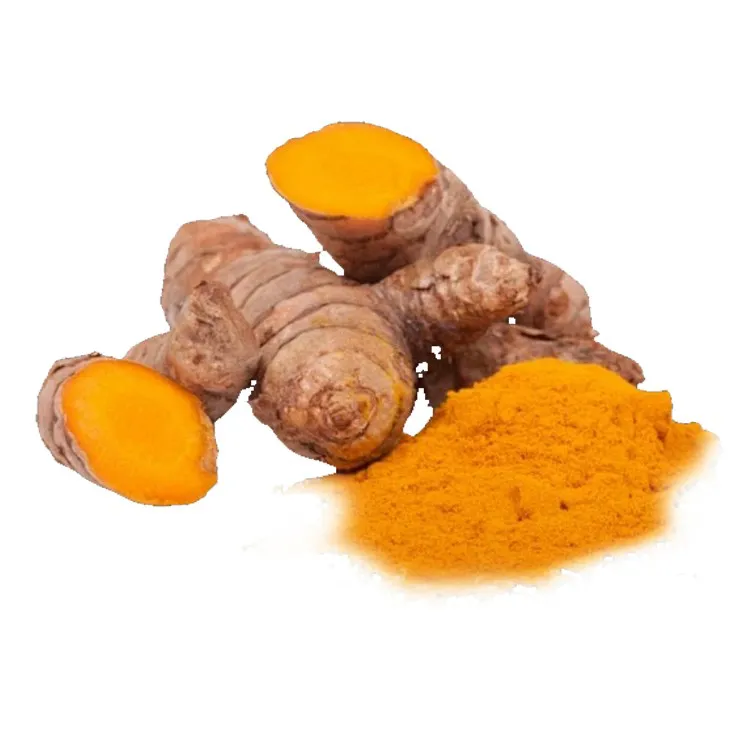
Turmeric, a bright yellow spice, has been used for centuries in traditional medicine and cooking, particularly in Asian cuisines. It is derived from the rhizome of the Curcuma longa plant. Turmeric is known for its distinct flavor, color, and a wide range of potential health benefits.
The main bioactive compound in turmeric is Curcumin. Curcumin is responsible for many of the medicinal properties associated with turmeric. It has antioxidant, anti - inflammatory, and antimicrobial properties, among others. These properties have led to an increasing interest in Curcumin in various fields such as medicine, food, and cosmetics.
2. Properties of Curcumin
Curcumin is a polyphenolic compound with a characteristic bright yellow color, which is why turmeric is also known as "Indian saffron." It has a relatively low solubility in water but is soluble in organic solvents such as ethanol, acetone, and dimethyl sulfoxide (DMSO).
One of the most important properties of Curcumin is its antioxidant activity. It can scavenge free radicals and protect cells from oxidative damage. This antioxidant property is crucial in preventing various diseases, including cancer, heart disease, and neurodegenerative disorders.
Curcumin also exhibits strong anti - inflammatory effects. It can inhibit the production of inflammatory mediators such as cytokines and prostaglandins. This makes it a potential treatment for inflammatory diseases like arthritis and inflammatory bowel disease.
3. The Need for Curcumin Extraction
Although turmeric contains Curcumin, the amount of Curcumin in raw turmeric is relatively low. To obtain a sufficient quantity of Curcumin for various applications, extraction is necessary.
In the medical field, Curcumin is being studied for its potential use in drug development. However, to conduct proper research and develop effective medications, a pure and concentrated form of Curcumin is required. Extracting Curcumin allows for the isolation of the compound from other components in turmeric, enabling more accurate study of its properties and potential therapeutic effects.
In the food industry, Curcumin is used as a natural food coloring agent and flavor enhancer. Extraction ensures a consistent and pure source of Curcumin for these applications. Similarly, in the cosmetics industry, Curcumin is added to products for its antioxidant and skin - beneficial properties. A pure Curcumin extract can be more effectively incorporated into cosmetic formulations.
4. Traditional Extraction Methods
4.1 Solvent Extraction
Solvent extraction is one of the most commonly used methods for Curcumin extraction. In this method, turmeric powder is typically mixed with an organic solvent such as ethanol or acetone.
- The first step is to prepare the turmeric powder by grinding the dried turmeric rhizomes into a fine powder.
- Then, the powder is mixed with the solvent in a suitable container. The ratio of turmeric powder to solvent can vary depending on the desired extraction efficiency.
- The mixture is then stirred or shaken for a specific period, usually several hours to ensure proper extraction. This helps in dissolving the Curcumin from the turmeric powder into the solvent.
- After that, the mixture is filtered to separate the liquid extract (containing Curcumin) from the solid residue. Filtration can be done using filter paper or a filtration apparatus.
- Finally, the solvent is evaporated from the liquid extract to obtain the Curcumin. This can be done using techniques such as rotary evaporation under reduced pressure to avoid degradation of Curcumin due to high temperatures.
However, solvent extraction has some limitations. One major issue is the use of organic solvents, which may be hazardous to health and the environment. Additionally, the extraction process may not be highly selective, resulting in the extraction of other compounds along with Curcumin, which may require further purification steps.

4.2 Soxhlet Extraction
The Soxhlet extraction method is a more efficient form of solvent extraction. It uses a Soxhlet apparatus, which allows for continuous extraction of Curcumin.
- Turmeric powder is placed in a thimble inside the Soxhlet apparatus.
- The organic solvent, usually ethanol or acetone, is placed in the main flask of the apparatus.
- The solvent is heated, and it vaporizes. The vapor rises and enters the condenser, where it is condensed back into a liquid.
- The condensed solvent then drips onto the turmeric powder in the thimble. As the solvent accumulates in the thimble, it extracts the Curcumin from the powder.
- Once the solvent in the thimble is saturated with Curcumin, it siphons back into the main flask. This process is repeated continuously for several hours, ensuring a more complete extraction of Curcumin compared to simple solvent extraction.
- After the extraction is complete, the solvent is evaporated from the extract in the main flask to obtain the Curcumin, similar to the final step in the simple solvent extraction method.
While Soxhlet extraction is more efficient in terms of extraction yield, it still has the drawbacks associated with the use of organic solvents. Moreover, the equipment required for Soxhlet extraction is more complex and costly compared to simple solvent extraction.
5. Modern Extraction Methods

5.1 Supercritical Fluid Extraction (SFE)
Supercritical fluid extraction is a relatively new and advanced method for Curcumin extraction. In this method, supercritical carbon dioxide (CO₂) is used as the extraction solvent.
- Carbon dioxide is pressurized and heated to its supercritical state, where it has properties of both a liquid and a gas. In this state, it has a high diffusivity and low viscosity, which makes it an excellent solvent for Curcumin extraction.
- The dried turmeric powder is placed in an extraction vessel, and the supercritical CO₂ is passed through it.
- The Curcumin is dissolved in the supercritical CO₂, and the mixture is then passed through a separator. In the separator, the pressure is reduced, which causes the CO₂ to return to its gaseous state, leaving behind the Curcumin extract.
Supercritical fluid extraction has several advantages over traditional solvent extraction methods. Firstly, carbon dioxide is a non - toxic, non - flammable, and environmentally friendly solvent. Secondly, the extraction process is highly selective, resulting in a purer Curcumin extract. However, the equipment required for SFE is expensive, and the process requires high - pressure operation, which may limit its widespread application.

5.2 Microwave - Assisted Extraction (MAE)
Microwave - assisted extraction is another modern method that utilizes microwave energy to enhance the extraction of Curcumin.
- Turmeric powder is mixed with a suitable solvent (such as ethanol or water) in a microwave - safe container.
- The mixture is then placed in a microwave oven and irradiated with microwaves at a specific power and for a specific time.
- The microwave energy heats the solvent rapidly, which in turn increases the solubility of Curcumin in the solvent and accelerates the extraction process.
- After the extraction, the mixture is filtered to separate the liquid extract from the solid residue, and the solvent is evaporated to obtain the Curcumin.
MAE has the advantage of being a relatively fast and energy - efficient method. It can also reduce the amount of solvent required compared to traditional extraction methods. However, the extraction efficiency may be affected by factors such as the microwave power, irradiation time, and the type of solvent used.
5.3 Ultrasound - Assisted Extraction (UAE)
Ultrasound - assisted extraction uses ultrasonic waves to improve Curcumin extraction.
- Turmeric powder is mixed with a solvent in an extraction vessel.
- Ultrasonic waves are then applied to the mixture. The ultrasonic waves create cavitation bubbles in the solvent. When these bubbles collapse, they generate high - pressure and high - temperature micro - environments, which help in breaking down the cell walls of the turmeric powder and releasing Curcumin into the solvent.
- After a certain period of ultrasonic treatment, the mixture is filtered and the solvent is evaporated to obtain the Curcumin.
UAE is a simple and effective method that can enhance the extraction efficiency of Curcumin. It also has the potential to reduce the extraction time and the amount of solvent used. However, like other methods, it requires optimization of parameters such as ultrasonic power, treatment time, and solvent type to achieve the best results.
6. Challenges in Curcumin Extraction
Despite the availability of various extraction methods, there are several challenges in Curcumin extraction.
- Low Solubility: As mentioned earlier, Curcumin has a low solubility in water, which can limit the efficiency of extraction methods that use water - based solvents. This may require the use of organic solvents or the addition of surfactants to improve solubility.
- Stability: Curcumin is relatively unstable, especially in the presence of light, heat, and oxygen. During the extraction process, care must be taken to protect Curcumin from degradation. This may involve using low - temperature extraction methods or adding stabilizers to the extraction medium.
- Selectivity: Achieving a high - selectivity extraction of Curcumin is difficult, as turmeric contains many other compounds. Extracting only Curcumin without co - extracting other substances can be a challenge, especially in traditional extraction methods. Modern extraction methods such as supercritical fluid extraction offer better selectivity but are often more expensive.
7. Overcoming the Challenges
To overcome the challenges in Curcumin extraction, several strategies can be employed.
- For the low solubility issue, researchers are exploring the use of new solvents or solvent mixtures that can improve Curcumin solubility. For example, ionic liquids have shown potential in enhancing Curcumin solubility. Additionally, encapsulation techniques can be used to improve the handling and solubility of Curcumin after extraction.
- To address the stability problem, extraction can be carried out under controlled conditions. For example, using inert atmospheres (such as nitrogen) during extraction can protect Curcumin from oxidation. Also, the use of antioxidants in the extraction medium can help in maintaining the stability of Curcumin.
- Regarding selectivity, the development of more selective extraction methods and the optimization of existing methods are crucial. For example, further research on supercritical fluid extraction parameters can improve its selectivity and cost - effectiveness. Additionally, purification steps such as chromatography can be used to separate Curcumin from other co - extracted compounds.
8. Applications of Curcumin in Different Fields

8.1 Medicine
In medicine, Curcumin has shown great potential in treating various diseases.
- Cancer: Curcumin has been studied for its anti - cancer properties. It can inhibit the growth and spread of cancer cells by interfering with various signaling pathways involved in cancer development. For example, it can down - regulate genes related to cell proliferation and up - regulate genes involved in apoptosis (programmed cell death).
- Cardiovascular Diseases: Curcumin can help in reducing inflammation and oxidative stress in the cardiovascular system. It has been shown to improve endothelial function, which is important for maintaining healthy blood vessels. Additionally, it can lower cholesterol levels and prevent the formation of blood clots.
- Neurodegenerative Disorders: Due to its antioxidant and anti - inflammatory properties, Curcumin is being investigated for the treatment of neurodegenerative diseases such as Alzheimer's and Parkinson's. It can protect neurons from damage caused by oxidative stress and inflammation.
8.2 Food
In the food industry, Curcumin has multiple applications.
- Food Coloring: Curcumin is a natural food coloring agent. It imparts a bright yellow color to food products such as curries, mustard, and some baked goods. Its use as a food coloring is preferred over synthetic dyes as it is natural and generally recognized as safe (GRAS).
- Flavor Enhancer: It also adds a unique flavor to food. The earthy, slightly bitter taste of Curcumin can enhance the overall flavor profile of many dishes.
- Preservative: Curcumin has antimicrobial properties, which can help in extending the shelf life of food products by inhibiting the growth of bacteria, fungi, and other microorganisms.
8.3 Cosmetics
In the cosmetics industry, Curcumin is increasingly being used.
- Skin Health: Curcumin can be beneficial for skin health. It has antioxidant properties that can protect the skin from damage caused by free radicals. It can also reduce inflammation, which is useful in treating skin conditions such as acne, eczema, and psoriasis.
- Anti - Aging: Due to its ability to protect against oxidative stress, Curcumin can help in reducing the signs of aging, such as wrinkles and fine lines. It can stimulate collagen production in the skin, which is important for maintaining skin elasticity.
9. Conclusion
The extraction of Curcumin from turmeric is a complex but important process. With the increasing demand for Curcumin in various fields such as medicine, food, and cosmetics, it is crucial to develop efficient and sustainable extraction methods.
Traditional extraction methods such as solvent extraction and Soxhlet extraction have been widely used, but they have limitations in terms of selectivity, environmental impact, and efficiency. Modern extraction methods like supercritical fluid extraction, microwave - assisted extraction, and ultrasound - assisted extraction offer new opportunities for more efficient and selective Curcumin extraction.
Despite the challenges in Curcumin extraction, such as low solubility, instability, and selectivity issues, there are strategies to overcome them. And with the wide range of potential applications of Curcumin in different fields, the development of improved extraction methods will continue to be an area of active research.
FAQ:
What are the main properties of turmeric?
Turmeric has several notable properties. It is a bright yellow - orange spice commonly used in cooking. It contains bioactive compounds, with Curcumin being the most prominent. Turmeric has antioxidant, anti - inflammatory, and antimicrobial properties. It also has a characteristic flavor and aroma that adds a unique taste to various dishes.
What are the different methods of Curcumin extraction?
There are several methods for Curcumin extraction. One common method is solvent extraction, where solvents like ethanol, acetone, or hexane are used to dissolve Curcumin from turmeric. Another method is supercritical fluid extraction, which uses supercritical carbon dioxide. Microwave - assisted extraction is also employed, where microwave energy is utilized to enhance the extraction process. Additionally, enzymatic extraction can be used, which involves the use of enzymes to break down the cell walls of turmeric to release Curcumin more easily.
What are the challenges in the Curcumin extraction process?
The Curcumin extraction process faces several challenges. One major challenge is the low solubility of Curcumin in water, which makes aqueous - based extractions less efficient. Another challenge is the degradation of Curcumin during extraction, especially at high temperatures or in the presence of certain chemicals. The presence of impurities in turmeric can also interfere with the extraction process, and separating pure Curcumin from other compounds can be difficult. Additionally, the cost - effectiveness of the extraction method is a concern, as some methods may be too expensive for large - scale production.
How can the challenges in Curcumin extraction be overcome?
To overcome the challenges in Curcumin extraction, several strategies can be employed. For the low solubility issue, the use of appropriate solvents or surfactant - assisted extraction can be considered. To prevent Curcumin degradation, optimizing extraction conditions such as temperature, time, and pH is crucial. Using purification techniques like chromatography can help in separating Curcumin from impurities. In terms of cost - effectiveness, continuous research is being done to develop more efficient and affordable extraction methods, such as improving the efficiency of existing methods or exploring new, more economical solvents or extraction technologies.
What are the potential applications of Curcumin in medicine?
Curcumin has significant potential in medicine. It has anti - inflammatory properties, which may be useful in treating various inflammatory diseases such as arthritis. It also shows antioxidant activity, which can help in protecting cells from oxidative damage and may have implications in preventing chronic diseases like cancer and heart disease. Curcumin has been studied for its potential in enhancing brain function and may have a role in neurodegenerative diseases. Additionally, it may have antimicrobial properties that could be exploited in the development of new antibiotics or in treating infections.
Related literature
TAGS:


-

Ivy Extract
2024-07-29
-

Horse Chestnut Extract
2024-07-29
-

Hawthorn Extract
2024-07-29
-

Withania Somnifera Extract
2024-07-29
-

Tamarind extract powder
2024-07-29
-

Moringa powder
2024-07-29
-

Melatonin
2024-07-29
-

Chaste Berry Extract
2024-07-29
-

Vitamin B9
2024-07-29
-

Feverfew Extract
2024-07-29