


1. Introduction
White mustard seeds have been used for various purposes for a long time. The extract from white mustard seeds contains numerous bioactive compounds, which make it valuable in fields such as medicine, food, and cosmetics. To fully utilize the potential of White mustard seed extract, it is crucial to understand the proper extraction and distillation methods. This article will delve into the details of these methods.
2. Extraction Methods
2.1 Solvent Extraction
Solvent selection: The choice of solvent is a critical factor in solvent extraction. Different solvents have different affinities for the bioactive compounds in white mustard seeds. Commonly used solvents include ethanol, methanol, and hexane. Ethanol is often preferred due to its relatively low toxicity and good solubility for a wide range of compounds. Methanol, on the other hand, has a high polarity and can effectively extract polar compounds. Hexane is suitable for non - polar compounds.
Extraction conditions:
- Temperature: The temperature plays an important role in solvent extraction. Generally, increasing the temperature can enhance the solubility of the compounds in the solvent, thus increasing the extraction efficiency. However, if the temperature is too high, it may cause the degradation of some heat - sensitive compounds. For White mustard seed extraction, a temperature range of 40 - 60°C is often considered appropriate.
- Time: The extraction time also affects the extraction efficiency. Longer extraction times usually lead to higher yields, but after a certain point, the increase in yield becomes negligible. For solvent extraction of white mustard seeds, an extraction time of 2 - 6 hours is commonly used.
- Solvent - to - sample ratio: This ratio determines the amount of solvent available for extracting the compounds from the white mustard seeds. A higher solvent - to - sample ratio generally results in a higher extraction yield. However, it also increases the cost and the amount of solvent to be removed later. A common solvent - to - sample ratio for White mustard seed extraction is 10:1 - 20:1 (v/w).
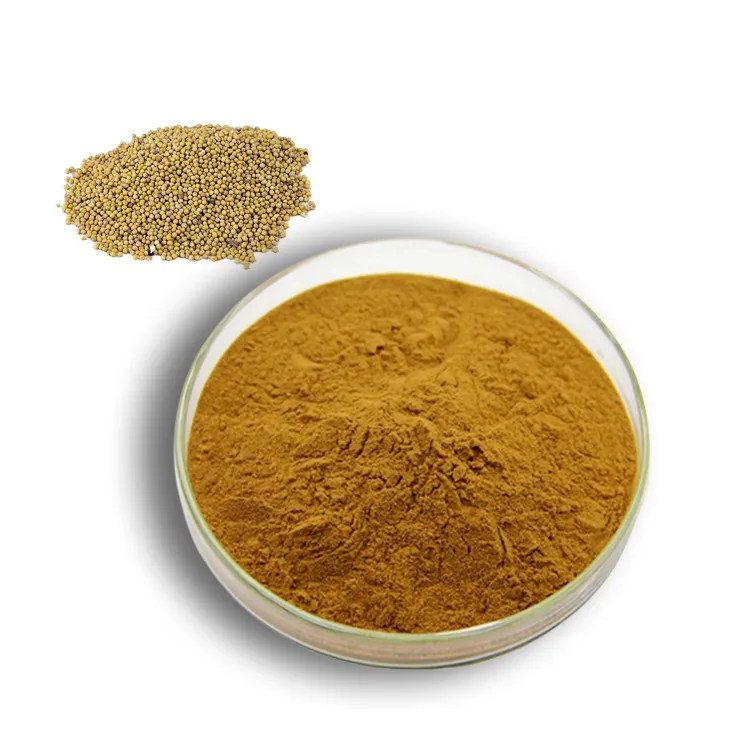
2.2 Supercritical Fluid Extraction
Supercritical fluid extraction (SFE) is an emerging extraction technique. Supercritical fluids, such as supercritical carbon dioxide (scCO₂), possess unique properties that make them suitable for extraction. scCO₂ has a low viscosity, high diffusivity, and can be easily removed from the extract by simply reducing the pressure.
- Pressure and temperature conditions: In supercritical fluid extraction of White mustard seed extract, the pressure and temperature need to be carefully controlled. For scCO₂, a pressure range of 10 - 30 MPa and a temperature range of 35 - 55°C are often used. These conditions can ensure that CO₂ is in the supercritical state and has the optimal extraction ability for the bioactive compounds in white mustard seeds.
- Modifier addition: Sometimes, modifiers are added to the supercritical fluid to improve its extraction selectivity. For example, adding a small amount of ethanol as a modifier can enhance the extraction of polar compounds from white mustard seeds. The amount of modifier added is typically in the range of 5 - 15% (v/v) of the supercritical fluid.
3. Distillation Methods
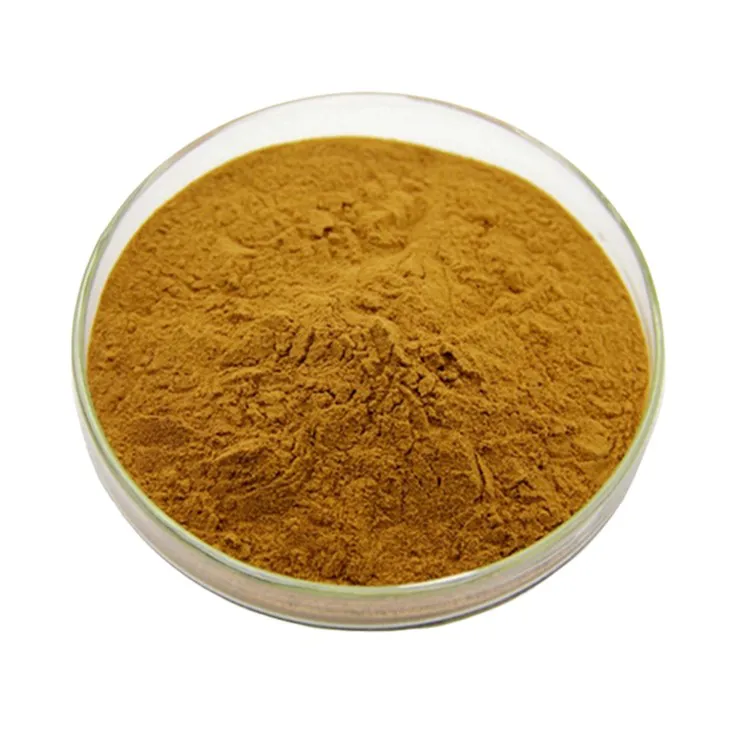
3.1 Steam Distillation
Principle: Steam distillation is based on the fact that the vapor pressure of a mixture of water and the volatile compounds in White mustard seed extract is equal to the sum of the vapor pressures of its individual components. When steam is passed through the white mustard seeds, the volatile compounds are carried away with the steam due to their relatively high vapor pressures.
Procedure:
- First, the white mustard seeds are ground into a fine powder to increase the surface area for better interaction with the steam.
- The ground seeds are placed in a distillation flask, and water is added. The ratio of water to seeds can vary, but a common ratio is 2:1 - 3:1 (v/w).
- The distillation flask is then heated, and steam is generated. The steam passes through the white mustard seed powder, carrying the volatile compounds with it.
- The mixture of steam and volatile compounds is then condensed in a condenser. The condensed liquid is collected in a receiving flask.
Key parameters:
- Steam flow rate: The steam flow rate affects the extraction efficiency. A too - slow steam flow rate may not be able to effectively carry away all the volatile compounds, while a too - fast steam flow rate may cause some problems such as incomplete condensation. A suitable steam flow rate for white mustard seed steam distillation is typically 1 - 3 mL/min.
- Distillation time: The distillation time also needs to be optimized. If the distillation time is too short, not all the volatile compounds will be extracted. If it is too long, it may lead to the extraction of some unwanted compounds or the degradation of the desired compounds. For white mustard seed steam distillation, a distillation time of 2 - 4 hours is usually appropriate.
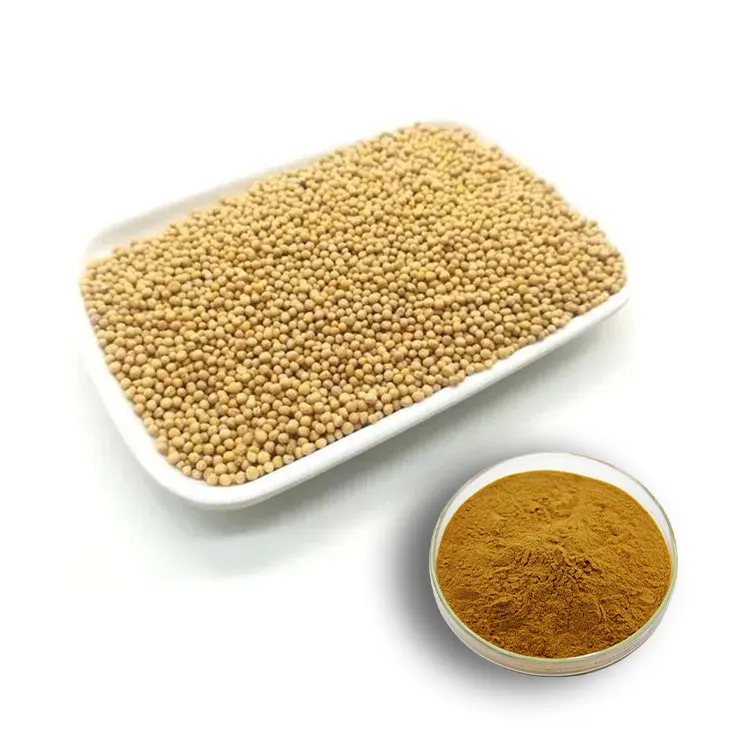
3.2 Vacuum Distillation
Vacuum distillation is used when the compounds in the White mustard seed extract are sensitive to heat or have high boiling points. By reducing the pressure, the boiling point of the compounds is lowered, which allows for distillation at a lower temperature.
- Pressure adjustment: The pressure in vacuum distillation is typically reduced to a few millimeters of mercury (mmHg). For example, a pressure of 1 - 10 mmHg is often used for White mustard seed extract distillation. This low - pressure environment ensures that the compounds can be distilled at a relatively low temperature, thus minimizing the risk of thermal degradation.
- Temperature control: Although the boiling point is lowered in vacuum distillation, the temperature still needs to be carefully controlled. The appropriate temperature depends on the nature of the compounds in the White mustard seed extract. Generally, a temperature range of 40 - 80°C is used for vacuum distillation of White mustard seed extract.
4. Conclusion
Understanding the extraction and distillation methods of White mustard seed extract is essential for its efficient production and utilization. Solvent extraction, supercritical fluid extraction, steam distillation, and vacuum distillation all have their own characteristics and application scopes. By optimizing the parameters and procedures of these methods, it is possible to obtain high - quality White mustard seed extract, which can then be widely used in various fields such as medicine, food, and cosmetics.
FAQ:
What are the common solvents used in solvent extraction of White mustard seed extract?
Common solvents include ethanol, hexane, and chloroform. Ethanol is often preferred as it is relatively safe and can effectively extract the active components. Hexane is good for extracting non - polar compounds, while chloroform can also be used but requires careful handling due to its toxicity.
How can the extraction conditions be optimized in solvent extraction?
The extraction conditions can be optimized in several ways. Temperature plays a crucial role; for example, increasing the temperature within a certain range may enhance the solubility of the components in the solvent, but not too high to avoid component degradation. The ratio of solvent to white mustard seeds should also be adjusted appropriately. Longer extraction time may lead to higher yields, but there is a point of diminishing returns, so it needs to be balanced.
What are the key parameters in steam distillation of White mustard seed extract?
The key parameters in steam distillation include steam pressure, temperature, and distillation time. The appropriate steam pressure ensures efficient transfer of the volatile components. Temperature needs to be controlled within a suitable range to prevent over - heating or under - heating. The distillation time affects the purity and yield of the extract; too short a time may result in incomplete extraction, while too long may introduce impurities.
How to ensure the purity of White mustard seed extract after distillation?
To ensure the purity after distillation, proper separation techniques can be used. For example, fractional distillation can further separate different components based on their boiling points. Additionally, filtration and purification steps such as using activated carbon to remove impurities can be carried out. Quality control measures like chromatography can also be employed to monitor and ensure the purity.
What are the advantages of steam distillation over other distillation methods for White mustard seed extract?
Steam distillation has several advantages. It is a relatively gentle method that can preserve the integrity of the volatile and heat - sensitive components in White mustard seed extract. It is also a cost - effective method compared to some other complex distillation techniques. Moreover, it can effectively separate the desired components from the non - volatile substances.
Related literature
- Extraction and Characterization of Bioactive Compounds from White Mustard Seeds"
- "Optimization of Extraction and Distillation Processes for White mustard seed extract: A Review"
- "The Chemistry and Technology of White mustard seed extract: Extraction, Distillation and Applications"


-

Citrus Aurantii Extract
2025-01-04
-

Red Yeast Rice
2025-01-04
-

Pine bark Extract Powder
2025-01-04
-

Rosemary extract
2025-01-04
-

Dandelion Leaf Extract
2025-01-04
-

Vitamin C
2025-01-04
-

Bilberry Extract
2025-01-04
-

Saw Palmetto Extract
2025-01-04
-

Green Tea Extract
2025-01-04
-

Rutin
2025-01-04