


1. Introduction
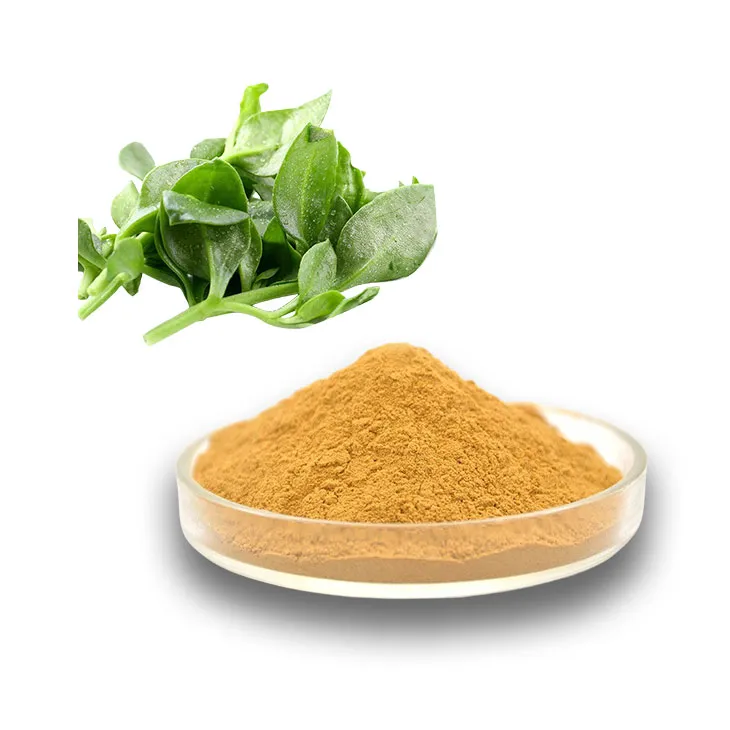
Andrographis paniculata is a well - known medicinal plant in traditional medicine systems, especially in Asian countries. Andrographolide, a major bioactive compound in Andrographis paniculata, has shown a wide range of pharmacological activities such as anti - inflammatory, antioxidant, and antiviral properties. Therefore, the extraction, separation, and identification of andrographolide from Andrographis Paniculata Extract Powder are of great significance for both research and industrial applications.
2. Extraction Process
2.1 Solvent Extraction
Solvent extraction is one of the most common methods for extracting andrographolide from Andrographis paniculata extract powder. The choice of solvent is crucial.
- Ethanol: Ethanol is a widely used solvent. It has a relatively high polarity, which can effectively dissolve andrographolide. The extraction process usually involves soaking the Andrographis Paniculata Extract Powder in ethanol for a certain period, followed by filtration and concentration. For example, a common procedure may be to soak the powder in 70% - 90% ethanol at room temperature for 24 - 48 hours.
- Methanol: Methanol is also a suitable solvent. However, it is more toxic than ethanol, so extra safety precautions are required during the extraction process. When using methanol, similar extraction times and concentration procedures can be applied as with ethanol.
2.2 Supercritical Fluid Extraction (SFE)
Supercritical fluid extraction has emerged as an advanced extraction technique in recent years.
- Carbon dioxide (CO₂) is the most commonly used supercritical fluid in the extraction of andrographolide. Under supercritical conditions, CO₂ has properties between a gas and a liquid, which allows it to have a high diffusivity and low viscosity. This enables it to penetrate the matrix of Andrographis paniculata extract powder effectively and extract andrographolide.
- The process usually requires specific equipment to maintain the supercritical state of CO₂. The extraction conditions such as pressure, temperature, and extraction time need to be optimized. For instance, a typical condition may be a pressure of 10 - 30 MPa and a temperature of 35 - 60 °C for an extraction time of 1 - 3 hours.
3. Separation Techniques

3.1 Column Chromatography
Column chromatography is a traditional and effective separation method.
- Stationary Phase: Silica gel is often used as the stationary phase in the separation of andrographolide. It provides a suitable surface for the adsorption and desorption of andrographolide and other components in the extract.
- Mobile Phase: The choice of mobile phase is based on the polarity of the compounds. For andrographolide, a mixture of solvents such as chloroform - methanol (in different ratios) can be used as the mobile phase. The sample is loaded onto the top of the column, and as the mobile phase passes through the column, different components are separated based on their affinity to the stationary and mobile phases.

3.2 High - Performance Liquid Chromatography (HPLC)
HPLC is a widely used modern separation technique in the analysis of andrographolide.
- Column and Mobile Phase: C18 columns are commonly used in HPLC for andrographolide separation. The mobile phase can be a mixture of acetonitrile - water with appropriate additives such as formic acid or acetic acid to adjust the pH. This allows for better separation and resolution of andrographolide from other components in the extract.
- Detector: UV detectors are often used in HPLC for andrographolide analysis. Andrographolide has a characteristic absorption peak in the UV region, usually around 225 - 230 nm. By monitoring this peak, the presence and quantity of andrographolide can be determined.
4. Identification Strategies
4.1 Spectroscopic Methods
4.1.1 UV - Vis Spectroscopy
UV - Vis spectroscopy is a simple and rapid method for the identification of andrographolide. As mentioned earlier, andrographolide has a characteristic absorption peak in the UV region. By comparing the absorption spectrum of the extracted sample with that of a standard andrographolide sample, the presence of andrographolide can be preliminarily determined.
4.1.2 Infrared (IR) Spectroscopy
IR spectroscopy can provide information about the functional groups in andrographolide. Different functional groups in andrographolide such as carbonyl, hydroxyl, and alkene groups have characteristic absorption bands in the IR spectrum. By analyzing these absorption bands, the structure of andrographolide can be further confirmed.
4.2 Mass Spectrometry (MS)
Mass spectrometry is a powerful tool for the identification of andrographolide.
- Electron Spray Ionization (ESI - MS): In ESI - MS, the andrographolide molecule is ionized in the solution phase and then transferred to the gas phase. The resulting ions are then separated according to their mass - to - charge ratio (m/z). The molecular ion peak of andrographolide can be detected, which helps in determining its molecular weight and providing information about its structure.
- Tandem Mass Spectrometry (MS/MS): MS/MS can provide more detailed structural information about andrographolide. By fragmenting the molecular ions of andrographolide, the fragments can be analyzed to understand the connectivity of different parts of the molecule and further confirm its structure.
5. Conclusion
The extraction, separation, and identification of andrographolide from Andrographis Paniculata Extract Powder are complex but crucial processes. The development of efficient extraction methods such as supercritical fluid extraction, advanced separation techniques like HPLC, and accurate identification strategies including mass spectrometry has significantly promoted the research and application of andrographolide. Future research should focus on further optimizing these processes, exploring new extraction and separation methods, and applying andrographolide in more fields such as new drug development and functional food production.
FAQ:
What are the common extraction methods for andrographolide from Andrographis Paniculata Extract Powder?
Common extraction methods include solvent extraction. For example, using ethanol or methanol as solvents to extract andrographolide from the powder. Supercritical fluid extraction is also a method, which can achieve efficient extraction with high selectivity.
How can we ensure the effectiveness of the separation of andrographolide?
To ensure the effectiveness of separation, chromatographic techniques can be used. High - performance liquid chromatography (HPLC) is a very effective method. By optimizing the mobile phase composition and column conditions, accurate separation of andrographolide from other components can be achieved. Column chromatography can also be used for preliminary separation and purification.
What are the main identification methods for andrographolide?
The main identification methods include spectroscopic methods. For example, ultraviolet - visible spectroscopy (UV - Vis) can be used to detect the characteristic absorption peaks of andrographolide. Infrared spectroscopy (IR) can help identify the functional groups in andrographolide. Nuclear magnetic resonance spectroscopy (NMR) can provide detailed structural information for accurate identification.
What factors may affect the extraction process of andrographolide?
Factors that may affect the extraction process include the type of solvent used, extraction time, extraction temperature, and the particle size of Andrographis Paniculata Extract Powder. Different solvents have different solubilities for andrographolide. Longer extraction time and appropriate extraction temperature may increase the extraction yield, and smaller particle size can increase the contact area between the powder and the solvent, which is conducive to extraction.
Why is the study of andrographolide extraction, separation and identification important?
The study is important because andrographolide has various pharmacological activities, such as anti - inflammatory, antibacterial, and antiviral effects. By effectively extracting, separating and identifying andrographolide, we can better understand its properties and develop drugs or health products based on it, which is of great significance for promoting human health.
Related literature
- Isolation and Identification of Andrographolide from Andrographis paniculata"
- "Optimization of the Extraction Process of Andrographolide from Andrographis paniculata"
- "Advanced Separation and Identification Techniques for Andrographolide"


-

Licorice Root Extract Powder
2024-12-07
-

Marigold Extract
2024-12-07
-

Black Garlic Extract
2024-12-07
-

Pomegranate Extract
2024-12-07
-

Bladder horn extract powder
2024-12-07
-

Beetroot Powder
2024-12-07
-

Bromelain
2024-12-07
-

Red Clover Extract
2024-12-07
-

Dandelion Leaf Extract
2024-12-07
-

Tormentil Extract
2024-12-07