


1. Introduction
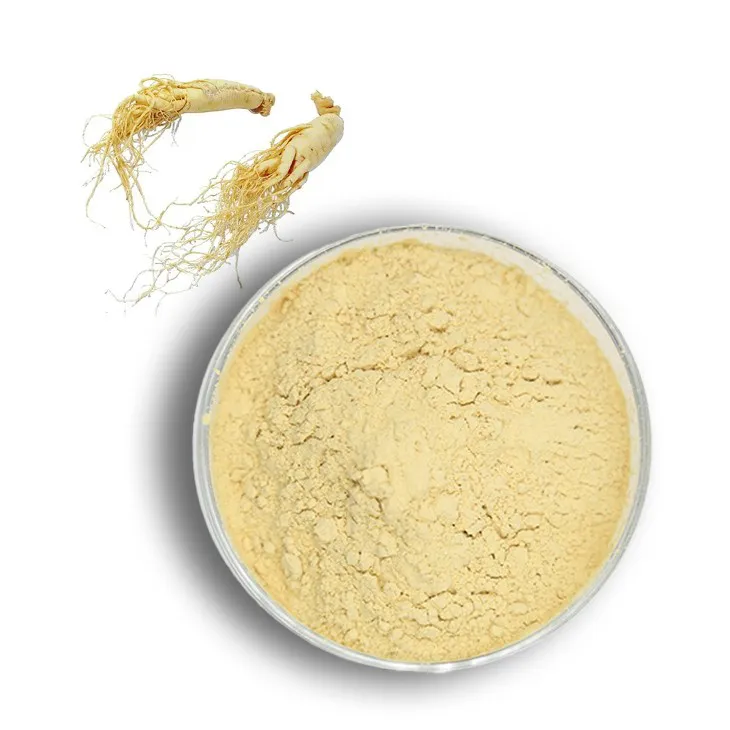
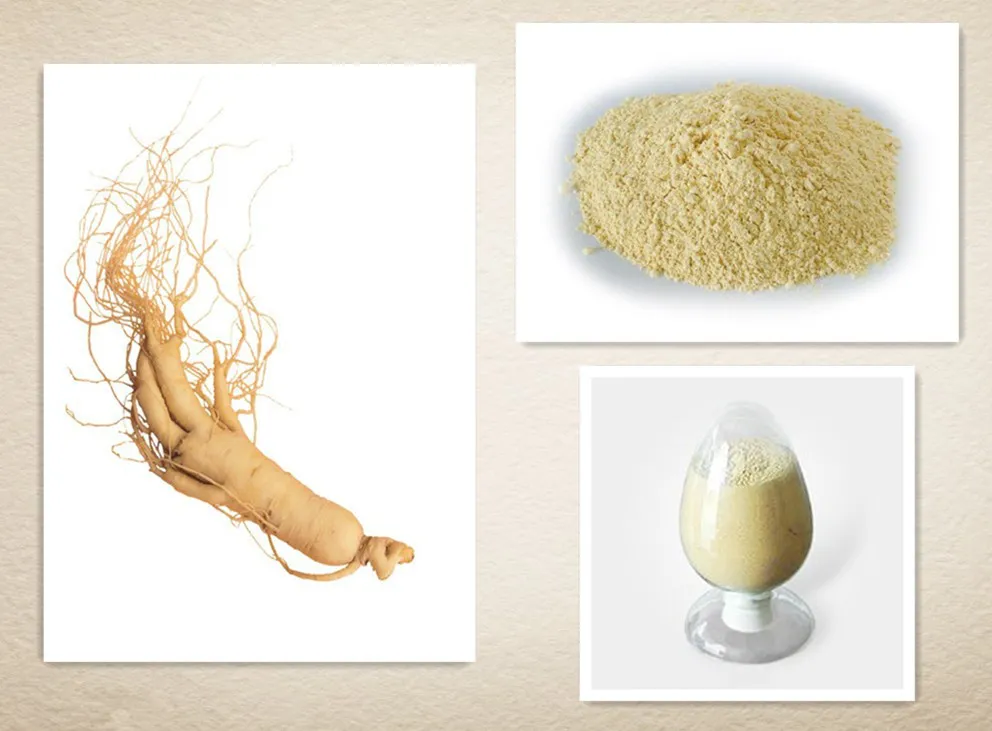
Ginseng, a well - known traditional Chinese medicine, has been widely used for thousands of years due to its numerous health - promoting effects. Ginsenosides are considered as the main active components in ginseng, which are responsible for many of its pharmacological activities, such as anti - inflammatory, anti - oxidative, and immunomodulatory effects. Therefore, the extraction, separation, and identification of ginsenosides from Ginseng Root Extract are of great significance for both the pharmaceutical industry and the comprehensive utilization of ginseng resources.
2. Extraction of Ginsenosides
2.1 Traditional Extraction Methods
- Soxhlet Extraction: This is a classic extraction method. It involves continuous extraction of the sample with a solvent (usually an organic solvent such as ethanol or methanol) in a Soxhlet extractor. However, this method has some drawbacks. For example, it usually requires a long extraction time, which may lead to the degradation of some heat - sensitive ginsenosides. Also, the extraction efficiency is relatively low, and a large amount of solvent is consumed.
- Maceration Extraction: In this method, the ginseng root is soaked in a solvent for a certain period of time (usually several days to weeks). Although it is a simple and easy - to - operate method, it also has limitations. The extraction rate is not high, and the quality of the extracted product may be affected by factors such as microbial contamination during the long - term soaking process.
2.2 Modern Advanced Extraction Methods
- Microwave - Assisted Extraction (MAE): MAE is a relatively new extraction technology. Microwave radiation can directly heat the sample and the solvent, which can significantly increase the extraction efficiency. It can reduce the extraction time compared with traditional methods. For example, in some studies, the extraction time of ginsenosides by MAE can be shortened to several minutes to tens of minutes, while the extraction rate is relatively high. Moreover, MAE can also be more energy - efficient and use less solvent.
- Ultrasonic - Assisted Extraction (UAE): UAE utilizes ultrasonic waves to create cavitation bubbles in the solvent. When these bubbles collapse, they generate intense local pressure and temperature changes, which can enhance the mass transfer between the ginseng root and the solvent, thus improving the extraction efficiency. UAE has the advantages of simple equipment, easy operation, and relatively short extraction time. It can also be combined with other extraction methods to further improve the extraction effect.
- Supercritical Fluid Extraction (SFE): SFE uses supercritical fluids (usually carbon dioxide) as the extraction solvent. Supercritical fluids have the properties of both gas and liquid, such as high diffusivity and low viscosity. SFE can achieve high - purity extraction of ginsenosides with the advantages of mild extraction conditions, no solvent residue, and environmental friendliness. However, the equipment for SFE is relatively expensive, which limits its widespread application to a certain extent.
3. Separation of Ginsenosides

3.1 Column Chromatography
- Silica Gel Column Chromatography: Silica gel is one of the most commonly used stationary phases in column chromatography for ginsenoside separation. Ginsenosides with different polarities can be separated based on their different adsorption and desorption behaviors on the silica gel. By using different solvent systems (such as chloroform - methanol - water mixtures with different ratios) as the mobile phase, the individual ginsenosides can be eluted step by step from the column. However, silica gel column chromatography may have some problems, such as relatively long separation time and low sample loading capacity in some cases.
- Reverse - phase Column Chromatography: Reverse - phase columns, usually using C18 or C8 bonded silica as the stationary phase, are widely used for ginsenoside separation. This method is more suitable for separating ginsenosides with relatively low polarities. The mobile phase often consists of water - methanol or water - acetonitrile mixtures with different ratios. Reverse - phase column chromatography has the advantages of high separation efficiency, good reproducibility, and relatively high sample loading capacity. It can be used for the preparative separation of ginsenosides on a large scale.

3.2 Other Separation Methods
- High - Speed Counter - current Chromatography (HSCCC): HSCCC is a liquid - liquid partition chromatography technique without a solid support. It is based on the partition of the sample components between two immiscible liquid phases. HSCCC has the advantages of high separation efficiency, no sample loss due to adsorption, and gentle separation conditions. It can be used for the separation of complex mixtures of ginsenosides, especially for those with similar structures.
- Gel Filtration Chromatography: Gel filtration chromatography separates ginsenosides based on their molecular size differences. The stationary phase is usually a gel matrix with a certain pore size. Larger molecules are excluded from the pores of the gel and elute first, while smaller molecules can enter the pores and elute later. This method is mainly used for the preliminary purification or fractionation of ginsenosides according to their molecular weight ranges.
4. Identification of Ginsenosides

4.1 Spectroscopic Methods
- Infrared Spectroscopy (IR): IR spectroscopy can provide information about the functional groups in ginsenosides. Different ginsenosides have characteristic absorption peaks in the infrared region due to their different chemical structures. For example, the absorption peaks corresponding to hydroxyl groups, carbonyl groups, and ester groups can be used to identify and distinguish different ginsenosides. By comparing the infrared spectra of the sample with those of known ginsenosides, the presence and type of ginsenosides in the sample can be determined.
- Ultraviolet - Visible Spectroscopy (UV - Vis): UV - Vis spectroscopy is mainly used to study the conjugated systems in ginsenosides. Ginsenosides with different conjugated structures have different absorption wavelengths in the UV - Vis region. By measuring the absorption spectra of ginsenosides, some information about their molecular structures can be obtained. Moreover, UV - Vis spectroscopy can also be used for quantitative analysis of ginsenosides in combination with appropriate calibration methods.
- Nuclear Magnetic Resonance (NMR) Spectroscopy: NMR spectroscopy is a powerful tool for the structural identification of ginsenosides. Both 1H - NMR and 13C - NMR spectra can provide detailed information about the hydrogen and carbon atoms in ginsenosides, respectively. By analyzing the chemical shifts, coupling constants, and peak intensities in the NMR spectra, the complete chemical structure of ginsenosides can be determined accurately.
4.2 Chromatographic - Mass Spectrometry (MS) Methods
- Gas Chromatography - Mass Spectrometry (GC - MS): GC - MS is mainly used for the analysis of volatile and semi - volatile components in ginsenosides. However, most ginsenosides are non - volatile or semi - volatile, so they need to be derivatized before GC - MS analysis. After derivatization, ginsenosides can be separated by gas chromatography and then detected by mass spectrometry. The mass spectra obtained can be used to identify the molecular weights and structural fragments of ginsenosides, which is helpful for their identification.
- Liquid Chromatography - Mass Spectrometry (LC - MS): LC - MS is more suitable for the analysis of non - volatile ginsenosides. High - performance liquid chromatography (HPLC) is used to separate ginsenosides, and mass spectrometry is used for detection. LC - MS can provide information about the molecular weights, fragmentation patterns, and retention times of ginsenosides, which can be used for both qualitative and quantitative analysis. The development of tandem mass spectrometry (MS/MS) further enhances the ability of LC - MS to identify the structures of ginsenosides.
5. Conclusion
In conclusion, the extraction, separation, and identification of ginsenosides in Ginseng Root Extract are important research areas. Traditional extraction methods have certain limitations, while modern advanced extraction methods offer better extraction efficiency and product quality. Column chromatography and other separation methods can effectively purify ginsenosides, and spectroscopic and chromatographic - mass spectrometry methods can accurately identify ginsenosides. With the continuous development of technology, more efficient, accurate, and environmentally friendly methods for the extraction, separation, and identification of ginsenosides are expected to be developed, which will contribute to the in - depth research and comprehensive utilization of ginseng resources.
FAQ:
What are the traditional extraction methods for ginsenosides in Ginseng Root Extract?
Traditional extraction methods for ginsenosides include solvent extraction, such as using ethanol or methanol. However, these methods may have relatively lower extraction efficiency and may also affect product quality to some extent. For example, the extraction time may be long, and it may be difficult to completely extract all the ginsenosides.
How does microwave - assisted extraction work for ginsenosides?
Microwave - assisted extraction uses microwaves to generate heat rapidly. This rapid heating can disrupt the cell walls of ginseng root more effectively, facilitating the release of ginsenosides into the solvent. It can significantly shorten the extraction time compared to traditional methods and often improve the extraction yield.
What are the advantages of using column chromatography in the separation of ginsenosides?
Column chromatography allows for the purification of ginsenosides based on their different affinities to the stationary phase and mobile phase. It can effectively separate ginsenosides from other impurities in the extract. Different types of column chromatography, such as silica gel column chromatography, can be selected according to the specific properties of ginsenosides, enabling high - purity separation.
How can infrared spectroscopy be used to identify ginsenosides?
Infrared spectroscopy measures the absorption of infrared light by ginsenosides. Different functional groups in ginsenosides have characteristic absorption frequencies in the infrared region. By analyzing these absorption peaks, we can determine the presence of specific functional groups and thus identify the chemical structure of ginsenosides.
What is the significance of the comprehensive study of extraction, separation and identification of ginsenosides?
The comprehensive study is of great significance. Firstly, it helps to fully utilize the active components in ginseng. By improving the extraction efficiency, more ginsenosides can be obtained. Secondly, accurate separation and identification ensure the quality and safety of ginsenoside - related products. It also promotes the development of ginseng - based pharmaceuticals and health products.
Related literature
- Advances in Ginsenoside Extraction Techniques from Ginseng Root"
- "Separation and Purification of Ginsenosides: A Review of Column Chromatography Applications"
- "Identification of Ginsenosides in Ginseng Extracts Using Spectroscopic Methods"


-

Apricot Powder
2024-12-07
-

Bromelain
2024-12-07
-

Calendula Extract
2024-12-07
-

Green coffee bean Extract
2024-12-07
-

Citrus bioflavonoids
2024-12-07
-

Fig Extract
2024-12-07
-

Cocoa Extract
2024-12-07
-

Andrographis Paniculata Extract Powder
2024-12-07
-

Soy Extract
2024-12-07
-

Lemon Balm Extract
2024-12-07