


1. Introduction
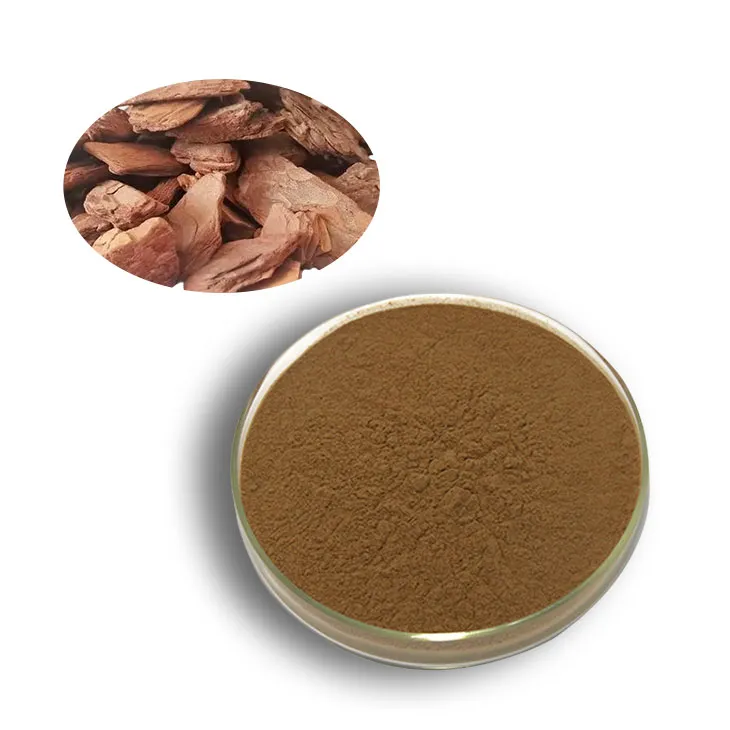
Pine bark Extract Powder has gained significant attention in recent years due to its potential applications in various industries such as pharmaceuticals, cosmetics, and nutraceuticals. The production of pure isolates from Pine bark Extract Powder is crucial for ensuring the effectiveness and safety of these applications. This article will delve into the processing and extraction technologies involved in obtaining pure isolates from pine bark.
2. Pretreatment of Pine Bark
Drying
- The first step in the pretreatment of pine bark is drying. Drying helps to reduce the moisture content, which is essential for subsequent processing steps. Different drying methods can be employed, such as air drying, oven drying, or freeze - drying. Air drying is a simple and cost - effective method, but it may take longer compared to other methods. Oven drying allows for more controlled drying conditions, with the ability to set specific temperatures. Freeze - drying, on the other hand, is a more advanced method that helps to preserve the bioactive compounds in the pine bark by minimizing the damage caused by heat during drying.
- After drying, the pine bark needs to be ground to an appropriate particle size. Grinding is important as it increases the surface area of the pine bark, which in turn enhances the extraction efficiency. The particle size can be adjusted depending on the extraction method to be used. For example, for some traditional extraction methods, a coarser particle size may be sufficient, while for modern extraction techniques such as supercritical fluid extraction, a finer particle size may be required. Grinding can be carried out using various equipment such as a mortar and pestle for small - scale operations or a mechanical grinder for larger - scale production.
3. Extraction Mechanisms
3.1 Traditional Extraction Technologies
Solvent Extraction
- Solvent extraction is one of the most commonly used traditional extraction methods. In this method, a suitable solvent is used to dissolve the bioactive compounds from the pine bark. Common solvents used include ethanol, methanol, and water. Ethanol is often preferred as it has good solubility for many bioactive compounds and is relatively safe for use in pharmaceutical and nutraceutical applications. The extraction process typically involves soaking the ground pine bark in the solvent for a certain period of time, followed by filtration to separate the extract from the solid residue.
- The efficiency of solvent extraction can be influenced by several factors. The choice of solvent, the ratio of solvent to pine bark, and the extraction time all play important roles. For example, a higher solvent - to - pine - bark ratio may result in a more complete extraction, but it may also increase the cost and the amount of solvent to be removed in the subsequent purification steps.
- Maceration is a simple and traditional extraction technique. It involves soaking the pine bark in a solvent for an extended period, usually several days to weeks. During this time, the solvent gradually penetrates the pine bark and extracts the bioactive compounds. Maceration can be carried out at room temperature or at a slightly elevated temperature to enhance the extraction rate. However, one of the drawbacks of maceration is that it is a time - consuming process, and there is a risk of microbial contamination during the long soaking period.
3.2 Modern Extraction Technologies
Supercritical Fluid Extraction (SFE)
- Supercritical fluid extraction has emerged as a promising modern extraction technology for Pine bark Extract Powder. In this method, a supercritical fluid, usually carbon dioxide (CO₂), is used as the extraction solvent. The supercritical state of CO₂ has unique properties, such as high diffusivity and low viscosity, which enable it to penetrate the pine bark effectively and extract the bioactive compounds. One of the main advantages of SFE is that it is a clean and environmentally friendly extraction method, as CO₂ is non - toxic, non - flammable, and can be easily removed from the extract.
- The extraction process using SFE is highly controllable. Parameters such as temperature, pressure, and extraction time can be precisely adjusted to optimize the extraction of specific bioactive compounds. For example, by increasing the pressure, the density of the supercritical CO₂ can be increased, which can enhance the solubility of certain bioactive compounds in the pine bark.
- Ultrasonic - assisted extraction utilizes ultrasonic waves to enhance the extraction process. The ultrasonic waves create cavitation bubbles in the solvent, which collapse and generate high - intensity shock waves and micro - jets. These mechanical forces help to break the cell walls of the pine bark, thereby facilitating the release of bioactive compounds into the solvent. UAE can significantly reduce the extraction time compared to traditional extraction methods. For example, in solvent extraction, the extraction time may be reduced from several hours to just a few minutes with the assistance of ultrasonic waves.
- However, one of the challenges in UAE is to optimize the ultrasonic parameters such as frequency, power, and exposure time. Different pine bark samples and bioactive compounds may require different ultrasonic settings for optimal extraction.
4. Factors Influencing the Quality of the Final Product
Temperature
- Temperature plays a crucial role in both extraction and purification processes. In extraction, different bioactive compounds have different solubility - temperature relationships. For example, some compounds may be more soluble at higher temperatures, while others may be degraded or denatured at elevated temperatures. In traditional solvent extraction, a moderate temperature may be preferred to balance the solubility and the stability of the bioactive compounds. In modern extraction techniques such as SFE, temperature also affects the properties of the supercritical fluid. An increase in temperature can change the density and diffusivity of the supercritical fluid, which in turn influences the extraction efficiency.
- The extraction time is an important factor that needs to be optimized. In traditional extraction methods such as maceration, a longer extraction time may be required to ensure a sufficient extraction of bioactive compounds. However, a very long extraction time may also lead to the extraction of unwanted impurities or the degradation of the desired compounds. In modern extraction techniques, such as UAE, the extraction time can be significantly reduced, but it still needs to be carefully controlled to achieve the best extraction results. For example, in UAE, if the exposure time to ultrasonic waves is too long, it may cause over - extraction or damage to the bioactive compounds.
- Pressure is a significant factor, especially in modern extraction technologies like SFE. As mentioned earlier, an increase in pressure can increase the density of the supercritical fluid, which can enhance the solubility of bioactive compounds. However, too high a pressure may also lead to equipment problems and increased energy consumption. Therefore, it is necessary to find the optimal pressure for the extraction process based on the characteristics of the pine bark and the desired bioactive compounds.
5. Applications of Pure Pine bark Extract Powder Isolates
Pharmaceuticals
- In the pharmaceutical industry, pure Pine bark Extract Powder isolates can be used for their antioxidant, anti - inflammatory, and antimicrobial properties. For example, they may be used in the development of drugs for treating chronic diseases such as cardiovascular diseases, arthritis, and diabetes. The bioactive compounds in pine bark extract, such as proanthocyanidins, have been shown to have beneficial effects on human health, and the production of pure isolates can ensure the consistency and effectiveness of these pharmaceutical products.
- For cosmetics, Pine bark Extract Powder isolates are highly valued for their antioxidant and skin - rejuvenating properties. They can be incorporated into skincare products such as creams, lotions, and serums to protect the skin from oxidative damage, reduce wrinkles, and improve skin elasticity. The pure isolates can provide a more concentrated and effective form of these beneficial properties compared to crude pine bark extracts.
- In the nutraceutical field, Pine bark Extract Powder isolates can be used as dietary supplements. They can provide consumers with a natural source of antioxidants and other bioactive compounds. The production of pure isolates allows for accurate dosing and quality control, which is important for ensuring the safety and efficacy of these nutraceutical products.
6. Conclusion
The production of pure isolates from Pine bark Extract Powder is a complex process that involves pretreatment, extraction, and careful consideration of various factors influencing the quality of the final product. Traditional and modern extraction technologies each have their own advantages and limitations, and a combination of these methods may be used to achieve the best results. By mastering these processing and extraction technologies, it is possible to produce high - quality Pine bark Extract Powder isolates for diverse applications in pharmaceuticals, cosmetics, and nutraceuticals. This not only provides opportunities for the development of new products but also contributes to the utilization of natural resources in a more sustainable and effective manner.
FAQ:
What are the initial steps in processing pine bark for extract powder?
The initial steps in processing pine bark for extract powder often involve pre - treatment. This typically includes drying the pine bark to reduce moisture content. After drying, the pine bark is ground to an appropriate particle size. This is important as it can affect the efficiency of the subsequent extraction process. A proper particle size ensures better contact between the pine bark and the extraction solvent.
What are the traditional extraction technologies for Pine bark Extract Powder?
Traditional extraction technologies for Pine bark Extract Powder include solvent extraction. For example, using organic solvents like ethanol. In this method, the ground pine bark is soaked in the solvent for a certain period. The solvent then dissolves the active compounds in the pine bark. After that, the solvent is separated from the solid residue, and the extract is further processed to obtain the powder. Another traditional method could be maceration, where the pine bark is kept in contact with the solvent for an extended time with occasional stirring.
How does modern extraction technology differ from traditional ones in obtaining Pine bark Extract Powder?
Modern extraction technologies often offer more efficiency and selectivity compared to traditional ones. For instance, supercritical fluid extraction (SFE) is a modern technique. In SFE, a supercritical fluid, usually carbon dioxide, is used as the extraction solvent. It has properties between a gas and a liquid at specific conditions. This allows for better penetration into the pine bark matrix and more selective extraction of the desired compounds. It also has the advantage of being a cleaner process as it leaves no solvent residue, unlike some traditional solvent - based extraction methods. Additionally, modern techniques may use advanced equipment that can precisely control parameters such as temperature, pressure, and extraction time more accurately than traditional methods.
What factors play a crucial role in determining the quality of Pine bark Extract Powder?
Temperature, extraction time, and pressure are crucial factors in determining the quality of Pine bark Extract Powder. Temperature can affect the solubility of the active compounds in the extraction solvent. If the temperature is too high, it may cause degradation of some sensitive compounds. Extraction time also matters. If it is too short, not all the desired compounds may be extracted, while if it is too long, it may lead to the extraction of unwanted substances. Pressure is an important factor especially in modern extraction techniques like supercritical fluid extraction. Appropriate pressure is required to maintain the supercritical state of the fluid and to ensure efficient extraction.
What are the applications of pure Pine bark Extract Powder isolates?
Pure Pine bark Extract Powder isolates have applications in pharmaceuticals, cosmetics, and nutraceuticals. In pharmaceuticals, they may be used for their potential antioxidant, anti - inflammatory, or other medicinal properties. In cosmetics, they can be added to products for their skin - enhancing properties, such as improving skin elasticity and reducing wrinkles. In nutraceuticals, they can be used as dietary supplements due to their potential health - promoting effects.
Related literature
- Advanced Extraction Techniques for Pine Bark Bioactive Compounds"
- "The Role of Temperature in Pine bark Extract Powder Production"
- "Quality Control in Pine bark Extract Powder Manufacturing"


-

Tongkat Ali Extract Powder
2024-12-08
-

Yam Extract
2024-12-08
-

Saponin Extract
2024-12-08
-

Rhodiola Rosea Root extract
2024-12-08
-

Aged Garlic Extract
2024-12-08
-

Cocoa Extract
2024-12-08
-

Green coffee bean Extract
2024-12-08
-

Lycopene
2024-12-08
-

Bromelain
2024-12-08
-

Lemon Extract
2024-12-08