


1. Introduction
Pine bark Extract Powder has been increasingly recognized for its various beneficial properties in different industries, such as the pharmaceutical and cosmetic sectors. However, in the complex market environment, understanding the differences between cooperation partners and raw material suppliers in the context of Pine bark Extract Powder production is of great significance. This not only affects the quality of the final product but also has a profound impact on cost - control and overall business competitiveness.
2. The Process of Pine bark Extract Powder Production
2.1 Raw Material Collection
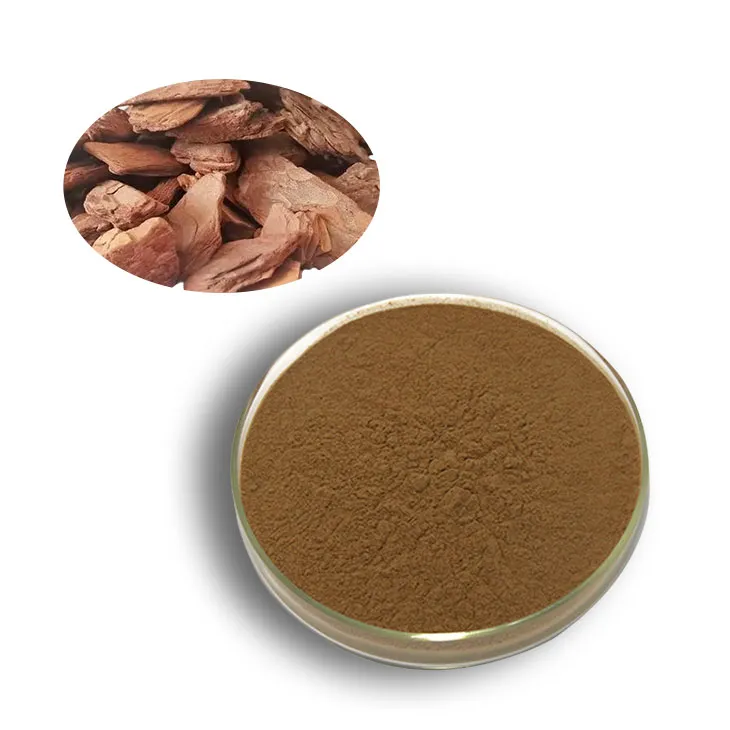
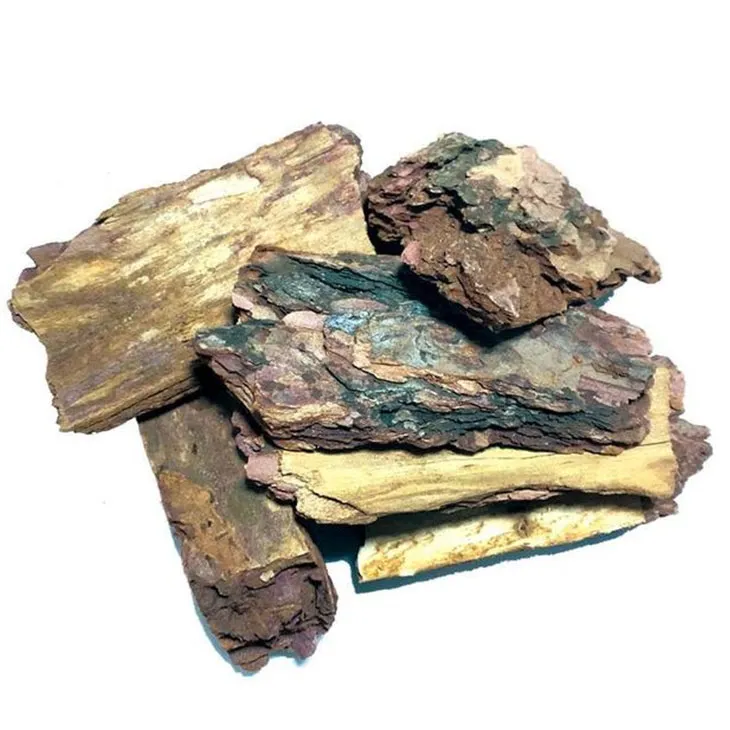
The production of Pine bark Extract Powder begins with the collection of high - quality pine bark. Quality pine bark should be sourced from healthy pine trees, preferably from sustainable forests. This ensures that the raw material contains the necessary bioactive compounds. The collection process needs to follow strict environmental and ethical guidelines to avoid over - exploitation of forest resources.
2.2 Pretreatment
Once the pine bark is collected, it undergoes pretreatment. This includes cleaning to remove dirt, debris, and other impurities. Then, the pine bark is usually dried to a certain moisture content. Drying is a crucial step as it can affect the subsequent extraction process. Improper drying may lead to the degradation of active ingredients or the growth of mold, which would seriously affect the quality of the extract powder.
2.3 Extraction
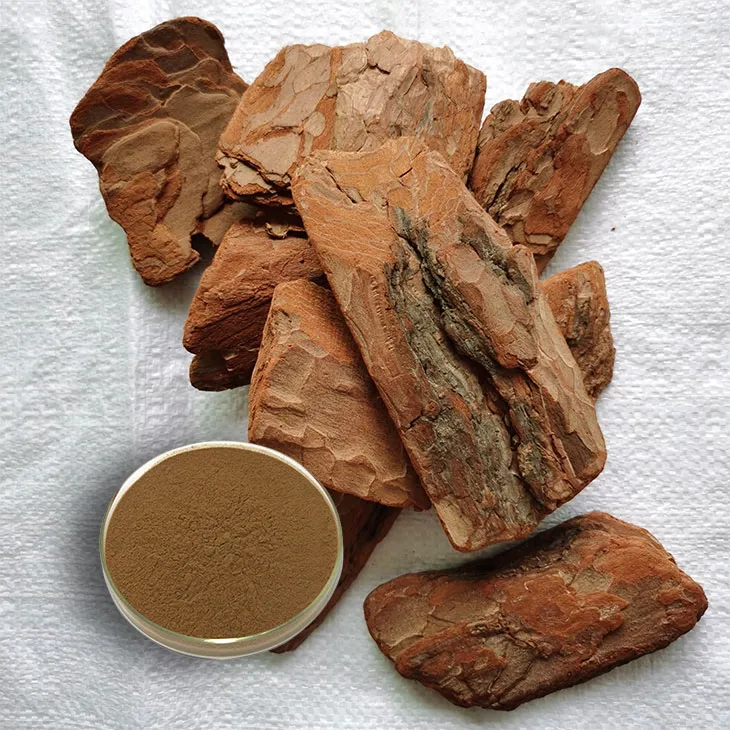
The extraction process is the core of obtaining Pine bark Extract Powder. There are several methods for extraction, such as solvent extraction.
- Solvent extraction involves using appropriate solvents, such as ethanol or water - ethanol mixtures. The choice of solvent depends on the solubility of the target compounds in the pine bark. For example, if the desired bioactive compounds are more soluble in ethanol, then ethanol - based extraction may be more effective.
- The extraction process needs to be carried out under controlled conditions, including temperature, pressure, and extraction time. These parameters can significantly influence the yield and quality of the extract. For instance, too high a temperature may cause the decomposition of some heat - sensitive compounds, while too low a temperature may result in incomplete extraction.
2.4 Concentration and Drying
After extraction, the resulting solution is usually concentrated to increase the concentration of the active ingredients. This can be achieved through evaporation or other concentration techniques. Subsequently, the concentrated solution is dried to obtain the Pine bark Extract Powder. Drying methods can include spray drying or freeze - drying. Spray drying is a more common and cost - effective method, while freeze - drying can better preserve the activity of some sensitive compounds but is relatively more expensive.
3. Quality Control in Pine bark Extract Powder Production
3.1 For Partners
Cooperation partners in the production of Pine bark Extract Powder play a crucial role in quality control.
- They are often involved in the overall production process design. Quality - oriented partners will ensure that each step of the production process, from raw material collection to final product packaging, meets high - quality standards. For example, they may introduce advanced quality management systems such as Good Manufacturing Practice (GMP) to ensure product consistency and safety.
- Partners also contribute to quality control through in - process testing. They will regularly test samples during the production process to monitor the content of active ingredients, the presence of impurities, and other quality parameters. If any deviation from the standard is detected, they can take immediate corrective actions to ensure the final product quality.
3.2 For Raw Material Suppliers
Raw material suppliers mainly focus on the quality of the pine bark itself.
- They need to ensure that the pine bark they supply meets certain quality criteria. This includes factors such as the age of the pine trees (as it can affect the content of bioactive compounds in the bark), the absence of pesticides or other contaminants, and proper handling during collection and storage. For example, if the pine bark is contaminated with pesticides, it can introduce harmful substances into the extract powder during the extraction process.
- Some suppliers may also conduct preliminary testing on the pine bark, such as testing for basic chemical composition. However, their quality control scope is relatively limited compared to that of cooperation partners, mainly concentrating on the raw material stage.
4. Cost Differences between Partners and Raw Material Suppliers
4.1 Cost Structure of Partners
The cost structure of cooperation partners is more complex.
- They need to invest in production facilities, including extraction equipment, drying equipment, and quality testing instruments. These capital investments are relatively large and need to be amortized over the production volume. For example, high - end extraction equipment can cost hundreds of thousands of dollars, and its depreciation cost will be included in the production cost per unit of Pine bark Extract Powder.
- Partners also need to bear the cost of labor for the entire production process, including skilled technicians for operating the equipment and quality control personnel. In addition, they need to consider the cost of research and development, especially if they are constantly looking for ways to improve the production process or enhance the quality of the product.
4.2 Cost Structure of Raw Material Suppliers
Raw material suppliers' costs are mainly concentrated in the collection and initial treatment of pine bark.
- The cost of collecting pine bark includes labor costs for forest workers, transportation costs from the forest to the storage site, and sometimes a small amount of equipment cost for collection tools. For example, if the pine bark collection area is far from the storage and processing site, the transportation cost will be relatively high.
- The cost of pretreatment, such as cleaning and drying, is also part of their cost. However, compared to cooperation partners, their overall cost is relatively lower, mainly because they do not need to bear the large - scale production facility investment and complex production - related labor costs.
5. Technological Capabilities of Partners and Raw Material Suppliers
5.1 Technological Capabilities of Partners
Cooperation partners usually possess more advanced technological capabilities.
- They are often at the forefront of extraction technology. For example, they may be able to use supercritical fluid extraction technology, which can obtain a higher - purity extract with better selectivity compared to traditional solvent extraction methods. This technology requires a high level of technical knowledge and expensive equipment, which partners with strong technological capabilities are more likely to possess.
- Partners also have the ability to conduct in - depth research on the bioactive compounds in Pine bark Extract Powder. They can analyze the chemical structure of these compounds, study their pharmacological effects, and develop new applications based on this knowledge. This kind of technological research ability is crucial for the long - term development of Pine bark Extract Powder products in the market.
5.2 Technological Capabilities of Raw Material Suppliers
Raw material suppliers' technological capabilities are relatively limited.
- They mainly focus on the technology related to the collection and pretreatment of pine bark. For example, they may be proficient in using certain drying techniques to ensure the quality of pine bark during storage. However, they generally do not have the ability to conduct complex extraction technology research or in - depth analysis of bioactive compounds.
- Some raw material suppliers may gradually introduce some basic quality testing technologies to ensure the quality of the pine bark they supply. But compared to cooperation partners, their technological investment and innovation ability are much lower.
6. Importance of Distinguishing between Partners and Raw Material Suppliers
Distinguishing between cooperation partners and raw material suppliers is essential for businesses involved in the Pine bark Extract Powder industry.
- For product quality assurance, understanding the different roles and quality control capabilities of both can help companies better select reliable sources. If a company only focuses on the price of raw materials and ignores the quality control capabilities of partners, it may face quality problems in the final product, which can lead to negative impacts on the brand and market share.
- From a cost - management perspective, clearly differentiating between them allows companies to accurately calculate production costs. By choosing the right partners and raw material suppliers, companies can optimize their cost structure and improve their profit margins. For example, if a company overestimates the cost contribution of raw material suppliers and underestimates that of partners, it may make incorrect pricing decisions for its products.
- In terms of long - term development, recognizing the technological capabilities of both is crucial. If a company wants to develop high - value - added Pine bark Extract Powder products, it needs to cooperate with partners with strong technological capabilities. On the other hand, choosing reliable raw material suppliers can ensure a stable supply of raw materials with good quality.
7. Conclusion
In conclusion, the process of Pine bark Extract Powder production is complex, and there are significant differences between cooperation partners and raw material suppliers in terms of quality control, cost, and technological capabilities. Businesses need to have a clear understanding of these differences to make more informed decisions in the procurement and production chain related to Pine bark Extract Powder. By carefully distinguishing between partners and raw material suppliers, companies can ensure product quality, optimize costs, and promote the long - term development of their products in the market.
FAQ:
Question 1: What are the key steps in the production process of Pine bark Extract Powder?
The production process of Pine bark Extract Powder typically involves several key steps. First, the pine bark is collected as the raw material. Then, it may go through a cleaning process to remove impurities. After that, extraction techniques such as solvent extraction are often used to obtain the active compounds from the pine bark. The extracted solution is then purified to remove unwanted substances. Finally, the purified extract is dried and powdered to form the Pine bark Extract Powder.
Question 2: How can one distinguish between a cooperation partner and a raw material supplier in the Pine bark Extract Powder business?
There are several ways to distinguish. A cooperation partner usually engages in more aspects of the business beyond just providing raw materials. They may be involved in product development, quality improvement jointly with the buyer, and share in the risks and rewards of the business. In contrast, a raw material supplier mainly focuses on supplying the pine bark or the initial extract. Cooperation partners often have more in - depth technological capabilities related to the entire production process, while raw material suppliers may only be experts in the supply of the basic material. Quality control is also different; cooperation partners may have more integrated quality control systems throughout the production chain, while raw material suppliers mainly ensure the quality of the raw material itself.
Question 3: What role does quality control play in differentiating between cooperation partners and raw material suppliers in the context of Pine bark Extract Powder?
For cooperation partners, quality control is a comprehensive process that spans from the selection of raw materials to the final product. They are more likely to be involved in setting and adhering to strict quality standards throughout the entire production cycle. This includes ensuring that the pine bark is of high - quality origin, that the extraction process is carried out under optimal conditions, and that the final powder meets all regulatory and market requirements. On the other hand, raw material suppliers mainly focus on the quality of the raw pine bark. They ensure that it is free from contaminants, has the right composition in terms of its natural components, and is properly stored and transported to maintain its quality until it reaches the next stage of production.
Question 4: How do cost differences between cooperation partners and raw material suppliers affect the Pine bark Extract Powder business?
The cost structure of cooperation partners and raw material suppliers is different. Raw material suppliers' costs are mainly related to the acquisition, harvesting, and initial processing of the pine bark. Their pricing is often based on the quantity and quality of the raw material. Cooperation partners, however, have additional costs associated with their more comprehensive services. For example, they may invest in research and development to improve the extraction process or enhance the quality of the final product. These additional costs can be reflected in their pricing. In the business, if a company only focuses on cost - cutting by choosing the cheapest option (which may be just a raw material supplier), it may sacrifice quality and long - term development. On the other hand, choosing a cooperation partner with a higher cost may bring long - term benefits such as better - quality products and more stable supply chains.
Question 5: What technological capabilities should a cooperation partner in the Pine bark Extract Powder business possess?
A cooperation partner in the Pine bark Extract Powder business should possess several technological capabilities. Firstly, they should have advanced extraction technologies to efficiently and effectively extract the active compounds from the pine bark. This could include the use of modern solvent extraction methods or supercritical fluid extraction. Secondly, they should have capabilities in purification techniques to ensure the final product is of high purity. They also need to have expertise in drying and powdering processes to produce a high - quality Pine bark Extract Powder. Additionally, technological capabilities in quality control, such as advanced analytical methods to detect impurities and ensure the consistency of the product, are essential. They may also have capabilities in research and development to explore new applications or improve the existing production process.
Related literature
- Production and Quality Control of Pine Bark Extract: A Comprehensive Review"
- "Differentiating Supply Chain Partners in the Botanical Extract Industry: The Case of Pine Bark Extract"
- "Technological Innovations in Pine bark Extract Powder Production"


-

Milk Thistle Extract
2024-12-07
-

Shikonin
2024-12-07
-

Cactus Extract
2024-12-07
-

Black Pepper Extract
2024-12-07
-

Green coffee bean Extract
2024-12-07
-
Pine bark Extract Powder
2024-12-07
-

Ginger Extract
2024-12-07
-

Konjac Powder
2024-12-07
-

L-carnitine
2024-12-07
-

Maitake Mushroom Extract
2024-12-07