


Introduction
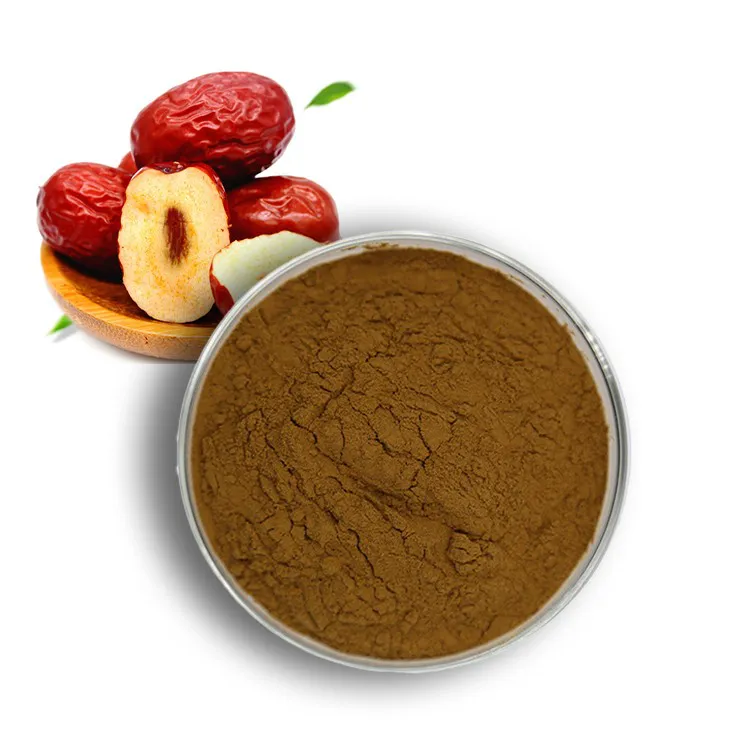
The production of 80 - 100 mesh Jujube Extract powder is an important process in the food and health - care industries. Jujube, also known as Chinese date, has been used for centuries in traditional medicine and cuisine due to its numerous health - promoting properties. The extraction of its active components into a fine powder form not only preserves these properties but also makes it more convenient for various applications. This article will explore in detail the process of producing 80 - 100 mesh Jujube Extract powder, including raw material selection, extraction methods, and quality control.
Raw Material Selection
The first step in producing high - quality Jujube Extract powder is the careful selection of raw materials. Jujubes should be of a specific variety known for its rich nutrient content and suitable for extraction. The following factors are considered during the selection process:
- Maturity: Fully mature jujubes are preferred as they contain a higher concentration of active ingredients such as polysaccharides, flavonoids, and vitamins. Immature jujubes may lack the desired flavor and nutritional value.
- Quality: The jujubes should be free from diseases, pests, and physical damage. Any blemishes or signs of decay can affect the quality of the extract powder.
- Source: Jujubes sourced from regions with good agricultural practices and a clean environment are more likely to produce high - quality extract powder. Organic jujubes are often favored for their purity and lack of pesticide residues.
Pre - treatment of Jujubes
Once the jujubes are selected, they need to undergo pre - treatment before extraction. This step is crucial to ensure the efficiency of the extraction process and the quality of the final product.
- Washing: The jujubes are thoroughly washed to remove dirt, dust, and any surface contaminants. This can be done using clean water, and sometimes a mild detergent may be added to ensure a more thorough cleaning. After washing, the jujubes are rinsed thoroughly to remove any detergent residue.
- Drying: After washing, the jujubes are dried to reduce their moisture content. This can be achieved through natural drying in a well - ventilated area or using a drying machine. The moisture content should be reduced to an appropriate level to prevent mold growth during storage and to facilitate the extraction process. A typical moisture content for dried jujubes used in extraction is around 10 - 15%.
- Removal of Stones and Stems: Any stones or stems present in the jujubes are carefully removed. This can be done manually or by using mechanical sorting devices. Stones can damage the extraction equipment, and stems may introduce unwanted impurities into the extract.
Extraction Process
The extraction of active components from jujubes is a key step in the production of Jujube Extract powder. Different solvents and techniques can be used depending on the desired components and the final product characteristics.
Solvent Selection
Common solvents used in Jujube Extraction include water, ethanol, and a combination of both. Each solvent has its own advantages:
- Water: Water is a natural and safe solvent. It is effective in extracting water - soluble components such as polysaccharides. However, water extraction may also extract some unwanted impurities, and the extract may have a relatively high moisture content, which requires further drying.
- Ethanol: Ethanol is a good solvent for extracting lipophilic components and flavonoids. Ethanol - based extracts are often more concentrated and have better preservation properties. However, ethanol is flammable, and proper safety measures need to be taken during the extraction process.
- Combination of Water and Ethanol: A combination of water and ethanol can be used to extract a wider range of components. This method can take advantage of the properties of both solvents and can be adjusted according to the specific requirements of the extraction.
Extraction Techniques
There are several extraction techniques available for Jujube Extraction:
- Maceration: In this method, the pre - treated jujubes are soaked in the solvent for a certain period of time, usually several hours to days. The solvent penetrates the jujube tissue and dissolves the active components. This is a simple and traditional method, but it may take a long time and the extraction efficiency may not be very high.
- Soxhlet Extraction: Soxhlet extraction is a more efficient method. The jujubes are placed in a Soxhlet extractor, and the solvent is continuously recycled through the sample. This method can ensure a more complete extraction of the active components, but it requires specialized equipment and may be more time - consuming.
- Ultrasonic - Assisted Extraction: Ultrasonic - assisted extraction uses ultrasonic waves to break the cell walls of jujubes, which can increase the extraction efficiency. The ultrasonic waves cause cavitation in the solvent, which enhances the mass transfer of the active components from the jujube tissue to the solvent. This method is relatively fast and can be used in combination with other extraction methods.
Filtration
After the extraction process, the resulting extract contains not only the desired active components but also some impurities such as undissolved particles, cell debris, and insoluble substances. Filtration is necessary to remove these impurities and obtain a clear extract.
- Filter Media Selection: Different filter media can be used depending on the size and nature of the impurities. For example, filter papers with different pore sizes can be used for coarse and fine filtration. Membrane filters are also commonly used for more precise filtration, especially for removing very small particles.
- Filtration Equipment: Filtration can be carried out using simple equipment such as a Buchner funnel for vacuum filtration or more advanced filtration systems such as a cross - flow filtration device. The choice of filtration equipment depends on the scale of production and the required filtration efficiency.
Concentration
The filtered extract usually has a relatively high volume and a low concentration of active components. Concentration is required to increase the concentration of the active components and reduce the volume of the extract, which is more suitable for the subsequent drying process.
- Evaporation: Evaporation is a common method for concentration. The extract is heated under reduced pressure or at normal pressure to evaporate the solvent. Rotary evaporators are often used for this purpose in laboratory - scale production, while large - scale production may use industrial evaporators.
- Reverse Osmosis: Reverse osmosis is another concentration method. It uses a semi - permeable membrane to separate the solvent from the solute. This method is more energy - efficient and can preserve the quality of the active components better than evaporation in some cases.
Drying
Drying is the final step in converting the concentrated extract into a powder form. The drying process should be carefully controlled to ensure the formation of a fine powder with good flowability and stability.
- Spray Drying: Spray drying is a widely used method in the production of food and pharmaceutical powders. The concentrated extract is sprayed into a hot air stream, and the solvent is rapidly evaporated, leaving behind fine powder particles. This method can produce powders with uniform particle size and good dispersibility.
- Vacuum Drying: Vacuum drying is carried out under reduced pressure. This method is suitable for heat - sensitive active components as it can reduce the drying temperature and prevent the degradation of the components. However, vacuum drying may be more time - consuming and requires more complex equipment.
- Freeze Drying: Freeze drying is a more advanced drying method. The extract is first frozen and then the ice is sublimated under reduced pressure. This method can preserve the structure and activity of the active components to the greatest extent, but it is also the most expensive drying method.
Quality Control
Quality control is an essential part of the production of 80 - 100 mesh Jujube Extract powder. It ensures that the final product meets the required standards in terms of purity, active component content, and safety.
- Purity Analysis: Purity analysis is carried out to determine the presence of impurities in the powder. This can be done using methods such as chromatography (e.g., high - performance liquid chromatography, HPLC) to detect and quantify any residual solvents, pesticides, or other contaminants.
- Active Component Analysis: The content of active components such as polysaccharides, flavonoids, and vitamins in the powder is analyzed. This helps to ensure that the product has the expected health - promoting properties. Spectroscopic methods and chemical assays are often used for this purpose.
- Microbial Testing: Microbial testing is necessary to ensure that the powder is free from harmful microorganisms such as bacteria, fungi, and yeasts. Standard microbiological methods are used to detect and count the microorganisms in the powder.
Packaging
Once the quality control is passed, the Jujube Extract powder needs to be properly packaged to protect it from moisture, light, and oxygen, which can affect its stability and quality.
- Packaging Materials: Suitable packaging materials such as aluminum - foil bags, laminated pouches, or glass bottles are used. These materials have good barrier properties against moisture, light, and oxygen.
- Packaging Environment: The packaging should be carried out in a clean and dry environment to prevent the introduction of contaminants. The powder is usually filled into the packaging containers under controlled conditions, and proper sealing is ensured.
Applications in the Health - care and Food Industries
The 80 - 100 mesh Jujube Extract powder has a wide range of applications in the health - care and food industries due to its unique properties.

Health - care Industry
In the health - care industry, Jujube Extract powder is used in various dietary supplements and traditional medicine products.
- Immune - Booster: The polysaccharides and flavonoids in Jujube Extract powder are believed to have immune - boosting properties. They can be used in supplements to enhance the body's immune system and help prevent diseases.
- Antioxidant: Jujube Extract powder is a rich source of antioxidants. Antioxidants can scavenge free radicals in the body, which are associated with aging, cancer, and other diseases. Therefore, it can be used in anti - aging and disease - prevention products.
- Stress - Relief: In traditional medicine, jujube has been used to relieve stress and improve sleep. Jujube Extract powder can be incorporated into products such as sleep - aids and stress - relief supplements.

Food Industry
In the food industry, Jujube Extract powder can be used as a natural flavoring agent, colorant, and functional ingredient.
- Flavoring Agent: Jujube Extract powder can add a unique sweet and fruity flavor to food products such as baked goods, beverages, and confectionery.
- Colorant: The natural color of Jujube Extract powder can be used to color food products, providing a natural alternative to artificial colorants.
- Functional Ingredient: As a functional ingredient, Jujube Extract powder can improve the nutritional value of food products. For example, it can be added to breakfast cereals or energy bars to provide additional vitamins and antioxidants.
Conclusion
The production of 80 - 100 mesh Jujube Extract powder is a complex and multi - step process. From raw material selection to final packaging, each step plays an important role in ensuring the quality and functionality of the product. With the increasing demand for natural and healthy products in the health - care and food industries, Jujube Extract powder has great potential for further development and application. However, strict quality control and compliance with relevant regulations are necessary to ensure the safety and effectiveness of the product.
FAQ:
Q1: What are the key factors in choosing jujubes for 80 - 100 mesh Jujube Extract powder production?
When choosing jujubes, factors such as ripeness, variety, and freedom from pests and diseases are crucial. Ripe jujubes tend to have a higher content of active ingredients. Different varieties may have slightly different chemical compositions, so the appropriate variety needs to be selected according to the specific requirements of the extract powder. And jujubes without pests and diseases ensure the purity and quality of the final product.
Q2: What pre - treatment methods are commonly used before extracting Jujube Extract powder?
Common pre - treatment methods include removing the stems and seeds of jujubes. This helps to standardize the raw materials for subsequent extraction. Sometimes, the jujubes may also be cut or crushed into smaller pieces to increase the contact area with the solvent during extraction, which can improve the extraction efficiency.
Q3: Which solvents are suitable for extracting Jujube Extract powder?
Common solvents used for extraction include water and ethanol. Water extraction is a relatively mild method, which can extract water - soluble components such as polysaccharides. Ethanol extraction is often used to extract lipophilic components. In some cases, a combination of different solvents may also be used to obtain a more comprehensive range of active ingredients.
Q4: How is the filtration process carried out to remove impurities in the production of Jujube Extract powder?
Filtration can be carried out through various methods such as filter paper filtration, membrane filtration. Filter paper filtration is a simple and traditional method, which can remove larger particles. Membrane filtration, especially microfiltration and ultrafiltration membranes, can more precisely remove impurities at the molecular level, ensuring the purity of the extract.
Q5: What quality control measures are involved in the production of 80 - 100 mesh Jujube Extract powder?
Quality control measures include testing the content of active ingredients, such as polysaccharides, flavonoids, etc. Also, microbiological tests are carried out to ensure that the product meets safety standards. Physical properties such as particle size distribution (to ensure it is within the 80 - 100 mesh range) are also measured. Additionally, heavy metal content is monitored to prevent contamination.
Related literature
- Studies on the Extraction and Bioactivity of Jujube Extract"
- "Optimization of Jujube Extract Powder Production Process"
- "Quality Evaluation of Jujube Extract Powder"


-

Cordyceps Extract
2025-02-12
-

Tamarind extract powder
2025-02-12
-

Propolis Extract Powder
2025-02-12
-

Eucommia Ulmoides Extract
2025-02-12
-

Oyster Mushroom Extract Powder
2025-02-12
-

Astaxanthin
2025-02-12
-

Feverfew Extract
2025-02-12
-

American Ginseng Root Extract
2025-02-12
-

Red Yeast Rice
2025-02-12
-

Buckthorn bark extract
2025-02-12