


1. Characteristics of Rose Hip Extract
Rose Hip Extract is a remarkable natural substance with a variety of beneficial characteristics.
1.1 Rich in Carotenoids
Rose Hip Extract is rich in carotenoids, which play a crucial role in our body. Carotenoids are precursors to vitamin A. Vitamin A is well - known for its importance in maintaining good vision. It helps in the proper functioning of the retina, allowing us to see clearly in different lighting conditions. Moreover, vitamin A is also essential for cell growth. It is involved in the development and maintenance of cells throughout the body. This includes cells in the skin, which helps keep the skin healthy and functioning well. In addition to vision and cell growth, carotenoids also have antioxidant properties. Antioxidants are substances that can protect our cells from damage caused by free radicals. Free radicals are unstable molecules that can be produced in the body during normal metabolic processes or as a result of environmental factors such as pollution and radiation. By neutralizing these free radicals, carotenoids in Rose Hip Extract can help reduce the risk of chronic diseases such as cancer, heart disease, and neurodegenerative disorders.
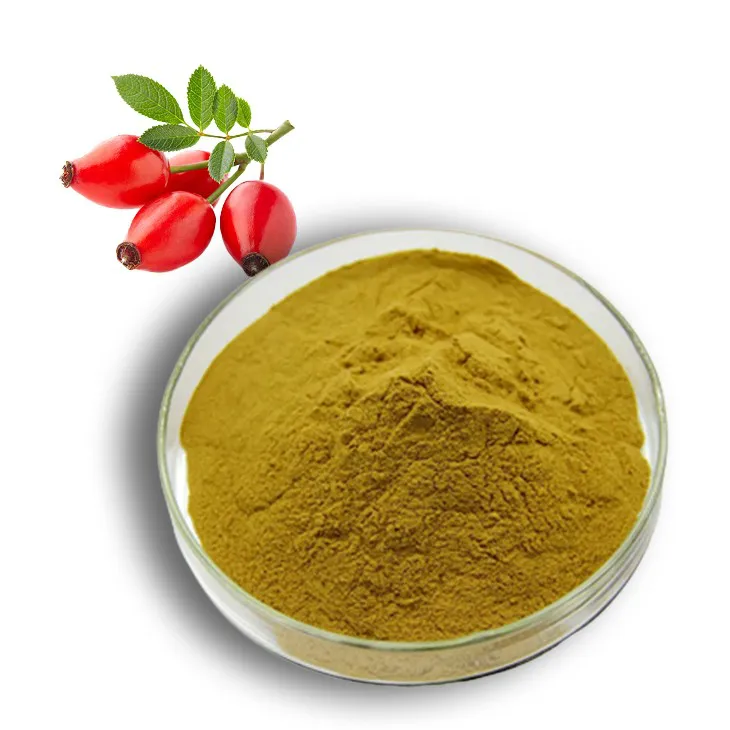
1.2 Tannins and Astringent Properties
The presence of tannins in Rose Hip Extract gives it unique astringent properties. Tannins are a type of polyphenolic compound that can bind to proteins. In skincare, these astringent properties are highly valued. When applied to the skin, Rose Hip Extract can cause the pores to constrict or tighten. This is beneficial for people with oily or acne - prone skin. Tightening the pores can help reduce the appearance of large pores, making the skin look smoother and more refined. It can also help control the production of sebum, which is the skin's natural oil. Excessive sebum production can lead to clogged pores and acne breakouts. By reducing sebum production, Rose Hip Extract can contribute to a clearer complexion. Additionally, the astringent properties of Rose Hip Extract can also have a firming effect on the skin. It can help improve the elasticity of the skin, reducing the appearance of sagging and wrinkles.

1.3 High Fiber Content
Rose Hip Extract has a relatively high fiber content. Fiber is an important component of a healthy diet and has several implications for digestive health. There are two main types of fiber: soluble and insoluble. Soluble fiber can dissolve in water and form a gel - like substance in the digestive tract. This can help slow down the digestion process, which in turn can lead to a more gradual release of sugars into the bloodstream. This is beneficial for people with diabetes or those at risk of developing diabetes, as it can help regulate blood sugar levels. Insoluble fiber, on the other hand, adds bulk to the stool and helps promote regular bowel movements. It can prevent constipation by keeping the digestive system functioning smoothly. The fiber in Rose Hip Extract can also act as a prebiotic. Prebiotics are substances that can feed the beneficial bacteria in the gut. These beneficial bacteria play a vital role in maintaining a healthy gut microbiome. A healthy gut microbiome is associated with a strong immune system, improved digestion, and better overall health.
2. Processing Methods of Rose Hip Extract
The processing of Rose Hip Extract is a crucial aspect to ensure its quality and usability for various applications.

2.1 Cold - Pressing
Cold - pressing is a simple yet effective method for obtaining Rose Hip Extract. This method is based on mechanical pressure applied at low temperatures. By using cold - pressing, the oils present in the rosehips can be extracted while retaining most of the nutrients. The low - temperature process helps to preserve the delicate compounds in the rosehips, such as carotenoids, tannins, and other bioactive substances. This is in contrast to some other extraction methods that may use high heat or chemicals, which can potentially damage or destroy these valuable components. Cold - pressed Rose Hip Extract is often considered of higher quality due to its intact nutrient profile. It can be used in a variety of products, including skincare products, dietary supplements, and natural remedies.
2.2 Purification
After the initial extraction, whether it is by cold - pressing or other methods, purification is an important step. The purpose of purification is to remove impurities such as plant debris and unwanted substances. Plant debris can include parts of the rosehip such as stems, leaves, or seeds that may have been accidentally included during the extraction process. Unwanted substances may also include residual solvents if any solvents were used during extraction. The purification process helps to enhance the quality and purity of the Rose Hip Extract. There are several methods for purification. One common method is filtration. Filtration can be carried out using different types of filters, such as paper filters, membrane filters, or filter cartridges. These filters can effectively remove solid particles and debris from the extract. Another method is centrifugation. Centrifugation involves spinning the extract at high speeds, which causes the heavier impurities to separate from the liquid extract. After purification, the Rose Hip Extract is in a more refined state and is ready for further processing or formulation into various products.
3. Applications of Rose Hip Extract Based on Its Characteristics and Processing
Due to its unique characteristics and proper processing, Rose Hip Extract has a wide range of applications.
3.1 Skincare Applications
- Thanks to its astringent properties from tannins, Rose Hip Extract is used in toners and astringents. These products are designed to tighten pores and give the skin a smoother appearance. They can be applied after cleansing the face to prepare the skin for further skincare steps.
- The antioxidant properties of carotenoids in Rose Hip Extract make it suitable for anti - aging creams and serums. Antioxidants can help protect the skin from damage caused by environmental factors, such as UV radiation and pollution. By reducing this damage, Rose Hip Extract can help prevent the formation of wrinkles and keep the skin looking youthful.
- Rose Hip Extract can also be used in moisturizers. Its high fiber content, which can act as a prebiotic, may contribute to a healthy skin microbiome. A healthy skin microbiome can help maintain the skin's moisture barrier, preventing the skin from becoming dry and dehydrated.
3.2 Dietary and Nutritional Applications
- As a source of carotenoids, Rose Hip Extract can be used in dietary supplements. These supplements can be beneficial for people who may not get enough vitamin A from their diet. Vitamin A is essential for many functions in the body, as mentioned earlier, and taking Rose Hip Extract supplements can help ensure an adequate intake of this important nutrient.
- The high fiber content of Rose Hip Extract also makes it a potential ingredient in products designed to promote digestive health. For example, it can be added to fiber - rich bars or powders. These products can help people increase their fiber intake, which is important for maintaining a healthy digestive system.
4. Considerations in the Production and Use of Rose Hip Extract
When it comes to the production and use of Rose Hip Extract, there are several important considerations.
4.1 Sourcing of Rosehips
- The quality of rosehip extract starts with the sourcing of the rosehips themselves. It is important to ensure that the rosehips are sourced from a reliable and sustainable source. This may involve working with growers who follow good agricultural practices. For example, they should use appropriate fertilizers and pesticides to ensure the health of the plants while minimizing environmental impact.
- The variety of rosehip can also affect the quality of the extract. Different varieties may have different levels of nutrients and bioactive compounds. Therefore, it is necessary to select the appropriate variety for the desired application. For example, if the goal is to produce a high - carotenoid extract, a variety known for its high carotenoid content should be chosen.
4.2 Quality Control in Processing
- During the processing of Rose Hip Extract, strict quality control measures should be implemented. This includes monitoring the temperature during cold - pressing to ensure that it remains within the appropriate range. If the temperature is too high, it may lead to the degradation of nutrients.
- Quality control also involves testing the purity of the extract at various stages of purification. This can be done using analytical techniques such as chromatography. Chromatography can help identify and quantify the different components in the extract, ensuring that it meets the required quality standards.
4.3 Safety and Allergenicity
- Although Rose Hip Extract is generally considered safe for use, it is still important to consider safety aspects. Some people may be allergic to rosehips or components in the extract. Therefore, it is necessary to conduct proper allergenicity testing, especially when formulating products for widespread use.
- When using Rose Hip Extract in dietary supplements or food products, it should be used in accordance with regulatory guidelines. This ensures that the product is safe for consumption and that the dosage is appropriate.
5. Future Perspectives of Rose Hip Extract
Rose Hip Extract has great potential for future development in various fields.
5.1 Research and Development
- There is still much to be explored regarding the bioactive compounds in Rose Hip Extract. Future research may focus on identifying new compounds or understanding the mechanisms of action of existing compounds in more detail. For example, further studies could investigate how the tannins in Rose Hip Extract interact with the skin at a molecular level to produce its astringent and anti - aging effects.
- Research may also be directed towards improving the extraction and processing methods. This could involve finding more efficient ways to extract the maximum amount of beneficial compounds while minimizing the loss of nutrients. For example, new extraction technologies that combine cold - pressing with other techniques may be developed to enhance the yield and quality of Rose Hip Extract.
5.2 Expansion of Applications
- In the skincare industry, Rose Hip Extract may find new applications. For example, it could be incorporated into more advanced skincare formulations, such as those for treating specific skin conditions like eczema or psoriasis. Its anti - inflammatory properties, which are related to its antioxidant and astringent characteristics, may make it a valuable ingredient for these types of products.
- In the field of functional foods and nutraceuticals, Rose Hip Extract could be further developed. It could be used in the creation of new products that target specific health concerns, such as products designed to improve gut - brain axis function. The high fiber content and potential prebiotic effects of Rose Hip Extract could play a role in this area of development.
FAQ:
What are the main characteristics of Rose Hip Extract?
Rose Hip Extract is rich in carotenoids which are precursors to vitamin A and important for vision and cell growth. It contains tannins that give astringent properties useful in skincare for pore - tightening. Also, it has a relatively high fiber content with implications for digestive health.
Why is the carotenoid content in Rose Hip Extract significant?
The carotenoids in Rose Hip Extract are significant because they are precursors to vitamin A. Vitamin A is crucial for maintaining good vision and proper cell growth in the body.
How does the tannin in Rose Hip Extract benefit skincare?
The tannin in Rose Hip Extract has astringent properties. In skincare, these properties can be used to tighten pores, which can contribute to a smoother and more refined skin appearance.
What is the advantage of cold - pressing in processing Rose Hip Extract?
Cold - pressing is a simple and effective method for obtaining Rose Hip Extract. It can extract the oils from rosehips while retaining most of the nutrients, which is beneficial for maintaining the valuable properties of the extract.
Why is purification necessary in the processing of Rose Hip Extract?
Purification is necessary in the processing of Rose Hip Extract because after the initial extraction (by methods like cold - pressing), there are impurities such as plant debris and unwanted substances. The purification process helps to enhance the quality and purity of the extract for various applications.
Related literature
- The Nutritional and Therapeutic Properties of Rose Hip Extract"
- "Processing Techniques for Optimal Rose Hip Extract Production"
- "Rose Hip Extract: Chemical Composition and Its Significance"


-

Mulberry Extract
2024-12-10
-

Astaxanthin
2024-12-10
-
Rose Hip Extract
2024-12-10
-

Carrageenan Extract Powder
2024-12-10
-

Honeysuckle Pollen
2024-12-10
-

Fig Extract
2024-12-10
-

Aged Garlic Extract
2024-12-10
-

Moringa powder
2024-12-10
-

Beetroot Powder
2024-12-10
-

Alfalfa Meal
2024-12-10