


1. Introduction
Cranberry Extract has gained significant attention in recent years due to its numerous health benefits. It is rich in various bioactive compounds such as phenolic acids, flavonoids, and proanthocyanidins. Understanding the extraction process of Cranberry Extract is crucial for obtaining a high - quality product with maximum beneficial components. This article will delve into the different aspects of the Cranberry Extract extraction process.
2. Sourcing of Cranberries
The first step in the extraction process of Cranberry Extract is the sourcing of quality cranberries. Quality cranberries are essential as they form the basis for a good extract.
2.1. Selection Criteria
When sourcing cranberries, several factors are considered:
- Maturity: Cranberries should be harvested at the right stage of maturity. Immature cranberries may not have fully developed their beneficial compounds, while over - mature ones may have started to deteriorate.
- Appearance: They should have a uniform color, free from blemishes or signs of disease. This ensures that the cranberries are of good quality and not likely to introduce contaminants during the extraction process.
- Origin: The origin of the cranberries can also play a role. Cranberries grown in certain regions may have different characteristics due to factors such as soil type, climate, and farming practices. For example, cranberries from regions with colder climates may have a higher concentration of certain bioactive compounds.
3. Cleaning Process
Once the cranberries are sourced, they are subjected to a cleaning process. This is a vital step to get rid of external contaminants.

3.1. Types of Contaminants
Cranberries may be contaminated with various substances such as:
- Dirt and debris: These can be present on the surface of the cranberries due to the harvesting and handling processes. Dirt can introduce unwanted particles into the extract and may also harbor microorganisms.
- Pesticide residues: If the cranberries were grown using pesticides, there may be residues on the surface. Cleaning helps to reduce the levels of these residues, ensuring a safer extract.
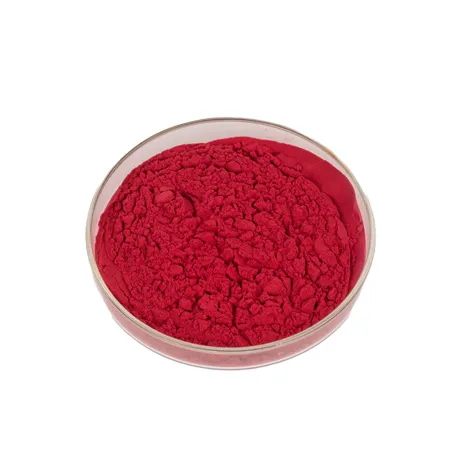
3.2. Cleaning Methods
There are different methods used for cleaning cranberries:
- Washing with water: This is a simple and common method. Cranberries are gently washed with clean water to remove dirt and some of the pesticide residues. However, care must be taken not to damage the cranberries during the washing process.
- Use of mild detergents: In some cases, mild detergents may be used to enhance the cleaning process. These detergents are carefully selected to be food - safe and not leave any harmful residues on the cranberries. After washing with detergents, thorough rinsing is required.
4. Extraction Methods
After the cleaning process, the extraction of Cranberry Extract can be carried out using different methods. Two common methods are enzymatic extraction and cold - press extraction.

4.1. Enzymatic Extraction
Enzymatic extraction is an important method in obtaining Cranberry Extract.
4.1.1. Principle
Enzymes are added to the cranberry pulp. The main principle behind this is that the enzymes hydrolyze the cell wall components of the cranberries. By breaking down the cell walls, the desired extract is more easily released. For example, enzymes can target polysaccharides and other complex molecules in the cell walls, making the intracellular components accessible.
4.1.2. Enzyme Selection
The selection of enzymes is crucial in enzymatic extraction. Different enzymes may be used depending on the specific components to be extracted:
- Cellulases: These enzymes break down cellulose, which is a major component of the cell walls in cranberries. By hydrolyzing cellulose, cellulases can help in opening up the cells and releasing the bioactive compounds.
- Pectinases: Pectin is another important component of the cell walls. Pectinases can degrade pectin, further facilitating the extraction process. They are especially useful in cases where the pectin content is relatively high in the cranberries.
4.1.3. Process Conditions
The enzymatic extraction process also requires specific conditions:
- Temperature: The temperature needs to be carefully controlled. Most enzymes have an optimal temperature range for activity. For example, some enzymes may work best at around 40 - 50°C. If the temperature is too low, the enzyme activity may be slow, and if it is too high, the enzymes may be denatured and lose their activity.
- pH: The pH of the reaction mixture also affects enzyme activity. Different enzymes have different pH optima. Maintaining the appropriate pH ensures that the enzymes can function effectively. For example, some cellulases may work best at a slightly acidic pH.
- Time: The duration of the enzymatic treatment is another important factor. Sufficient time must be allowed for the enzymes to act on the cranberry pulp. However, if the time is too long, it may lead to unwanted side reactions or degradation of the desired extract.
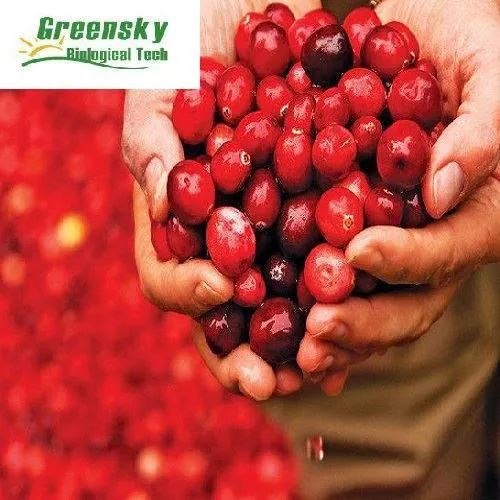
4.2. Cold - Press Extraction
Cold - press extraction is another method used for Cranberry Extract extraction.
4.2.1. Advantage
The main advantage of cold - press extraction is that it can preserve the heat - sensitive components in the cranberries. Heat - sensitive components such as some of the volatile compounds and certain bioactive molecules may be degraded when exposed to high temperatures. Cold - press extraction avoids this problem as it is carried out at relatively low temperatures.
4.2.2. Process
In cold - press extraction, the cranberries are typically mechanically pressed. This can be done using specialized cold - press equipment. The pressure applied causes the juice, which contains the extract, to be squeezed out of the cranberries. However, compared to enzymatic extraction, cold - press extraction may not be as efficient in extracting all the desired components, especially those that are more tightly bound within the cells.
5. Purification of the Extract
After the extraction process, whether it is enzymatic extraction or cold - press extraction, the resulting mixture needs to be purified. One common method for purification is column chromatography.
5.1. Principle of Column Chromatography
Column chromatography is based on the different chemical properties of the components in the extract. The extract is passed through a column filled with a stationary phase. Different components in the extract will interact differently with the stationary phase based on their chemical properties such as polarity, size, and charge.
5.2. Separation of Components
As the extract moves through the column, the different components are separated:
- Polar components: Components with higher polarity may interact more strongly with the polar stationary phase, causing them to move more slowly through the column. For example, phenolic acids, which are polar, may be retained longer in a polar stationary phase column compared to less polar components.
- Non - polar components: Non - polar components will have different interactions. They may move more quickly through the column if the stationary phase is polar, or they may be retained more strongly if the stationary phase is non - polar, depending on the relative polarities of the components and the stationary phase.
5.3. Collection of the Purified Extract
Once the components are separated, the purified extract can be collected. This involves collecting the fractions that contain the desired components. The purity of the collected extract can be further analyzed using techniques such as high - performance liquid chromatography (HPLC) to ensure that it meets the required quality standards.
6. Composition and Health Benefits of Cranberry Extract
The resulting Cranberry Extract is a concentrated form of the beneficial elements present in cranberries.
6.1. Composition
Cranberry Extract contains a variety of bioactive compounds:
- Phenolic acids: These are important contributors to the antioxidant properties of Cranberry Extract. Phenolic acids such as ellagic acid and caffeic acid can scavenge free radicals, protecting cells from oxidative damage.
- Flavonoids: Flavonoids in Cranberry Extract, such as Quercetin and myricetin, also have antioxidant, anti - inflammatory, and anti - microbial activities.
- Proanthocyanidins: Proanthocyanidins are a type of flavonoid polymer. They are known for their ability to prevent the adhesion of bacteria, especially in the urinary tract, which is one of the main health benefits associated with cranberry products.
6.2. Health Benefits
The bioactive compounds in Cranberry Extract confer several health benefits:
- Urinary tract health: As mentioned, proanthocyanidins can prevent bacteria from adhering to the walls of the urinary tract, reducing the risk of urinary tract infections.
- Antioxidant activity: The phenolic acids and flavonoids in the extract can neutralize free radicals, which are associated with various diseases such as cancer, heart disease, and neurodegenerative diseases.
- Anti - inflammatory effects: The flavonoids in Cranberry Extract can help reduce inflammation in the body, which is beneficial for conditions such as arthritis and other inflammatory disorders.
7. Conclusion
The extraction process of Cranberry Extract involves multiple steps, from sourcing quality cranberries to cleaning, extraction using methods such as enzymatic extraction or cold - press extraction, and purification. Each step is crucial in obtaining a high - quality Cranberry Extract with a rich composition of bioactive compounds. Understanding this process not only helps in the production of Cranberry Extract but also in appreciating its potential health benefits.
FAQ:
What are the initial steps in the extraction of Cranberry Extract?
The initial steps involve sourcing quality cranberries and then cleaning them to remove external contaminants.
What is enzymatic extraction in the context of Cranberry Extract?
In the context of Cranberry Extract, enzymatic extraction is a method where enzymes are added to the cranberry pulp. These enzymes hydrolyze the cell wall components, which helps in releasing the desired extract.
How is the mixture purified after enzymatic treatment in Cranberry Extract extraction?
After enzymatic treatment, column chromatography can be used for purification. It separates different components of the extract based on their chemical properties.
What is the advantage of cold - press extraction for cranberries?
The advantage of cold - press extraction for cranberries is that it can preserve the heat - sensitive components in the cranberries.
What are the beneficial elements in Cranberry Extract?
The Cranberry Extract contains beneficial elements such as phenolic acids, which contribute to its health - promoting effects.
Related literature
- The Extraction and Bioactivity of Cranberry Bioactive Compounds"
- "Cranberry Extract: Production, Composition and Health Benefits"


-

Carrageenan Extract Powder
2024-12-07
-

Fenugreek Extract Powder
2024-12-07
-

L-Cysteine
2024-12-07
-

Tamarind extract powder
2024-12-07
-

Beta Carotene
2024-12-07
-

Ginger Extract
2024-12-07
-

Reishi mushroom extract
2024-12-07
-

Yam Extract
2024-12-07
-

Rosemary extract
2024-12-07
-

Tongkat Ali Extract Powder
2024-12-07