


1. Introduction
Purple Sweet Potato Extract has been increasingly recognized and utilized in a wide range of industries, including the food, cosmetic, and pharmaceutical sectors. This is mainly due to its rich composition of bioactive compounds such as polysaccharides, phenolic compounds, and anthocyanins. The extraction process of Purple Sweet Potato Extract is crucial for obtaining high - quality products with desired properties. This article will provide a detailed exploration of this extraction process.
2. Raw Material Selection
The extraction process of Purple Sweet Potato Extract starts with the careful selection of raw materials. High - quality purple sweet potatoes are the foundation for a good extract.
2.1 Quality Criteria
- The purple sweet potatoes should be fresh, without signs of decay or disease. - They should have a rich purple color, which is often an indication of a high content of bioactive compounds, especially anthocyanins. - The size and shape can also be considered, as more uniform potatoes may be easier to process.
3. Washing
Once the suitable purple sweet potatoes are selected, the next step is washing. This is a simple yet essential step in the extraction process.

3.1 Purpose of Washing
- The main purpose is to remove dirt and impurities that may be present on the surface of the sweet potatoes. These impurities can include soil, sand, and other debris. - Washing also helps to reduce the microbial load on the surface of the potatoes, which can prevent contamination during the subsequent extraction process.
3.2 Washing Methods
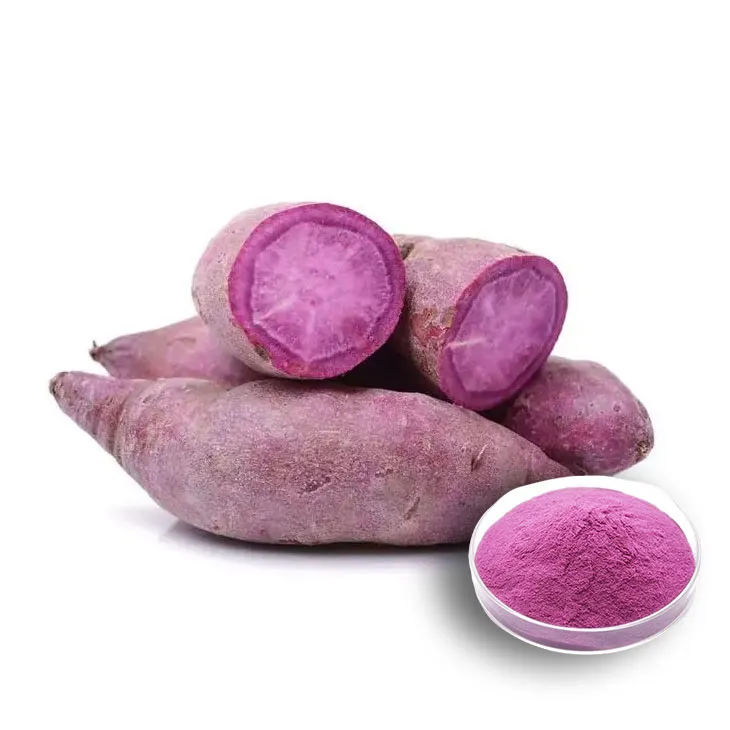
- Rinsing with water: This can be done by simply running tap water over the sweet potatoes. However, for a more thorough cleaning, soaking the potatoes in water for a short period (e.g., 10 - 15 minutes) can be effective. - Using a brush: For sweet potatoes with more stubborn dirt, a soft - bristled brush can be used to gently scrub the surface while rinsing with water.
4. Peeling and Cutting
After washing, the purple sweet potatoes need to be prepared for extraction by peeling and cutting.

4.1 Peeling
- Peeling removes the outer skin of the purple sweet potatoes. The skin may contain substances that are not desirable in the extract or may interfere with the extraction process. - Manual peeling using a peeler or knife is a common method. However, in industrial settings, mechanical peeling devices can be used for large - scale processing.
4.2 Cutting
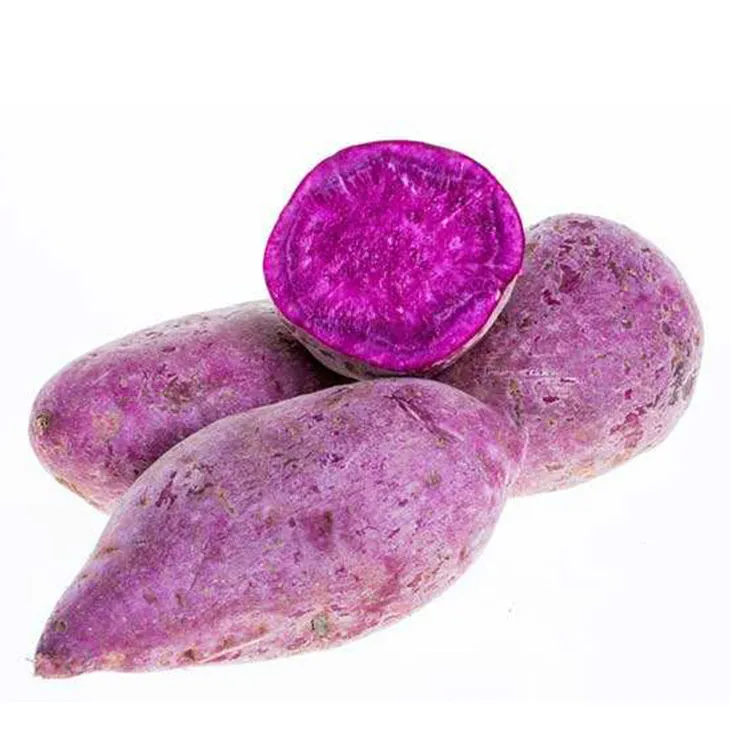
- Once peeled, the purple sweet potatoes are cut into small pieces. This increases the surface area of the sweet potatoes, which is beneficial for the extraction process. - The size of the pieces can vary depending on the extraction method and equipment used. Generally, smaller pieces (e.g., cubes of about 1 - 2 cm) are preferred as they allow for more efficient extraction.
5. Pretreatment
Before the actual extraction, a pretreatment process is often carried out on the cut purple sweet potato pieces.
5.1 Blanching
- Blanching is one of the most common pretreatment methods. It involves briefly immersing the sweet potato pieces in hot water or steam. - The main purpose of blanching is to inactivate enzymes that are naturally present in the sweet potatoes. These enzymes, such as polyphenol oxidase, can cause spoilage or affect the quality of the extract. For example, polyphenol oxidase can oxidize phenolic compounds, leading to a change in color and a decrease in the antioxidant activity of the extract. - The blanching time and temperature need to be carefully controlled. Typically, blanching in hot water at a temperature of around 80 - 90°C for 1 - 3 minutes can be effective.
5.2 Other Pretreatment Methods
- Freezing - thawing: This method can also be used to break down the cell walls of the sweet potatoes, making it easier for the extraction solvents to access the intracellular components. - Microwave pretreatment: Microwave energy can be applied to the sweet potato pieces for a short period. This can cause internal heating and disruption of the cell structure, enhancing the extraction efficiency.
6. Extraction
The extraction step is a key part of obtaining Purple Sweet Potato Extract. Different extraction solvents can be used depending on the target components.
6.1 Water Extraction
- Water extraction is suitable for extracting water - soluble compounds from purple sweet potatoes, such as polysaccharides. - The extraction is usually carried out by mixing the pretreated sweet potato pieces with water in a suitable ratio. For example, a ratio of 1:5 (sweet potato pieces: water) can be used. - The extraction is typically carried out at a certain temperature (e.g., 60 - 80°C) for a specific period of time (e.g., 1 - 3 hours). During this process, the water - soluble components are dissolved into the water.
6.2 Ethanol Extraction
- Ethanol extraction is more effective for targeting phenolic compounds, including anthocyanins. - Ethanol solutions of different concentrations can be used. Commonly, ethanol concentrations ranging from 50% - 80% are used for Purple Sweet Potato Extraction. - Similar to water extraction, the pretreated sweet potato pieces are mixed with the ethanol solution and the extraction is carried out under controlled temperature and time conditions. For example, extraction at room temperature for 2 - 4 hours using a 70% ethanol solution.
6.3 Comparison of Extraction Solvents
- Water extraction has the advantage of being a more environmentally friendly and cost - effective method. However, it may extract a broader range of components, which may require further purification steps if only specific components are desired. - Ethanol extraction can be more selective in extracting phenolic compounds, but ethanol is a flammable solvent, which requires more safety precautions during the extraction process.
7. Filtration
After the extraction process, the resulting solution needs to be filtered to remove solid residues.
7.1 Purpose of Filtration
- The main purpose is to separate the liquid extract from the solid particles, such as the remaining pieces of sweet potato tissue. These solid residues can affect the quality and purity of the extract if not removed. - Filtration also helps to improve the clarity of the extract, which is important for its subsequent applications, especially in the cosmetic and pharmaceutical industries.
7.2 Filtration Methods
- Gravity filtration: This is a simple method where the extract is allowed to pass through a filter medium (such as filter paper or a porous membrane) under the force of gravity. However, this method can be relatively slow for large - volume extractions. - Vacuum filtration: In this method, a vacuum is applied to the filtration system, which speeds up the filtration process. It is often used in industrial settings where large - volume and rapid filtration are required.
8. Purification
After filtration, the filtrate may still contain a mixture of components. Therefore, purification steps are often carried out to isolate the specific active components.
8.1 Chromatography
- Chromatography is a powerful purification technique. There are different types of chromatography that can be used for Purple Sweet Potato Extract purification, such as column chromatography and high - performance liquid chromatography (HPLC). - In column chromatography, the filtrate is passed through a column filled with a stationary phase (such as a resin or silica gel). Different components in the filtrate will interact differently with the stationary phase and will be eluted at different times, allowing for separation. - HPLC is a more advanced chromatography technique that can provide higher resolution and more precise separation of components. It is often used for the purification of high - value components in Purple Sweet Potato Extract, such as specific phenolic compounds or anthocyanins.
8.2 Membrane Separation
- Membrane separation is another purification method. It uses membranes with different pore sizes to separate components based on their molecular size. - For example, ultrafiltration membranes can be used to separate larger molecules (such as polysaccharides) from smaller molecules (such as phenolic compounds). This can be an effective way to purify the Purple Sweet Potato Extract and obtain fractions with different bioactive components.
9. Concentration and Drying
The final steps in the extraction process of Purple Sweet Potato Extract are concentration and drying.
9.1 Concentration
- Concentration is carried out to increase the concentration of the active components in the extract. This can be done by methods such as evaporation under reduced pressure. - By concentrating the extract, the volume is reduced, which is beneficial for storage and transportation. It also makes it easier to further process the extract into different forms, such as powders or liquid concentrates.
9.2 Drying
- Drying is used to remove the remaining water or solvent from the concentrated extract, obtaining the final product in a dry form. - There are different drying methods, such as spray drying, freeze - drying, and oven drying. Spray drying is a commonly used method in industrial production, which can quickly convert the liquid extract into a powder form. Freeze - drying can preserve the bioactive components better, but it is a more expensive method. Oven drying is a simple and cost - effective method, but it may cause some loss of bioactive components due to the relatively high temperature.
10. Conclusion
The extraction process of Purple Sweet Potato Extract is a complex and multi - step process. Each step, from raw material selection to concentration and drying, plays an important role in obtaining a high - quality extract with desired properties. Understanding this process is essential for the proper utilization of Purple Sweet Potato Extract in various industries.
FAQ:
What are the key steps in the extraction process of Purple Sweet Potato Extract?
The key steps include selecting high - quality purple sweet potatoes, washing, peeling, cutting into small pieces, pretreatment (such as blanching), using extraction solvents (water or ethanol), filtering, further purification (like chromatography or membrane separation), and finally concentrating and drying.
Why is the selection of purple sweet potatoes important in the extraction process?
High - quality purple sweet potatoes are crucial because they are the source material. Their quality directly affects the quality and properties of the final Purple Sweet Potato Extract. Poor - quality potatoes may have lower amounts of desired compounds or may introduce contaminants.
What is the role of blanching in the extraction process?
Blanching is a pretreatment step. Its main role is to inactivate enzymes that could cause spoilage or have a negative impact on the quality of the extract during the extraction process.
How do you choose between water and ethanol as extraction solvents?
The choice depends on the desired components to be extracted. Water extraction is more suitable for water - soluble compounds like polysaccharides. Ethanol extraction, on the other hand, can target phenolic compounds more effectively.
What are the purposes of further purification steps?
The further purification steps, such as chromatography or membrane separation, are carried out to isolate the specific active components from the filtrate obtained after filtering the initial extraction solution.
Related literature
- Purple Sweet Potato: A Review of Its Phytochemical Composition and Health Benefits"
- "Extraction and Characterization of Bioactive Compounds from Purple Sweet Potatoes"
- "Optimization of Purple Sweet Potato Extract Production for Industrial Applications"


-

Artichoke Leaf Extract
2024-12-06
-

Echinacea Extract
2024-12-06
-

L-Tyrosine
2024-12-06
-

White Willow Bark Extract
2024-12-06
-

Licorice Root Extract Powder
2024-12-06
-

Astaxanthin
2024-12-06
-

Ginkgo Biloba Extract
2024-12-06
-

Dragon Fruit Powder
2024-12-06
-

Scutellaria Extract
2024-12-06
-

Red Clover Extract
2024-12-06