


1. Introduction
White mustard seed extract has gained significant attention in various industries, including the food, pharmaceutical, and cosmetic sectors. The powder form of this extract is particularly desirable due to its ease of handling, storage, and potential for diverse applications. However, the powder processing of White mustard seed extract involves several important aspects that need to be thoroughly understood. In this article, we will address six major questions regarding this process to provide a comprehensive overview.
2. What are the raw materials and their quality requirements?
Raw materials: The primary raw material for White mustard seed extract powder processing is, of course, white mustard seeds. These seeds should be sourced from reliable suppliers to ensure consistency in quality.
Quality requirements:
- Purity: The seeds should be free from contaminants such as dirt, stones, and other foreign matter. High - purity seeds are essential for obtaining a pure and effective extract.
- Viability: They should have a high germination rate, which is an indicator of their freshness and vitality. Seeds with low viability may result in a lower - quality extract.
- Genetic integrity: The white mustard seeds should belong to the correct species and variety, as different varieties may have different chemical compositions and properties.
3. What are the extraction methods?
There are several extraction methods commonly used in the processing of White mustard seed extract powder:
3.1 Solvent extraction
- Solvents used: Organic solvents such as ethanol, methanol, or hexane are often used. Ethanol is a popular choice as it is relatively safe, can dissolve a wide range of compounds, and is easily removable through evaporation.
- Process steps:
- The white mustard seeds are first ground into a fine powder.
- The powdered seeds are then mixed with the solvent in a suitable container.
- The mixture is stirred or shaken for a specific period, usually several hours to days, depending on the desired extraction efficiency.
- After extraction, the solvent - extract mixture is filtered to separate the solid residue from the liquid extract.
- The solvent is then evaporated under reduced pressure or at a low temperature to obtain the concentrated extract.
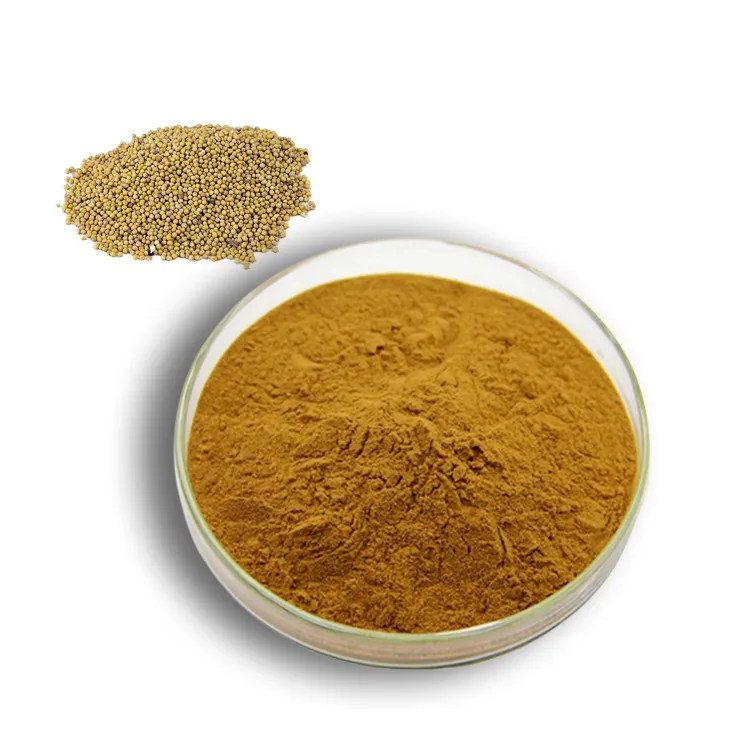
3.2 Supercritical fluid extraction
- Fluid used: Carbon dioxide (CO₂) is the most commonly used supercritical fluid in this process. Supercritical CO₂ has properties similar to both a gas and a liquid, which makes it an excellent solvent for extracting compounds from white mustard seeds.
- Advantages:
- It is a clean and environmentally friendly method as CO₂ is non - toxic, non - flammable, and easily recyclable.
- The extraction process can be precisely controlled by adjusting the pressure and temperature, allowing for selective extraction of specific compounds.
- Process steps:
- The white mustard seeds are placed in an extraction vessel.
- Supercritical CO₂ is pumped into the vessel at a specific pressure and temperature.
- The CO₂ extracts the desired compounds from the seeds and forms a solution.
- The solution is then passed through a separator where the pressure is reduced, causing the CO₂ to turn back into a gas and the extract to be collected.
4. How is the extract converted into powder?
Once the White mustard seed extract is obtained, it can be converted into powder through the following methods:
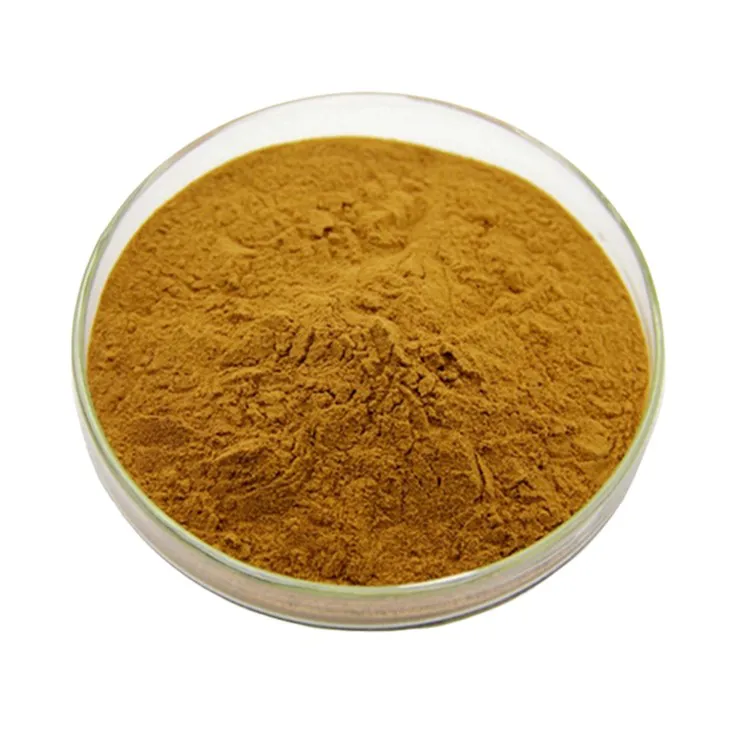
4.1 Spray drying
- Process overview:
- The extract is first mixed with a suitable carrier, such as maltodextrin or gum arabic, to improve its drying properties.
- The mixture is then pumped into a spray dryer, where it is atomized into fine droplets through a nozzle.
- Hot air is blown into the drying chamber, which rapidly evaporates the moisture from the droplets, leaving behind a fine powder.
- Advantages:
- It is a fast and efficient method, suitable for large - scale production.
- The resulting powder has a fine particle size and good flowability.
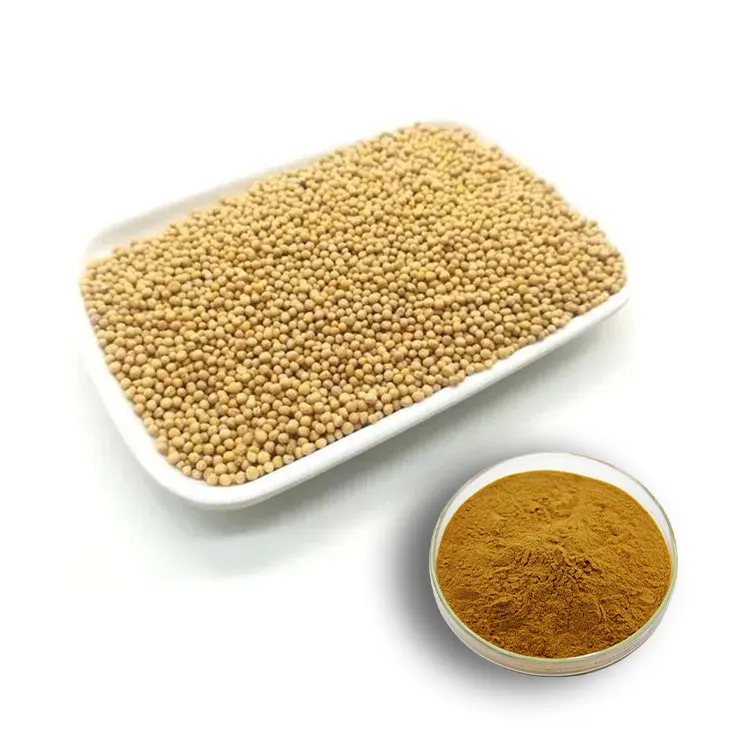
4.2 Freeze drying
- Process overview:
- The extract is first frozen at a very low temperature, usually below - 40°C.
- The frozen extract is then placed in a vacuum chamber, where the ice crystals sublime directly from the solid to the gas phase without passing through the liquid phase.
- The remaining dry extract is a porous powder with high porosity.
- Advantages:
- It preserves the bioactivity of the extract well, as the low - temperature process minimizes the degradation of heat - sensitive compounds.
- The resulting powder has a high - quality texture and can be easily rehydrated.
5. What are the safety measures during processing?
- Handling solvents:
- When using organic solvents in extraction, proper ventilation is crucial to prevent the build - up of solvent vapors, which can be flammable and toxic. Workers should wear appropriate protective equipment, such as respirators and gloves.
- Storage of solvents should be in accordance with safety regulations, in well - ventilated and fire - proof containers.
- Equipment safety:
- All processing equipment, such as grinders, mixers, and dryers, should be regularly maintained and inspected to ensure proper functioning. Faulty equipment can lead to accidents, such as mechanical failures or electrical shorts.
- Guards should be installed on moving parts of equipment to prevent workers from coming into contact with them.
- Quality control for safety:
- Regular testing of the final powder product for contaminants, such as heavy metals, pesticides, and microbial contaminants, is essential. This ensures that the product is safe for consumption or use in various applications.
- The processing environment should be kept clean and hygienic to prevent the growth and spread of microorganisms.
6. What are the potential challenges and how to overcome them?
- Variability in raw materials:
- As mentioned earlier, the quality of white mustard seeds can vary depending on factors such as the source, season, and storage conditions. To overcome this, strict quality control measures should be implemented at the sourcing stage. Suppliers should be required to provide certificates of analysis for each batch of seeds.
- Blending different batches of seeds in a controlled manner can also help to reduce the variability in the final extract.
- Extraction efficiency:
- Some extraction methods may not be able to extract all the desired compounds effectively. To improve extraction efficiency, optimization of extraction parameters such as solvent concentration, extraction time, and temperature is necessary.
- Combining different extraction methods, such as a pre - treatment with a mild solvent followed by supercritical fluid extraction, can also enhance the overall extraction efficiency.
- Cost - effectiveness:
- Some extraction and powder - conversion methods can be costly, especially on a large - scale production. To address this, research should be carried out to find more cost - effective alternatives. For example, using local and renewable sources of solvents or energy can reduce costs.
- Improving the overall process efficiency, such as reducing the drying time in powder conversion methods, can also contribute to cost - savings.
7. Conclusion
The powder processing of White mustard seed extract is a complex but fascinating process. By understanding the key aspects such as raw material quality, extraction methods, powder conversion, safety measures, and potential challenges, it is possible to produce high - quality White mustard seed extract powder for a wide range of applications. Continued research and innovation in this area will further improve the process and the quality of the final product.
FAQ:
Question 1: What are the initial steps in processing White mustard seed extract into powder?
The initial steps typically involve harvesting the white mustard seeds. These seeds are then carefully cleaned to remove any impurities such as dirt, stones, or damaged seeds. After cleaning, they may be dried to a certain moisture level, which is crucial for subsequent extraction processes.
Question 2: How is the extraction process carried out?
The extraction process usually involves using solvents. Commonly, a non - toxic and food - grade solvent is selected. The dried white mustard seeds are soaked in the solvent, which helps to dissolve the active compounds. This mixture is then stirred or agitated to ensure maximum extraction. After a period of time, the solvent with the dissolved extract is separated from the solid seed residue, often through filtration or centrifugation.
Question 3: What safety measures need to be considered during powder processing?
During powder processing, safety measures are of utmost importance. Workers should wear appropriate protective gear such as gloves, masks, and safety goggles, especially when handling solvents. The processing area should be well - ventilated to prevent the buildup of fumes. Also, strict quality control should be in place to ensure that the final powder product is free from contaminants and meets safety standards.
Question 4: How can the efficiency of the powder processing be improved?
To improve the efficiency of powder processing, modern equipment can be utilized. For example, advanced extraction machines can increase the yield of the extract. Optimal temperature and pressure conditions during extraction can also enhance the efficiency. Additionally, streamlining the production line and reducing unnecessary handling steps can save time and resources.
Question 5: What are the potential challenges in White mustard seed extract powder processing?
One potential challenge is maintaining the stability of the active compounds during processing. High temperatures or improper handling can lead to the degradation of these compounds. Another challenge is achieving a consistent quality of the final powder product. Variations in the raw materials, extraction processes, or drying conditions can result in differences in the powder's properties. Also, regulatory compliance can be a challenge, as there are often strict regulations regarding food - based extracts and powders.
Related literature
- White Mustard Seed: Properties, Composition, and Potential Applications" by [Author Name 1]
- "Advances in Seed Extract Processing Technologies" by [Author Name 2]
- "Safety Considerations in Natural Extract Powder Production" by [Author Name 3]


-

Lavender Extract
2024-12-06
-

Taurine
2024-12-06
-

Resveratrol Extract
2024-12-06
-

Clove Powder
2024-12-06
-

Sophora Japonica Flower Extract
2024-12-06
-

Nettle Root Extract
2024-12-06
-

Rhodiola Rosea Root extract
2024-12-06
-

Scutellaria Extract
2024-12-06
-

Antler Extract
2024-12-06
-

Nettle leaf extract
2024-12-06