


1. Introduction
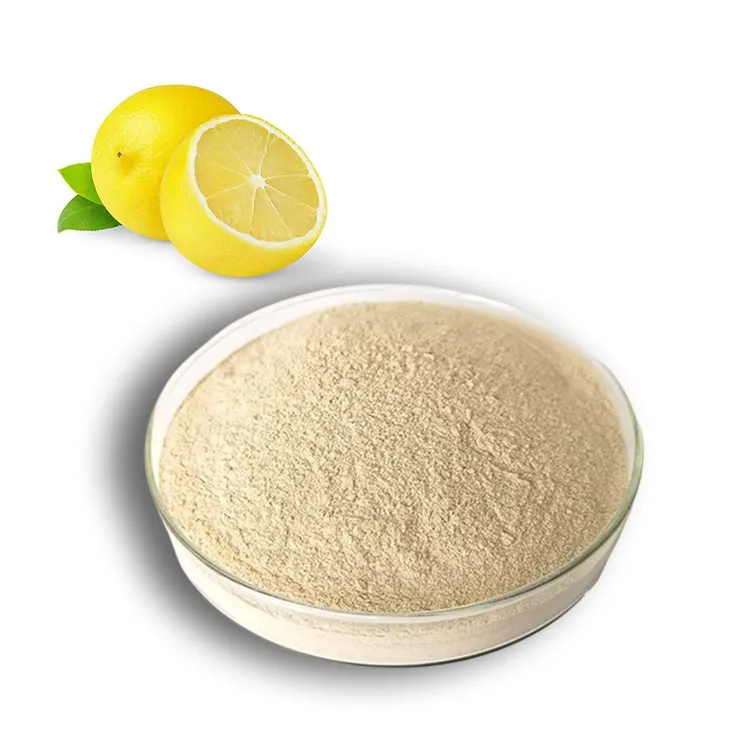
Lemon essential oil is a highly valuable natural product derived from Lemon Extracts. It is widely used in the food, cosmetics, and aromatherapy industries due to its pleasant aroma and various beneficial properties. The extraction, separation, and identification of lemon essential oil are crucial steps in ensuring its quality and appropriate utilization. This article aims to comprehensively discuss these aspects.
2. Extraction Processes
2.1 Cold - Pressing
Cold - pressing is one of the traditional methods for extracting lemon essential oil. This process involves mechanically squeezing the lemon peel to release the essential oil. The advantage of cold - pressing is that it can produce a high - quality essential oil with a relatively pure aroma. Since it does not involve high - temperature treatment, the chemical composition of the essential oil is less likely to be altered, which helps to preserve the natural properties of the oil. However, cold - pressing also has some limitations. For example, the extraction efficiency may not be as high as some other methods, and it requires fresh lemons as raw materials. Moreover, the equipment used for cold - pressing can be relatively expensive.
2.2 Steam Distillation
Steam distillation is another commonly used method for extracting lemon essential oil. In this process, steam is passed through the lemon peel or the entire lemon. The steam helps to vaporize the essential oil, which is then condensed and collected. One of the main advantages of steam distillation is its relatively high extraction efficiency. It can be used to extract essential oil from a large amount of lemon raw materials in a relatively short time. Additionally, steam distillation is suitable for lemons that may not be in the freshest state. However, the high - temperature steam used in this process may cause some changes in the chemical composition of the essential oil. For example, some of the more volatile and heat - sensitive components may be lost during the distillation process, which may slightly affect the aroma and quality of the final essential oil.
3. Separation Methods

3.1 Chromatographic Techniques
Chromatographic techniques play a crucial role in the separation of lemon essential oil components. Gas chromatography (GC) and high - performance liquid chromatography (HPLC) are two commonly used chromatographic methods in this regard.
Gas chromatography is particularly suitable for separating the volatile components in lemon essential oil. It works on the principle of separating different components based on their different volatilities and affinities for the stationary phase in a gas - filled column. GC can provide detailed information about the individual components in the essential oil, including their relative amounts. However, it requires that the samples be in a gaseous state, which may require some pre - treatment steps for the lemon essential oil samples.
High - performance liquid chromatography is more suitable for separating non - volatile or less volatile components in lemon essential oil. HPLC uses a liquid mobile phase to carry the sample through a column filled with a stationary phase. It can separate components based on their different interactions with the stationary and mobile phases. HPLC has high resolution and can detect a wide range of components, even those that are difficult to analyze by gas chromatography.
4. Identification Techniques

4.1 Spectroscopic Methods
Spectroscopic methods are essential for accurately determining the chemical composition of lemon essential oil. Infrared spectroscopy (IR) and mass spectrometry (MS) are two important spectroscopic techniques used in this area.
Infrared spectroscopy works by analyzing the absorption of infrared radiation by the molecules in the essential oil. Different chemical bonds in the molecules absorb infrared radiation at different wavelengths. By analyzing the infrared absorption spectrum, information about the functional groups present in the essential oil can be obtained. This helps in identifying the types of compounds present, such as alcohols, esters, and terpenes. However, IR spectroscopy may not be able to provide detailed information about the specific molecular structure of each component.
Mass spectrometry involves ionizing the molecules in the essential oil and then analyzing the mass - to - charge ratio of the resulting ions. This technique can provide very accurate information about the molecular weight of the components in the essential oil. By comparing the mass spectra with known databases, the specific compounds can be identified. Mass spectrometry is a very powerful tool for identifying the components in lemon essential oil, especially for detecting trace components.
5. Importance of Quality Control in Lemon Essential Oil Production
Quality control is of utmost importance in the production of lemon essential oil. The accurate extraction, separation, and identification of the essential oil are essential for ensuring its quality. In the food industry, for example, lemon essential oil is used as a flavoring agent. If the quality is not properly controlled, it may affect the taste and safety of the food products. In the cosmetics industry, poor - quality lemon essential oil may cause skin irritation or other adverse reactions. In aromatherapy, the effectiveness of the essential oil depends on its pure composition. Therefore, strict quality control measures need to be implemented throughout the production process.
One of the key aspects of quality control is to ensure that the extraction process is carried out properly. This includes using the appropriate extraction method, controlling the extraction conditions such as temperature and pressure, and using high - quality raw materials. For separation and identification, it is important to use accurate and reliable techniques. Regular calibration of the equipment used for separation and identification is also necessary to ensure accurate results.
6. Conclusion
In conclusion, the extraction process, separation, and identification of lemon essential oil in Lemon Extract are complex but crucial processes. Different extraction methods such as cold - pressing and steam distillation have their own advantages and limitations. Chromatographic techniques are important for separating the components of the essential oil, and spectroscopic methods are essential for accurately identifying its chemical composition. Quality control throughout the production process is necessary to ensure the high - quality production of lemon essential oil for its various applications in different industries.
FAQ:
What are the common extraction methods of lemon essential oil?
Two common extraction methods of lemon essential oil are cold - pressing and steam distillation. Cold - pressing is a mechanical method that can preserve the natural components well, but it may have a relatively lower yield. Steam distillation is a traditional method which can obtain essential oil with relatively high purity, yet it may cause some loss of volatile components due to high temperature.
What are the advantages of cold - pressing for lemon essential oil extraction?
The main advantage of cold - pressing in lemon essential oil extraction is that it can maintain the original chemical composition and aroma of the essential oil to a large extent. Since it does not use high temperature or chemical solvents during the process, the natural properties of the essential oil are well - preserved, which is very important for applications where high - quality and natural products are required, such as in high - end cosmetics and aromatherapy.
How do chromatographic techniques contribute to the separation of lemon essential oil?
Chromatographic techniques play a crucial role in the separation of lemon essential oil. For example, gas chromatography (GC) can separate the different components in the essential oil based on their different volatilities and affinities to the stationary phase. High - performance liquid chromatography (HPLC) can also be used, especially for separating non - volatile or less volatile components. These techniques can accurately separate the complex mixtures in lemon essential oil, which is beneficial for further analysis and identification of each component.
What spectroscopic methods are used for the identification of lemon essential oil?
Common spectroscopic methods used for the identification of lemon essential oil include infrared spectroscopy (IR) and nuclear magnetic resonance spectroscopy (NMR). Infrared spectroscopy can identify the functional groups present in the essential oil by analyzing the absorption of infrared light. Nuclear magnetic resonance spectroscopy can provide detailed information about the molecular structure and the types of atoms in the essential oil, which is very useful for accurately determining the chemical composition.
Why is the accurate identification of the chemical composition of lemon essential oil important?
The accurate identification of the chemical composition of lemon essential oil is crucial for several reasons. Firstly, in the food industry, it helps to ensure the safety and quality of products containing lemon essential oil. In the cosmetics industry, it is essential for formulating products with the desired properties and effects. In aromatherapy, the correct identification of components is necessary to achieve the expected therapeutic effects. Overall, accurate identification is fundamental for quality control and proper utilization in various industries.
Related literature
- Extraction and Characterization of Lemon Essential Oil"
- "Separation and Identification of Volatile Components in Lemon Extracts"
- "Analysis of Lemon Essential Oil: From Extraction to Application"


-

Curcuma Longa Extract/Turmeric extract
2024-12-08
-

White Willow Bark Extract
2024-12-08
-

Moringa powder
2024-12-08
-

Kelp Extract Powder
2024-12-08
-

Boswellia Serrata Extract
2024-12-08
-

Bladder horn extract powder
2024-12-08
-

Selenium yeast
2024-12-08
-

Yohimbine Bark Extract
2024-12-08
-

Bromelain
2024-12-08
-

L-Cysteine
2024-12-08