


1. Introduction
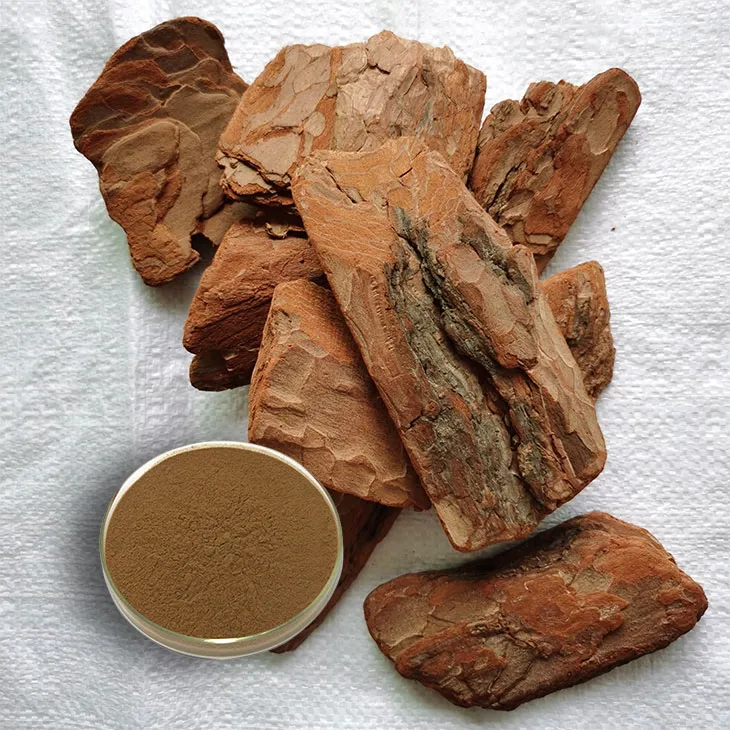
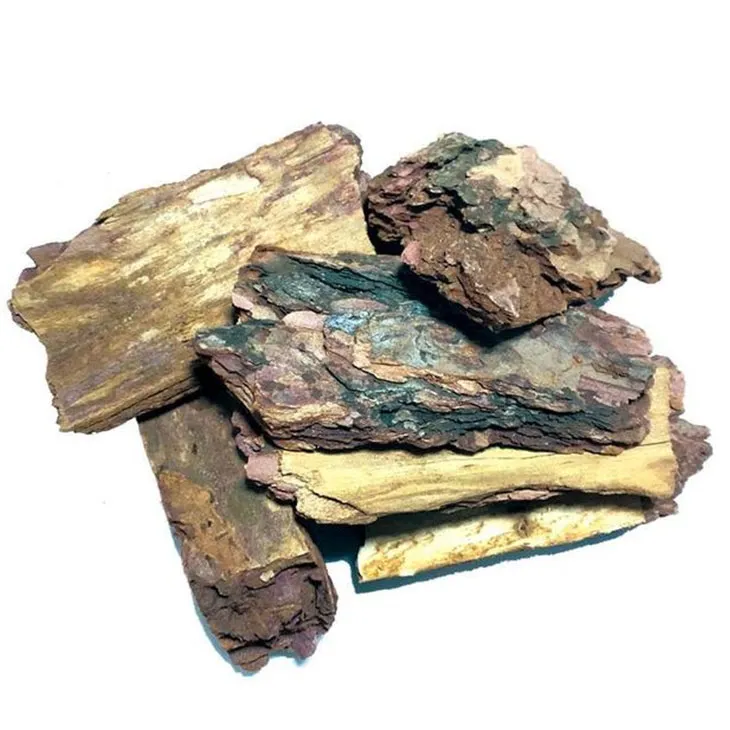
Proanthocyanidins are a class of polyphenolic compounds that are widely distributed in plants. Pine bark Extract Powder is a rich source of proanthocyanidins. The extraction of proanthocyanidins from Pine bark Extract Powder has attracted significant attention due to their potential applications in medicine, food, and cosmetics.
In medicine, proanthocyanidins have been reported to possess antioxidant, anti - inflammatory, and cardiovascular protective properties. In the food industry, they can be used as natural preservatives and antioxidants. In cosmetics, proanthocyanidins are added to products for their anti - aging and skin - protecting effects.
2. Extraction processes
2.1 Traditional extraction methods
Maceration extraction is one of the traditional methods for extracting proanthocyanidins from Pine bark Extract Powder.
- Firstly, the Pine bark Extract Powder is mixed with a suitable solvent, such as ethanol or methanol. The ratio of powder to solvent is an important factor, usually ranging from 1:5 to 1:10 (w/v).
- Then, the mixture is left to stand at room temperature for a certain period, which can range from several hours to several days. During this time, the solvent penetrates the powder, and the proanthocyanidins dissolve into the solvent.
- Finally, the mixture is filtered to obtain the extract containing proanthocyanidins. However, this method has some drawbacks, such as long extraction time and relatively low extraction efficiency.
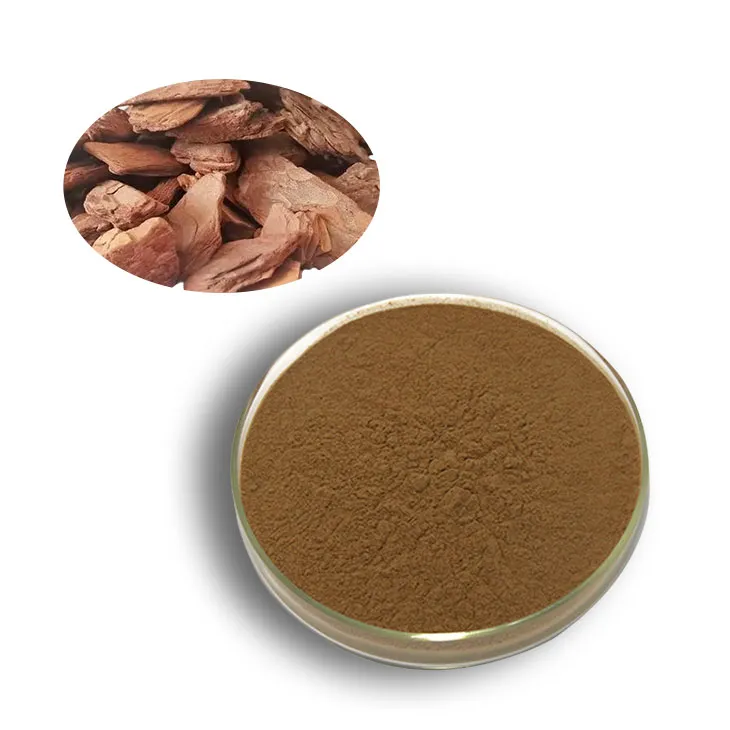
2.2 Modern extraction methods
Microwave - assisted extraction has emerged as a modern and efficient method for proanthocyanidin extraction.
- The Pine bark Extract Powder is placed in a microwave - compatible container along with the extraction solvent. The solvent choice is similar to that in maceration extraction, mainly ethanol or methanol.
- The mixture is then subjected to microwave irradiation. The microwave energy can cause rapid heating of the solvent and the powder, which in turn enhances the mass transfer process. The power and irradiation time need to be optimized. For example, a power of 300 - 600 W and an irradiation time of 5 - 15 minutes are often used.
- After microwave irradiation, the mixture is cooled and then filtered to obtain the proanthocyanidin - rich extract. Compared to maceration extraction, microwave - assisted extraction can significantly reduce the extraction time and improve the extraction efficiency.
3. Separation of proanthocyanidins
After extraction, the obtained extract contains not only proanthocyanidins but also other components. Column chromatography is a commonly used technique for separating proanthocyanidins from other substances.
- Stationary phase selection: Silica gel is often used as the stationary phase in column chromatography for proanthocyanidin separation. It has good adsorption properties and can effectively separate proanthocyanidins from other polar and non - polar components.
- Sample loading: The extract obtained from the extraction process is carefully loaded onto the top of the column. The loading amount should be appropriate to ensure good separation efficiency. Usually, a small amount of sample is loaded at a time to avoid overloading the column.
- Elution: Different solvents or solvent mixtures are used for elution. For proanthocyanidins, a gradient elution method may be employed. For example, a mixture of ethanol and water with different ratios can be used as the eluent. Initially, a lower percentage of ethanol (e.g., 10 - 20%) can be used to elute some of the less polar impurities, and then the percentage of ethanol can be gradually increased to elute the proanthocyanidins.
- Fraction collection: As the eluent passes through the column, different fractions are collected. These fractions are then analyzed to determine which ones contain the proanthocyanidins. Usually, spectrophotometric methods are used to monitor the elution process and identify the fractions rich in proanthocyanidins.
4. Identification of proanthocyanidins
4.1 Chemical methods
Chemical methods play an important role in the identification of proanthocyanidins.
- Vanillin - HCl reaction: Proanthocyanidins can react with vanillin in the presence of hydrochloric acid. This reaction results in a characteristic color change, usually from colorless to pink or red. The intensity of the color can be used to qualitatively and semi - quantitatively analyze proanthocyanidins.
- Folin - Ciocalteu reaction: This reaction is based on the reduction of Folin - Ciocalteu reagent by the phenolic groups of proanthocyanidins. The reaction produces a blue - colored complex, and the absorbance of the complex at a specific wavelength can be measured to determine the content of proanthocyanidins.
4.2 Physical methods
Physical methods are also crucial for the accurate identification of proanthocyanidins.
- High - performance liquid chromatography - mass spectrometry (HPLC - MS): HPLC - MS is a powerful technique for the identification and quantification of proanthocyanidins. The HPLC separates the different components in the sample based on their different affinities for the stationary and mobile phases. The mass spectrometer then detects and identifies the separated components based on their mass - to - charge ratios. For proanthocyanidins, HPLC - MS can provide detailed information about their molecular weights, structures, and fragmentation patterns.
- Nuclear magnetic resonance (NMR) spectroscopy: NMR spectroscopy can be used to study the chemical structure of proanthocyanidins. It provides information about the types of atoms, their chemical environments, and the connectivity between atoms in the molecule. However, NMR spectroscopy requires relatively pure samples and is more complex in terms of data interpretation compared to HPLC - MS.
5. Conclusion
In conclusion, the extraction, separation, and identification of proanthocyanidins in Pine bark Extract Powder are important research areas with broad application prospects. The traditional and modern extraction methods each have their own characteristics, and the choice of method depends on factors such as extraction efficiency, cost, and environmental impact. Column chromatography is an effective method for separating proanthocyanidins from other components, and chemical and physical methods can be used for accurate identification. With the continuous development of research, it is expected that more efficient extraction methods, more precise separation techniques, and more accurate identification methods will be developed for proanthocyanidins in Pine bark Extract Powder, which will further promote their applications in medicine, food, and cosmetics.
FAQ:
What are the main traditional extraction processes for proanthocyanidins in Pine bark Extract Powder?
The main traditional extraction process is maceration extraction. In this method, Pine bark Extract Powder is soaked in a suitable solvent for a certain period of time. The solvent penetrates the powder, and proanthocyanidins dissolve into the solvent gradually. This is a relatively simple and traditional way, but it may take a long time and the extraction efficiency might not be very high compared to modern methods.
How does microwave - assisted extraction work for proanthocyanidins in Pine bark Extract Powder?
Microwave - assisted extraction utilizes microwaves to heat the Pine bark Extract Powder and the solvent. The microwaves cause the molecules in the system to vibrate rapidly, which in turn increases the temperature and pressure quickly. This enhanced energy helps to break the cell walls of the powder more effectively, allowing the proanthocyanidins to be released into the solvent more efficiently compared to traditional methods. It can significantly reduce the extraction time while potentially increasing the extraction yield.
What is the principle of column chromatography in separating proanthocyanidins from other components?
Column chromatography is based on the differential adsorption of components on a stationary phase. In the case of separating proanthocyanidins from other components in Pine bark Extract Powder, the sample is loaded onto the top of the column filled with a stationary phase (such as silica gel). Different components in the sample have different affinities for the stationary phase. Proanthocyanidins will move through the column at a different rate compared to other components due to their unique chemical properties. As a result, they can be separated from other substances as they elute from the column at different times.
How can HPLC - MS be used to identify proanthocyanidins?
HPLC - MS (High - Performance Liquid Chromatography - Mass Spectrometry) combines the separation ability of HPLC with the identification ability of MS. First, HPLC separates proanthocyanidins from other components in the sample based on their different retention times in the chromatographic column. Then, the eluted proanthocyanidins enter the mass spectrometer. The mass spectrometer measures the mass - to - charge ratio (m/z) of the ions generated from the proanthocyanidins. Based on the characteristic m/z values and fragmentation patterns, proanthocyanidins can be accurately identified.
Are there any other extraction methods for proanthocyanidins in Pine bark Extract Powder?
Yes, there are other extraction methods. For example, ultrasonic - assisted extraction. In this method, ultrasonic waves are applied to the Pine bark Extract Powder - solvent system. The ultrasonic waves create cavitation bubbles, which collapse and generate high - energy shock waves. These shock waves can disrupt the cell structure of the powder, facilitating the release of proanthocyanidins into the solvent. This method also has the advantages of relatively short extraction time and high efficiency.
Related literature
- Extraction and Characterization of Proanthocyanidins from Pine Bark: A Review"
- "Optimization of Proanthocyanidin Extraction from Pine Bark Using Response Surface Methodology"
- "Identification of Proanthocyanidins in Pine Bark Extract by Advanced Spectroscopic Techniques"


-

Lily extract
2024-12-08
-

Phyllanthus Emblica Extract
2024-12-08
-

Bilberry Extract
2024-12-08
-

Apricot Powder
2024-12-08
-

Diosmin
2024-12-08
-

Acerola Juice Powder
2024-12-08
-

Alfalfa Meal
2024-12-08
-

Nettle leaf extract
2024-12-08
-

Kelp Extract Powder
2024-12-08
-

Sophora Flavescens Root Extract
2024-12-08