


1. Introduction
Chinese Yam Extract has been widely recognized for its numerous health - promoting properties and diverse applications in various industries. The process of reducing the particle size of Yam Extract is a crucial aspect of its professional processing. This not only enhances the physical characteristics of the extract but also has a profound impact on its chemical reactivity and biological activity. In this article, we will delve into the significance of precisely controlling the particle size of Yam Extract, the role of modern technology in achieving this goal, and the far - reaching implications for industries that rely on Yam Extract.
2. The Importance of Particle Size Reduction in Yam Extract
2.1 Physical Properties Enhancement
When the particle size of Yam Extract is reduced, it often leads to an improvement in its physical properties. For example, smaller particles generally have a larger surface - to - volume ratio. This means that the extract can interact more effectively with other substances. In the case of formulating products such as dietary supplements or cosmetics, a finer Yam Extract can blend more evenly, resulting in a more homogeneous and stable product. Moreover, the reduced particle size can also affect the texture and appearance of the final product, which is particularly important in consumer - oriented industries where aesthetics play a significant role.

2.2 Chemical Reactivity Improvement
Smaller particles of Yam Extract can exhibit enhanced chemical reactivity. This is because the increased surface area provides more sites for chemical reactions to occur. For instance, in pharmaceutical applications, if Yam Extract is being used as an active ingredient or as a component in a drug delivery system, the improved chemical reactivity can lead to more efficient drug - receptor interactions. The active compounds in the Yam Extract may be able to react more quickly and completely with the target molecules, potentially increasing the efficacy of the treatment.

2.3 Biological Activity Augmentation
There is evidence to suggest that reducing the particle size of Yam Extract can boost its biological activity. The finer particles may be more easily absorbed by the body, whether through the digestive system in the case of oral consumption or through the skin in topical applications. This enhanced absorption can lead to a more pronounced physiological effect. For example, if the Yam Extract contains bioactive compounds with antioxidant or anti - inflammatory properties, the reduced particle size may enable these compounds to reach the target cells more rapidly and in greater quantities, thereby providing more effective protection against oxidative stress or inflammation.
3. Modern Technologies for Reducing Particle Size of Yam Extract
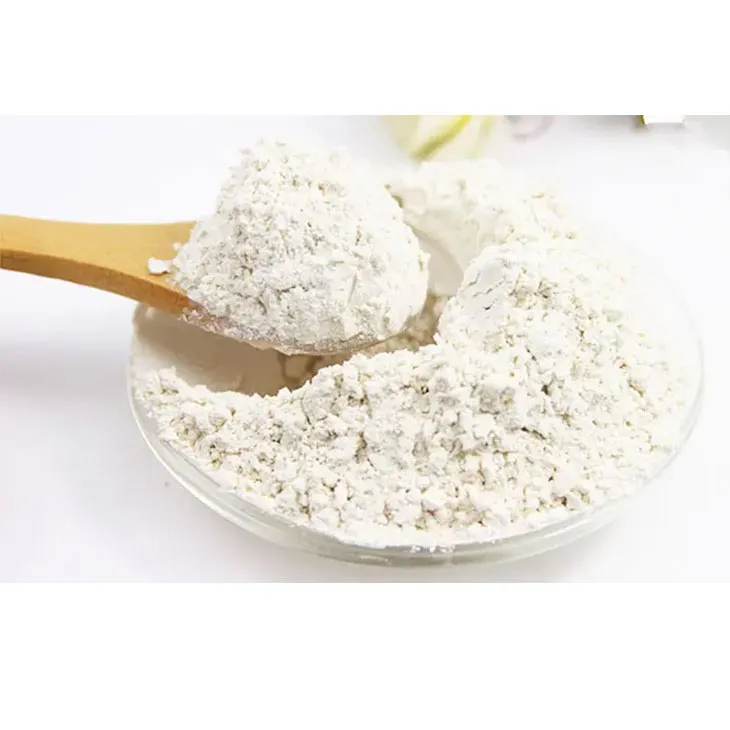
3.1 Grinding and Milling Techniques
Traditional grinding and milling methods have been used for particle size reduction for a long time. These include ball milling, where small balls are used to crush the Yam Extract into smaller particles. Another common method is hammer milling, which uses high - speed rotating hammers to break down the material. However, these methods may have some limitations. For example, they may generate heat during the process, which could potentially affect the quality of the extract if not carefully controlled. Additionally, the particle size distribution obtained may not be as narrow as desired in some applications.
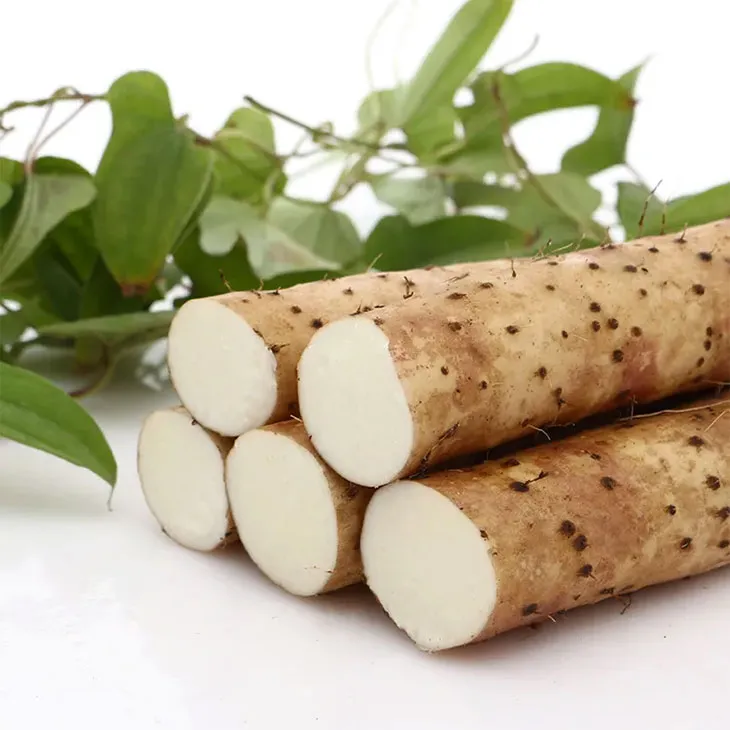
3.2 Micronization Technologies
Micronization technologies, such as jet milling, have emerged as more advanced options for reducing the particle size of Yam Extract. Jet milling works by using high - velocity jets of gas to accelerate the particles and cause them to collide with each other, thereby reducing their size. This method can produce very fine particles with a relatively narrow size distribution. It also has the advantage of being a dry process, which can be beneficial for heat - sensitive extracts like Yam Extract. Another micronization technology is ultrasonic milling, which uses ultrasonic waves to break down the particles. This method is often more energy - efficient and can produce particles with unique surface properties.
3.3 Nanotechnology - Based Approaches
Nanotechnology offers innovative ways to further reduce the particle size of Yam Extract to the nanoscale. Nanoparticle formation can be achieved through various techniques, such as emulsion - based methods or precipitation techniques. When the Yam Extract is in the form of nanoparticles, it can exhibit novel properties due to the quantum - size effect and enhanced surface activity. For example, nanoparticles of Yam Extract may have improved solubility, which can be crucial for certain applications where the extract needs to be dissolved in a liquid medium. However, the use of nanotechnology also raises some concerns, such as potential toxicity issues and the need for strict regulatory compliance.
4. Implications for Industries Relying on Yam Extract
4.1 New Market Opportunities
The ability to precisely control the particle size of Yam Extract can open up new market opportunities. In the food and beverage industry, for example, a more refined Yam Extract can be used to develop new types of functional foods or beverages. Consumers are increasingly interested in products with enhanced nutritional and health - promoting properties, and a Yam Extract with improved physical, chemical, and biological properties can meet these demands. In the cosmetics industry, the use of fine - particle Yam Extract can lead to the development of more effective skincare products, such as creams and lotions with better absorption and anti - aging properties, which can target high - end and niche markets.
4.2 Product Development Opportunities
For pharmaceutical and nutraceutical companies, reducing the particle size of Yam Extract provides a wealth of product development opportunities. It allows for the creation of more efficient drug formulations or dietary supplements. For instance, if the Yam Extract is being developed as a treatment for a particular disease, the enhanced bioavailability resulting from reduced particle size can lead to a more effective dosage form. Additionally, in the development of new products, the unique properties of the fine - particle Yam Extract can be combined with other ingredients to create innovative and competitive products.
5. Challenges and Future Directions
5.1 Quality Control Challenges
One of the main challenges in reducing the particle size of Yam Extract is ensuring quality control. Different particle size reduction methods may introduce variability in the product quality. For example, excessive heat generation during grinding can cause degradation of the active compounds in the extract. Additionally, ensuring a consistent particle size distribution is crucial, as variations can affect the performance of the extract in different applications. To overcome these challenges, advanced analytical techniques, such as laser diffraction for particle size analysis and high - performance liquid chromatography for chemical composition analysis, need to be employed.
5.2 Regulatory Considerations
As with any new processing technology applied to food, pharmaceuticals, or cosmetics, regulatory considerations play a significant role. When using nanotechnology - based approaches for particle size reduction, for example, there are often strict regulatory requirements regarding safety assessment and labeling. Companies need to ensure that their products meet all relevant regulatory standards in different regions. This may involve conducting extensive toxicity studies and providing detailed information on the production process and product characteristics.
5.3 Future Research Directions
Future research in the area of Yam Extract particle size reduction should focus on several aspects. Firstly, further exploration of the relationship between particle size and biological activity at the molecular level is needed. This will help to better understand how different particle sizes affect the interaction of the extract with biological systems. Secondly, the development of more efficient and environmentally friendly particle size reduction technologies is desirable. For example, finding ways to reduce energy consumption during the milling process or developing green solvents for nanoparticle formation. Finally, research on the long - term stability of reduced - particle - size Yam Extract in different product formulations is crucial to ensure the quality and efficacy of products over time.
6. Conclusion
In conclusion, the professional processing of Yam Extract with a focus on reducing particle size is a complex yet highly rewarding area of study and application. The importance of precise particle size control cannot be overstated, as it impacts the physical, chemical, and biological properties of the extract. Modern technologies offer a range of options for achieving the desired particle size reduction, but also come with their own challenges and considerations. For industries relying on Yam Extract, the ability to effectively reduce particle size can lead to new market and product development opportunities. However, careful attention must be paid to quality control and regulatory compliance. Looking ahead, further research in this area will continue to unlock the full potential of Yam Extract in various applications.
FAQ:
Q1: Why is particle size reduction important in the professional processing of Yam Extract?
Particle size reduction in Yam Extract processing is crucial as it can enhance the extract's efficacy. It not only modifies the physical properties but also impacts its chemical reactivity and biological activity. A refined particle size can lead to better absorption, solubility, and bioavailability, which are all essential factors for maximizing the potential benefits of the Yam Extract in various applications.
Q2: What modern technologies are used to achieve particle size reduction in Yam Extract?
There are several modern technologies employed for particle size reduction in Yam Extract. These may include high - pressure homogenization, which uses high pressure to break down particles into smaller sizes. Another technology is micronization, which can reduce the particle size to the micron level. Additionally, ball milling can also be used, where balls in a mill are rotated to crush and grind the Yam Extract particles to the desired smaller size.
Q3: How does particle size reduction affect the chemical reactivity of Yam Extract?
When the particle size of Yam Extract is reduced, the surface area to volume ratio increases. This larger surface area provides more sites for chemical reactions to occur. As a result, the chemical reactivity of the extract is enhanced. It can lead to more efficient reactions with other substances, which is beneficial in applications such as pharmaceutical formulations or in the development of functional foods where the Yam Extract may interact with other ingredients.
Q4: Can particle size reduction in Yam Extract open up new markets?
Yes, particle size reduction in Yam Extract can open up new markets. With a more refined particle size, the Yam Extract may have improved properties that can attract new industries. For example, in the cosmetic industry, a smaller particle size Yam Extract may offer better skin penetration and thus be more desirable for skincare products. In the pharmaceutical industry, enhanced bioavailability may lead to new drug formulations or delivery systems, expanding the market for yam - based pharmaceuticals.
Q5: What are the implications for product development when the particle size of Yam Extract is reduced?
For product development, reduced particle size of Yam Extract offers numerous opportunities. It can enable the creation of new types of products with enhanced functionality. For instance, in the food industry, it can be used to develop fortified foods with better nutrient absorption due to the improved properties of the Yam Extract. In the nutraceutical industry, more effective and targeted supplements can be formulated. It also allows for more precise dosing and formulation control, leading to higher - quality products overall.
Related literature
- Advances in Yam Extract Processing: Particle Size and Beyond"
- "The Significance of Particle Size in Yam Extract - Based Product Innovation"
- "Modern Technologies for Yam Extract Particle Size Manipulation"


-

Mango flavored powder
2024-12-06
-

Cassia Seed Extract
2024-12-06
-

Bromelain
2024-12-06
-

Milk Thistle Extract
2024-12-06
-

Coenzyme Q10
2024-12-06
-

Aguaje Extract
2024-12-06
-

Astaxanthin
2024-12-06
-

Calendula Extract
2024-12-06
-

Antler Extract
2024-12-06
-

Red Yeast Rice
2024-12-06